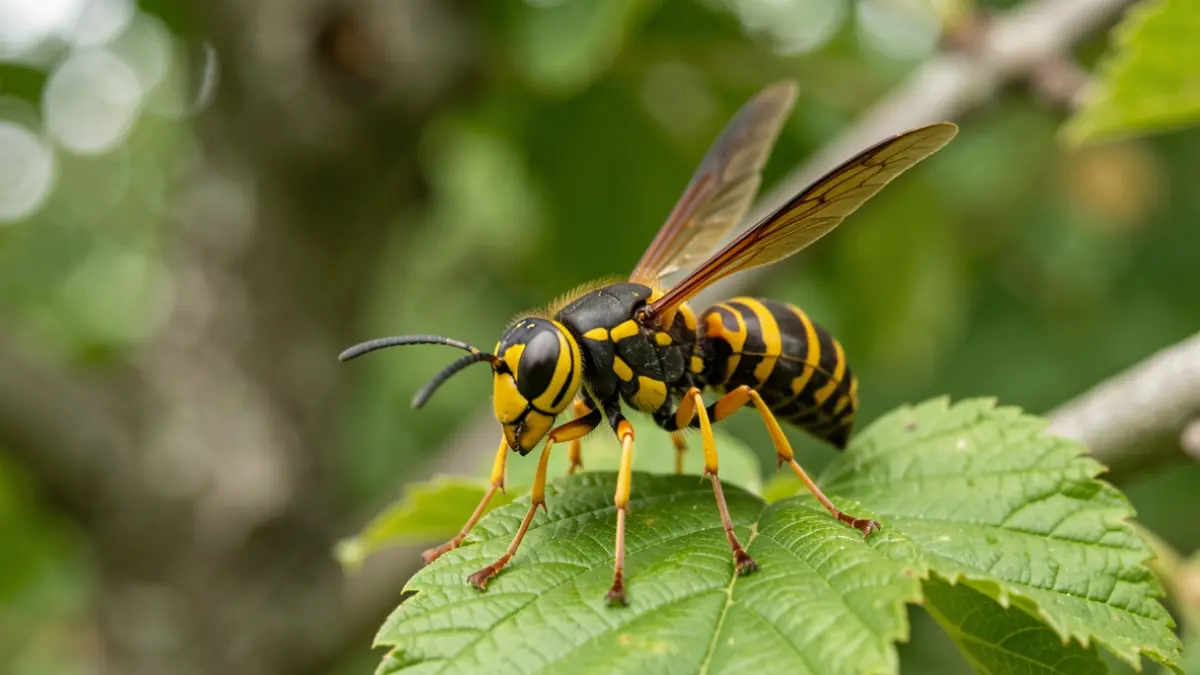
The Association for the Development of Climate Actions (ADACIS) has disseminated a guide, prepared seven months ago, for coordinated action against the Asian hornet (Vespa velutina ssp. nigrithorax). This initiative follows the discovery of a nest containing hundreds of specimens in a tree within the urban area of Las Palmas de Gran Canaria.
The Asian hornet, an invasive species in Spain since 2010, poses a significant threat to the Canary Islands' ecosystems, particularly to wild bees, of which 50 species are endemic to the islands. Its aggressive predatory nature places the already vulnerable Canary black bee (Apis mellifera) at particular risk.
Ezequiel Navío, spokesperson for ADACIS, emphasizes the need to implement "actions based on the experience of territories that have combated the hornet with a multidisciplinary method." He highlights that the issue also concerns Public Health due to the risks Asian hornet stings pose to human life.
The guide, which already warned of the risk of the vespa velutina invasion, is available to institutions and citizens. ADACIS warns in the document that "improvisation generates high economic costs, endangers public health, and hinders the containment of its impact on biodiversity and, particularly, on beekeeping."
Navío praises the information and response efforts by the Government of the Canary Islands through the Early Detection Network of Exotic Species (REDEXOS), calling them "formidable." He notes the collaboration with experts, the Cabildo of Gran Canaria, and the City Council of Las Palmas, urging the avoidance of "noise and distraction" during this crisis.
The creation of "sentinel apiaries" in strategic points like ports and airports is proposed, with beekeepers acting as "sentinels" to assess and report the appearance of Asian hornets. The Government of the Canary Islands also requests that citizens report any sightings to 1-1-2 or send photos and videos to the REDEXOS WhatsApp number (646-601-457).