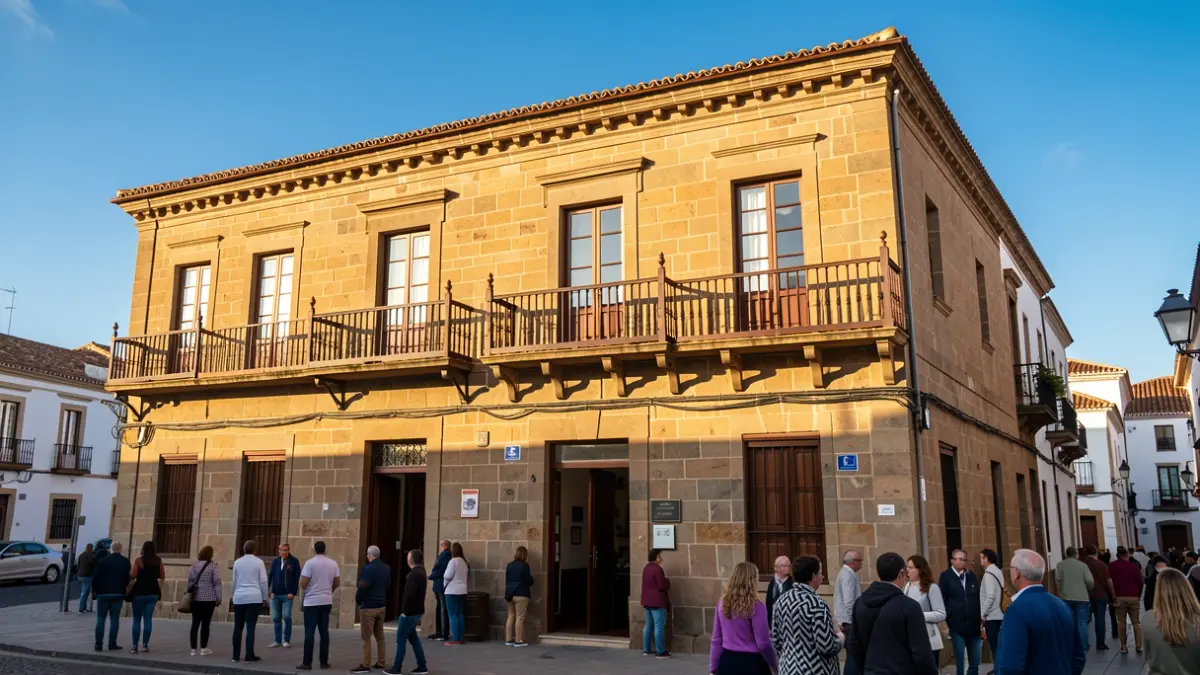
The Government of the Canary Islands initiated renovation works this Wednesday on Casa Samsó, also known as the Costa y Grijalba mansion, located in Santa Cruz de Tenerife. The building was purchased by the regional executive in December 2025 for 2.7 million euros.
According to a dossier from the General Directorate of Heritage and Contracting, the work will last for eight weeks. The objective is for the Vice-Ministry of Culture and Cultural Heritage to relocate to its new headquarters in November, once the adaptation activities are completed. This move aims to resolve current space and staff dispersion issues for the approximately 27 employees, with plans to expand to around 30.
The interventions will focus on data infrastructure, fiber optics, electrical and technological installations, air conditioning, and accessibility improvements. This is not a comprehensive rehabilitation but a limited intervention to preserve the original architectural elements of the building, which is protected as a Site of Cultural Interest (BIC) with Protection Level 2.
The acquisition of the property, spanning 725 square meters across four floors, was seen as a solution to consolidate the nearly 30 jobs, along with technical, managerial, and institutional representation spaces, into a single building. The purchase was made below the initial market listing price, according to the dossier.
The Ministry frames this operation within a common practice observed in other autonomous communities and the General State Administration, which have converted historic buildings into cultural headquarters to ensure their conservation and revitalization.