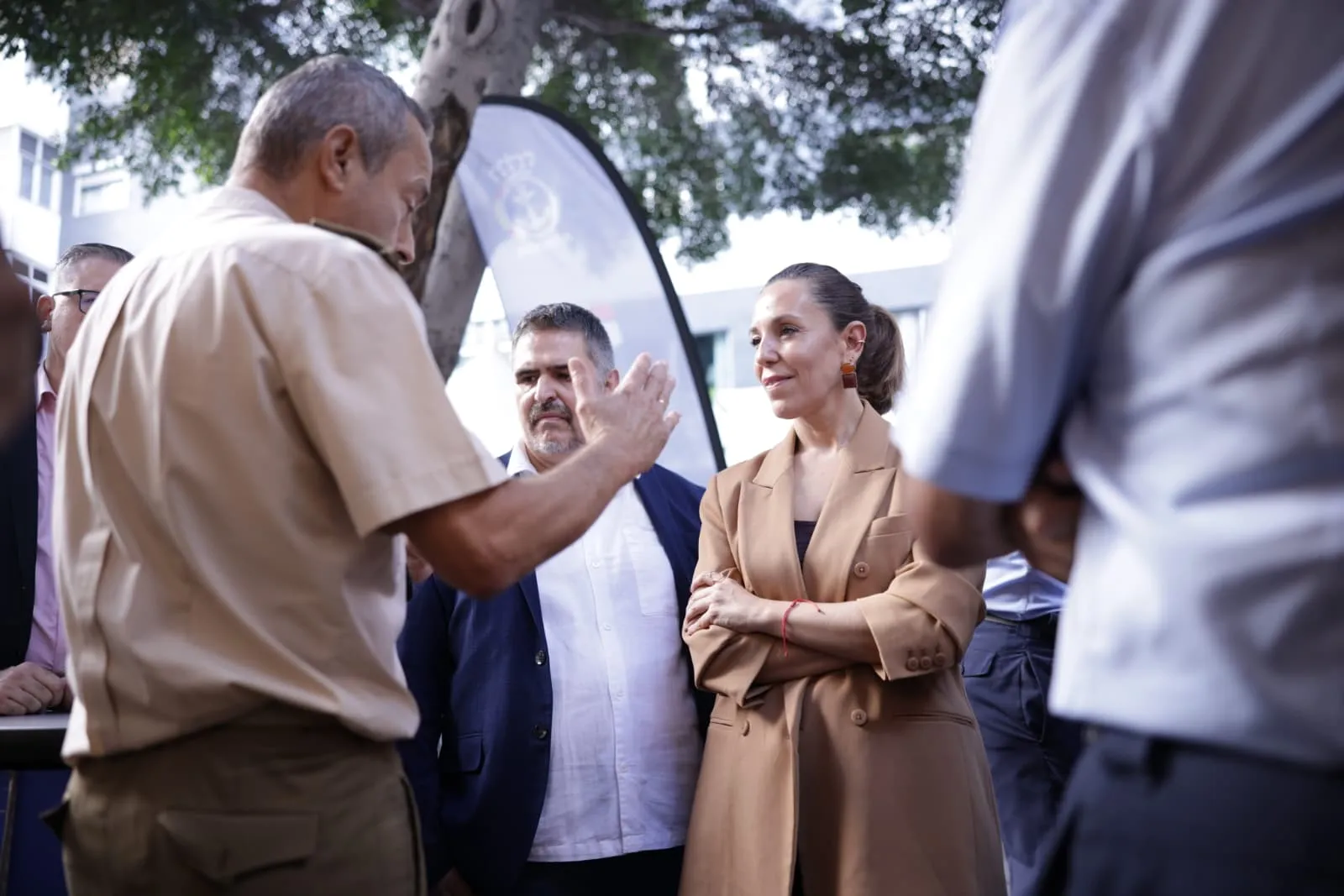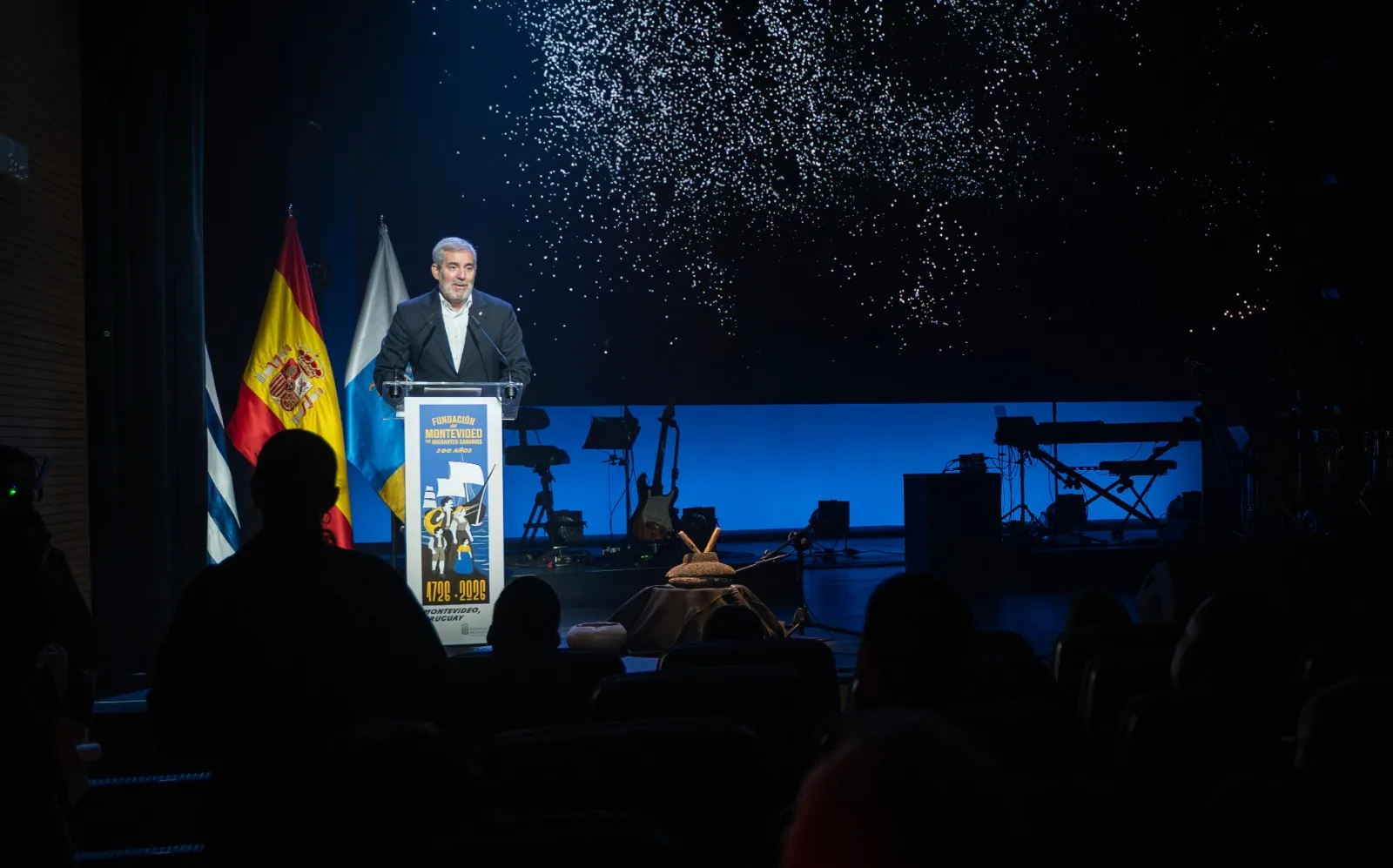
The commemorative event for the 300th anniversary of the founding of Montevideo by Canarian migrants brought together institutional representatives and members of the Uruguayan community residing in the Archipelago. Canary Islands President Fernando Clavijo highlighted the shared history and the bonds that unite both territories.
On November 19, 1726, nearly a hundred Canarians, half of them children, arrived in America aboard the ship Nuestra Señora de la Encina, after a long journey that departed from Santa Cruz de Tenerife to found what would become Montevideo.
Clavijo emphasized that "both peoples have managed to keep their common roots alive through the shared legacy and the brotherhood that we have preserved and nurtured for generations." The president highlighted the importance of continuing to strengthen a relationship built over time on "memory, cooperation, and mutual recognition."
The president evoked the effort of those Canarians who, with hope, crossed the Atlantic in search of new opportunities, bringing with them their knowledge, customs, and traditions. "Men, women, and children who left with uncertainty, but also with the excitement of what was yet to be discovered, who sowed with work and effort a new home far from their own and who were the architects of what would be a new society reflecting ours on the other side of the shore," he stated.
Clavijo affirmed that the value of this commemoration lies precisely in the fact that "three hundred years later, we continue to recognize each other and have been able to preserve the threads that unite us to come together and value our shared history and all that we have been able to build jointly through bonds of brotherhood, cooperation, respect, and mutual recognition over centuries."
The president recalled that many Canarian families had to emigrate in the past to find opportunities they did not have in the Islands, "they opened their doors to us when we needed it, they welcomed us and gave us the opportunity to work and forge a future where we could form families and build a future," he stated.
The Consul of Uruguay in the Canary Islands, Silvana Balaguer Mira, recalled a fundamental episode when, on November 19, 1726, twenty-five Canarian families arrived in the area where Montevideo would be settled, marking a key milestone in the city's foundation.
The President of the Canary Islands referred to his institutional trip to Montevideo last June, during which he visited various sites linked to the presence and legacy of Canarian emigration in Uruguay. This visit reaffirmed the foundations of relations between the two territories through a new cooperation framework. The recent visit to the Canary Islands by Uruguay's Minister of Education has also advanced collaboration, particularly in research and development.
The event concluded with the musical performance Tras las huellas (Following the Footprints), a scenographic proposal created for the occasion under the musical direction of Julio Tejera and Rogelio Botanz. The show featured three musical pieces (folías, canario, and malambo) designed to commemorate the 300th anniversary, exploring themes of inhabiting, crossing, and encountering.