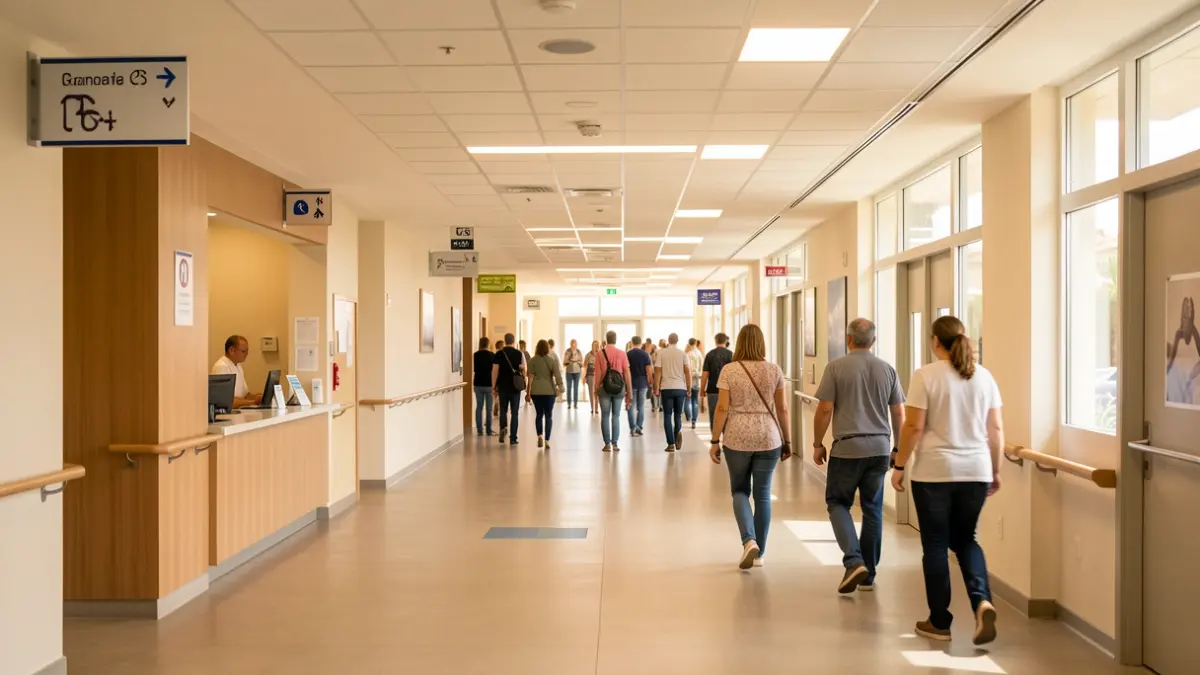
The Canary Islands healthcare system serves a growing number of people with disabilities, prompting the adoption of measures to enhance the comfort and accessibility of care. The number of accessibility and accompaniment (AA) health cards has doubled in the last three years, reaching approximately 40,000 individuals with disabling conditions or communication difficulties.
Health Minister Esther Monzón detailed the actions taken during a parliamentary commission. Key improvements include the installation of 49 magnetic induction loops, the translation of the Charter of Users' Rights and Duties into braille and sign language, and the distribution of 350 pictogram booklets to facilitate communication in health centers. "This is an advancement, especially for individuals with severe disabilities and communication problems," she stated.
Monzón acknowledged that "there is still much to advance," but expressed satisfaction with the initiatives launched, which aim to enable people with disabilities to access, use, and understand public services more safely and autonomously. For the coming years, the Department plans to continue improving accessibility and communication, reducing the digital divide, expanding mental health resources, and implementing new early attention units.
The minister also highlighted support for the Law on Dependency, noting that legislative changes at both the Canary Islands and state levels have streamlined the recognition of disability. The new law will grant individuals with a dependency degree of one a recognized disability of 33%, and those with degrees two and three, up to 65%. "A more agile and fair disability recognition system has been put in place," she insisted.
The Canary Islands have been pioneers in streamlining these procedures, resolving over 7,141 disability resolutions between January and May, double the number from the same period in the previous legislature. Improved coordination between the Departments of Social Welfare and Health has enabled the training of 250 professionals to expedite disability assessments and electronic health record access, contributing to the doubling of AA health cards.
Regarding early attention and diagnosis, eleven early attention units have been opened in the last three years, with plans to open nine more. Furthermore, neonatal screening programs have increased the detection of metabolic diseases from 18 to 49, and X-linked adrenoleukodystrophy will soon be included, bringing the total to fifty. "The Canary Islands are well above the national average in neonatal detection," the minister asserted.