The environmental impact study for the installation of a sea bass aquaculture farm on the coast of La Aldea de San Nicolás, Gran Canaria, anticipates that the effects on the marine environment will be minimal post-construction. The proposal, submitted by Gran Canaria Bass Company, aims to ensure compatibility with the current ecosystem through preventive and corrective measures.
This study, along with the technical project, is open for public information for 30 business days by the General Directorate of Fisheries of the Government of the Canary Islands. The plan involves cultivating 5,400 tons of sea bass annually in the coastal strip between Punta Góngora and Punta de La Aldea, adhering to the Island Spatial Planning Plan (PIO) and avoiding gorgonian fields.
Distances stipulated in the Regional Aquaculture Planning Plan (PROAC) and those related to elements such as marine caves, archaeological sites, maritime routes, submarine cables, and population centers have been considered. The document evaluates six alternatives for the location of the 24 marine cages, acknowledging that all will cause a visual alteration of the landscape.
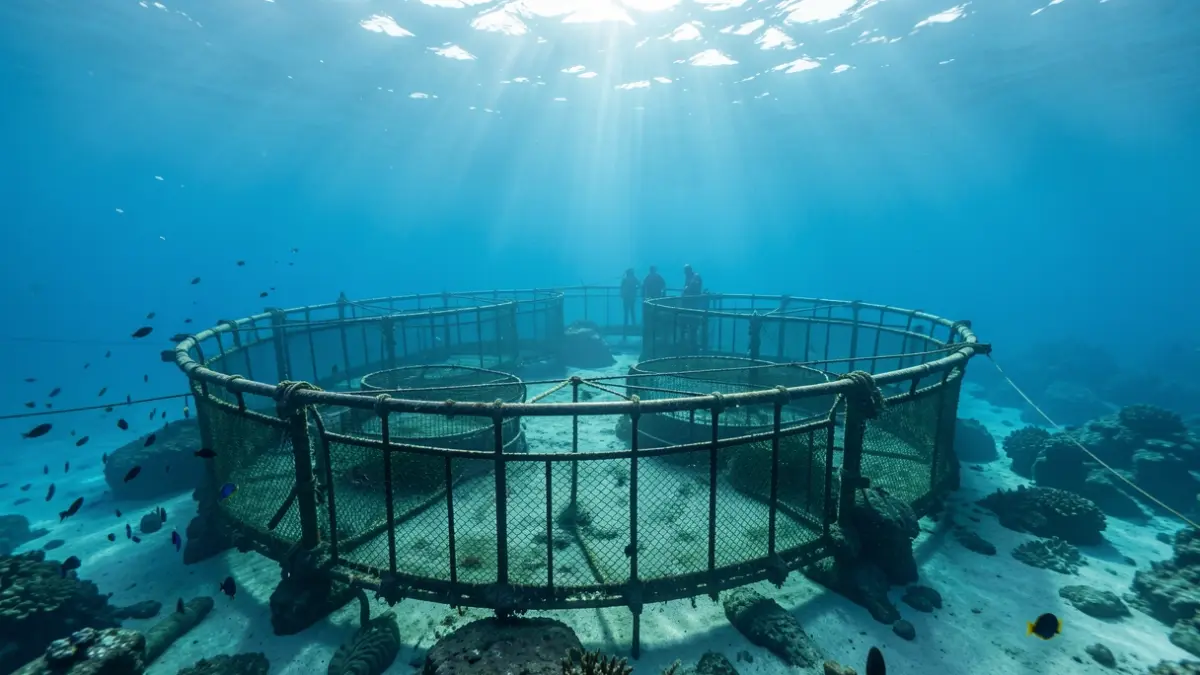
The technical project details that the 24 floating nurseries, 30 meters in diameter and 20 meters deep, will be anchored to the seabed to ensure safety and minimize the risk of escapes. The requested concession area is 472,064.236 square meters, ensuring a minimum distance of 22 meters between the net and the seabed.
The theoretical cultivation volume is 339,292 cubic meters, with the goal of producing 5,400 tons of sea bass annually from the sixth year. The material execution budget amounts to 6.82 million euros, allocated to marine elements (3.53 million), maritime operations (2.27 million), and land facilities (829,000 euros).
In addition to sea bass, the possibility of cultivating other species of aquaculture interest such as dentex or bogue is considered. La Aldea port will serve as the operational base for construction and daily operations, using its facilities for nursery assembly and vessel mooring.
During construction, an area of 200 square meters adjacent to the port ramp will be used for material storage, and 700 square meters for assembly. For daily operations, a storage area yet to be determined will be utilized. Ice supply will initially be sourced from the fishermen's guild of Agaete, though the construction of a dedicated ice plant is not ruled out.