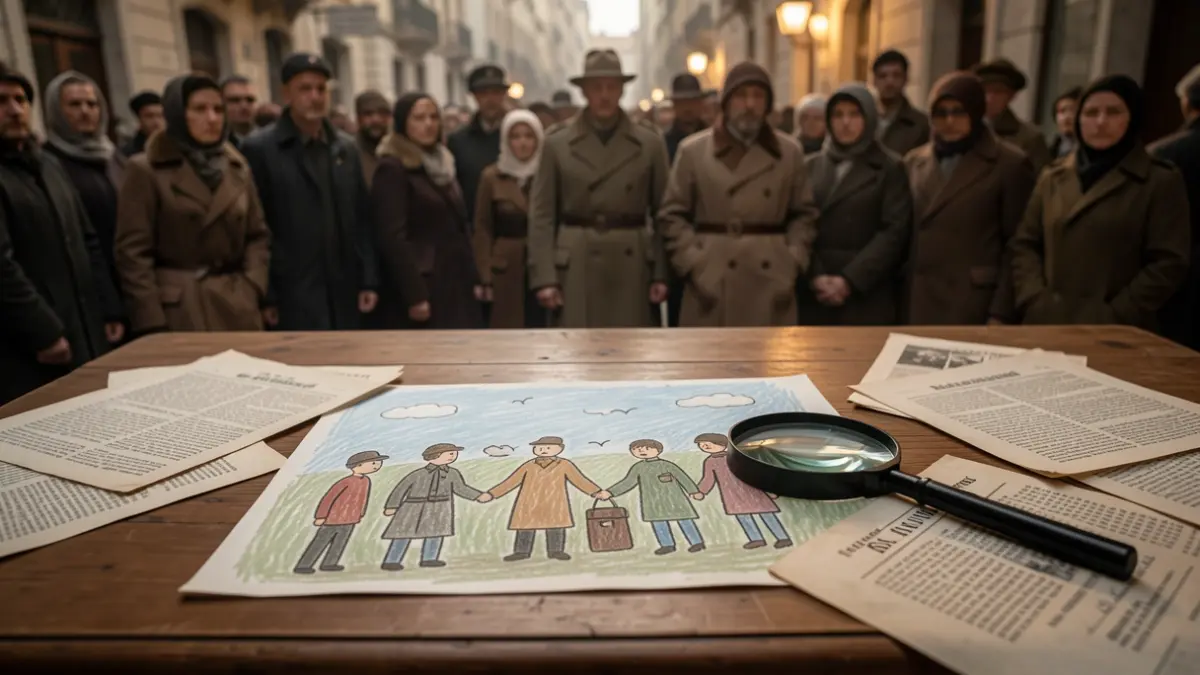
The Juan Negrín Foundation has given prominence to the testimonies of children during the Spanish Civil War (1936-1939), often overlooked in historiographical construction. Expert in the History of Written Culture, Verónica Sierra, presented her work rescuing these "orphan words"—including letters, drawings, and school essays—at a conference in Las Palmas de Gran Canaria.
Sierra explained that her interest in children's documents arose during her doctoral studies, motivated by the scarcity of research in Spain compared to other countries. "I began to collect all these testimonies ranging from letters and postcards to drawings, school notebooks, newspapers that the children themselves also made, or diaries," she detailed, supplementing later memorialistic production.
The historian emphasized the importance of prioritizing children's "own documents" to give them a voice. She noted that historians often construct childhood memory from an adult perspective, but this work seeks "to rescue a series of testimonies so we can see how boys and girls lived and conceived what happened in those years."
Sierra argues that childhood was neither a "mere spectator" nor a "passive victim" during the war. In a "totally ideologized" context, children experienced indoctrination and acted as "witnesses and narrators of those events on the same level as adults."
The researcher criticized the view that minimizes children's experiences, considering their experiences to be "less important or having less impact." She stressed that the war meant for many children "a childhood that would lose its childhood," premature maturation, and "lifelong traumas," affecting both those who remained in Spain and those evacuated to other countries.