Las Canteras beach in Las Palmas de Gran Canaria has seen the removal of industrial remnants that had been buried for decades. The municipal action follows the continuous winter storms, which caused a significant shortage of sand and exposed metal structures.
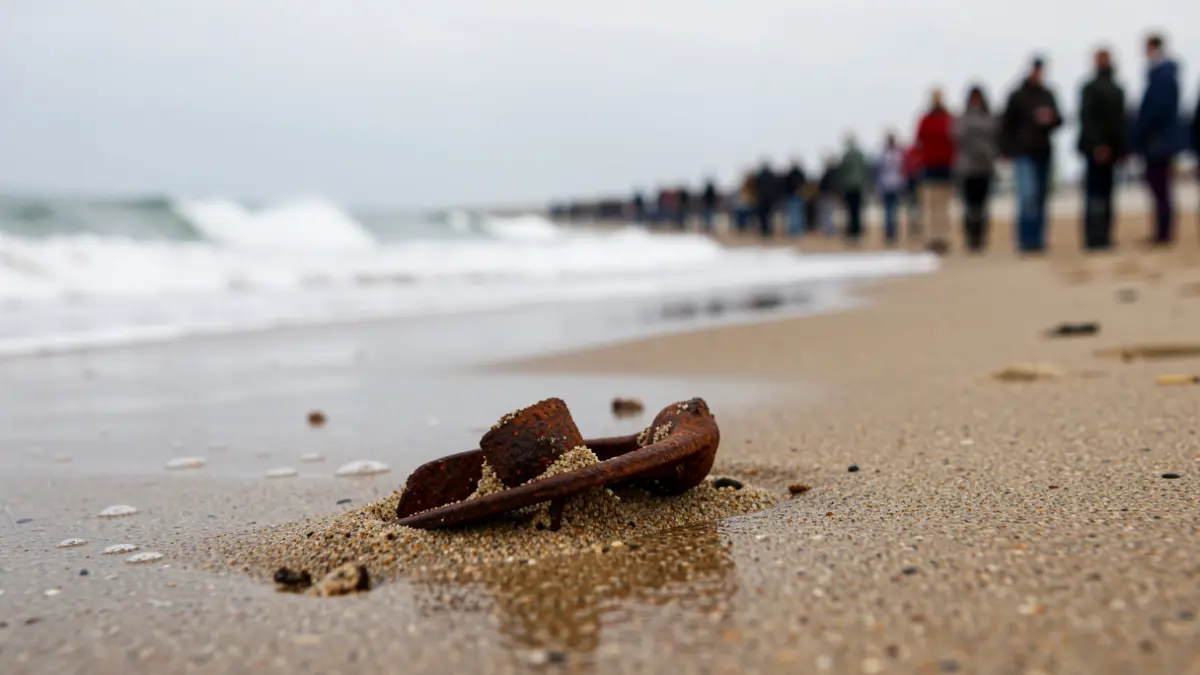
Among the removed items are remnants from the old La Cícer power plant and materials from previous uses. These findings are recurrent when significant changes occur in the beach's composition due to wave action. The Ciudad de Mar department, led by Pedro Quevedo, intervened to remove a circular structure that had drawn complaints from beach users due to its obstruction and the risk posed by its rusted metal components.
The structure was located near the intersection of Churruca and Portugal streets. The access staircase to the promenade at this point had been cordoned off since March for safety reasons, as the lack of sand had exposed its base and part of the promenade itself. The storms, particularly the passage of storm Therese, were decisive in the appearance of this debris.
Authorities explain that they can only remove artificial elements that surface, as intervention in the natural environment requires permits from Costas (Coastal Authority). If debris is reburied shortly after, it is not uncovered to avoid altering the beach. On previous occasions, specific permits have been necessary to remove semi-buried remains.
Concurrently, Ciudad de Mar is working to restore the beach after the damage caused by Therese, especially in the La Cícer area, where waves removed sand and deposited stones. Despite nearly three months having passed, the sandy area has not returned to its original state. The Government of the Canary Islands has been asked for assistance in restoring the beach's profile, following complaints from surf schools about difficulties in practicing their sport.
Technicians from the ULPGC (University of Las Palmas de Gran Canaria) conducted a topographic survey to determine the next steps. A researcher involved in the agreement between the City Council and the University, María José Sánchez, indicated in May that the sand is located in the submerged part of the beach and is expected to return with the summer trade winds. Forced intervention could affect the ecosystem's balance.
The winter storms also caused damage to the Las Canteras promenade, with new cracks and holes appearing in Los Lisos and Muro Marrero, near Playa Chica. A study by Urbanism commissioned in February did not require emergency actions. The repair project for Muro Marrero, budgeted at 835,000 euros, was declared void last year and is planned to be re-tendered with a revised price.