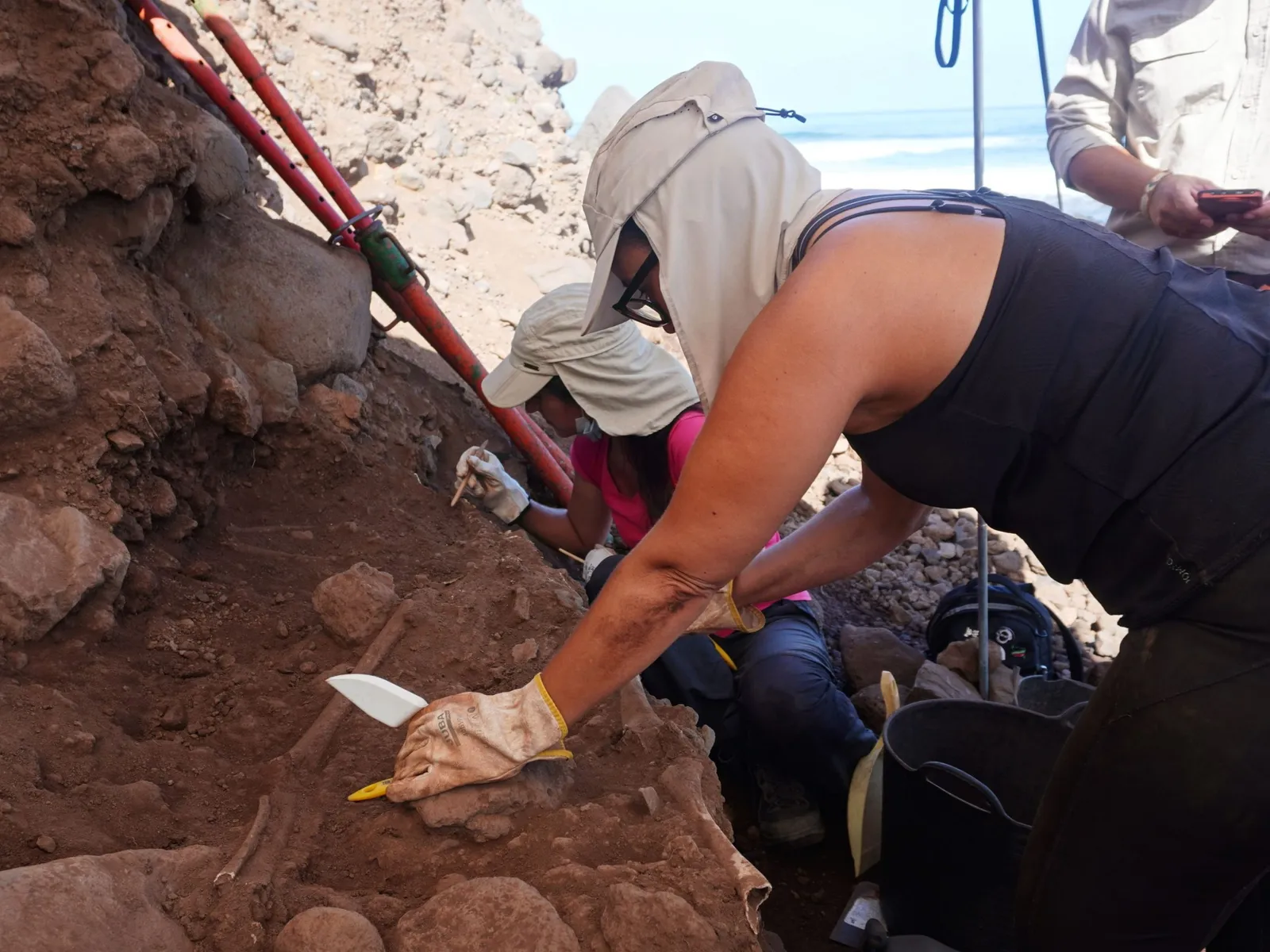
The Directorate General of Culture and Cultural Heritage of the Government of the Canary Islands has carried out an urgent archaeological operation in the Las Cruces area of Garachico. The primary objective was to recover human remains that were partially exposed on a coastal platform, close to Barranco Hondo beach, and at risk due to coastal erosion.
Fieldwork has enabled the documentation and extraction of the bone vestiges using rigorous archaeological procedures, ensuring the preservation of both the remains and the contextual information in which they were found. The recovered material will now undergo specialized archaeological and bioanthropological studies.
The research aims to determine the nature, chronology, and historical context of the deposit of these remains. To achieve this, specialists will examine the bone material, associated sediments, and any other elements that can provide complementary data on the circumstances of their discovery.
The intervention was declared urgent due to the exposure of the remains to coastal erosion processes. The work included graphic and photogrammetric documentation, manual excavation, and sediment screening to maximize the recovery of archaeological information.
The presence of human remains on the coast of Isla Baja has been documented for decades. However, the chronology and origin of the remains recovered in Garachico cannot yet be definitively established.
“"Right now, several hypotheses are being considered. This project originated with the idea that it could be a victim of the Civil War, but as we have excavated, new proposals have emerged. The body could be a result of the Black Death or of the floods that occurred in Garachico at different historical moments."
The results of laboratory analyses will be crucial for scientifically establishing these aspects and evaluating, based on the obtained evidence, the possible historical context of the remains.
The research team includes Luana Studer Villazán (contemporary history), Laura Bencomo Fernández and Nuria Álvarez Rodríguez (archaeologists), Sarah Delgado Luis (bioanthropology), and Carlos García Ávila (photogrammetric documentation technician). They will now continue with the study of the recovered materials and the analysis of the evidence obtained.