The Ministry of Public Works, Housing, and Mobility of the Government of the Canary Islands has greenlit the environmental restoration project for the LZ-3 road, a key thoroughfare in Lanzarote. The initiative aims to enhance the landscape and environmental integration of this vital route, with an execution period of 12 months.
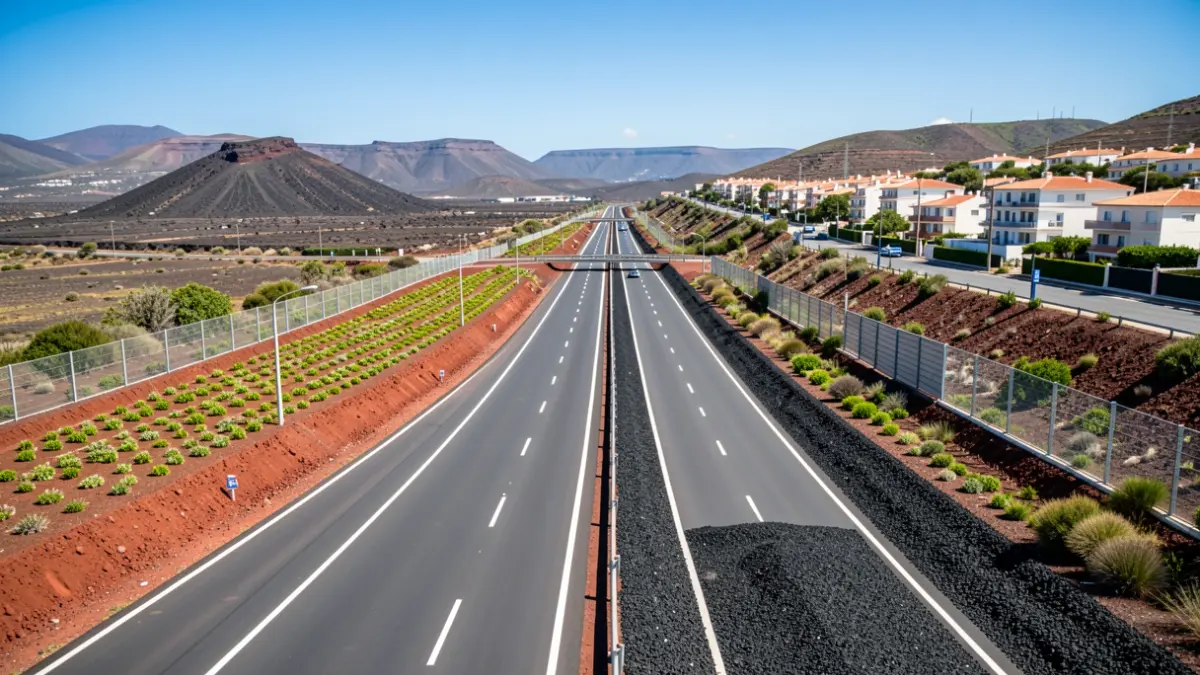
Interventions will focus on the margins, interchanges, and areas adjacent to the road, adhering to the guidelines of the BIOCRIT Report and the Lanzarote Landscape Pact. A notable change will be the replacement of the characteristic red volcanic soil (rofe rojo) with black volcanic gravel (picón negro), seeking chromatic harmony with the island's volcanic scenery.
The project also includes revegetating the margins and interchanges with species adapted to the region and requiring low water consumption. Debris, invasive species, and plant waste will be cleared from adjacent areas.
To mitigate traffic impact on residential zones, sound barriers will be installed near homes. The intervention will be complemented by an independent irrigation system, sustainable drainage solutions, beautification efforts using basaltic stone, and the placement of anti-glare screens on the median.
“"This project will allow us to advance in the environmental and landscape recovery of this infrastructure and correct some of the accumulated impacts."
From the Cabildo of Lanzarote, its president, Oswaldo Betancort, highlighted the approval's importance in materializing the island's environmental planning. The insular counselor for Landscape and Biosphere Reserve, Samuel Martín, emphasized that the intervention exemplifies how planning translates into concrete actions on the ground.
The LZ-3 is a crucial access and circulation axis in the Arrecife area, so this action will significantly improve the image of one of Lanzarote's busiest zones. The regional order definitively approves the project after receiving favorable technical and environmental reports on August 24th.