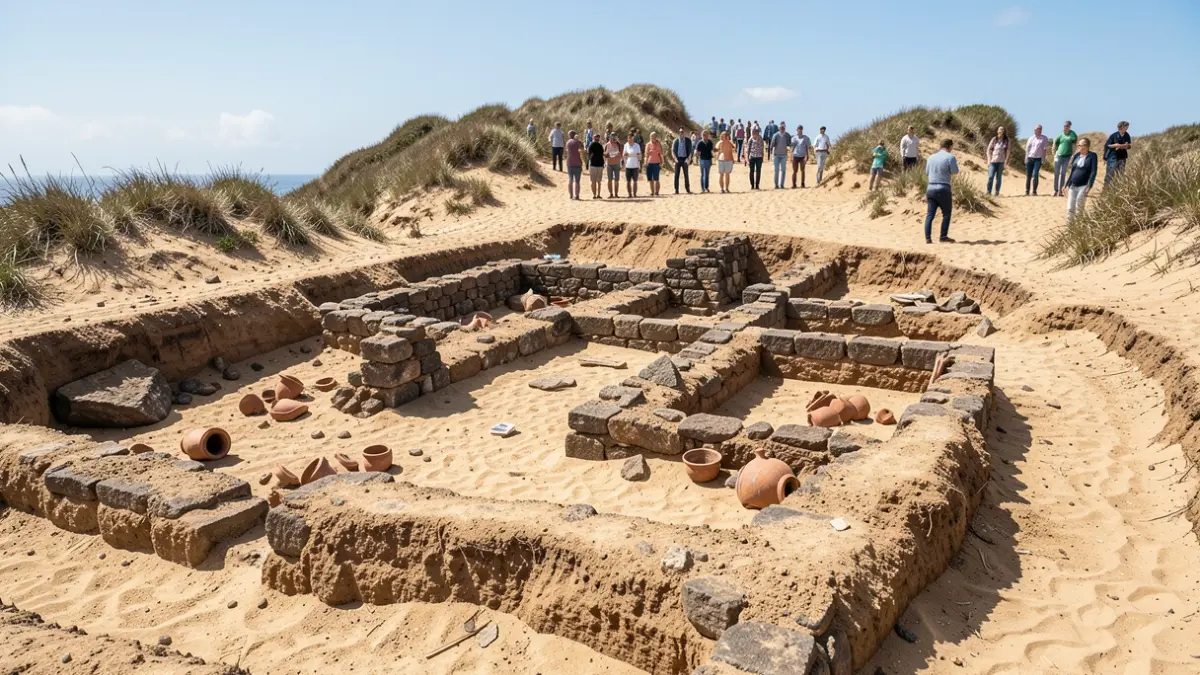
The work will focus on the Lobos 5 area, near La Calera beach, where a potential processing site and a lime kiln related to the production of the prized Roman purple dye will be investigated. This initiative is part of the 'Towards the definition of the Purpurarias Islands' project, a collaboration between the archaeological museums of both councils, with support from the University of La Laguna and BinterCanarias.
The eleventh campaign will excavate a deteriorated lime kiln. This substance was crucial in the Roman dye industry, used as an alkaline agent in treating the hypobranchial glands of purple-producing mollusks, such as the dog whelk (Stramonita haemastoma), to obtain the coveted violet pigment.
The archaeological site on Lobos Islet, dated between the 1st century BC and the 1st century AD, has been significant in understanding the commercial and industrial relations between Roman Hispania and the Canary Islands. Findings, including over 200,000 Stramonita apices, dry stone dwellings, and terra sigillata tableware, suggest a seasonally operated factory of great economic importance in the Atlantic.
The purple dye obtained was highly valued in the Mediterranean world, associated with elites. Ongoing research in Lobos deepens the understanding of this exceptional site and provides new insights into the relationships between the Canary Islands and the Roman world.