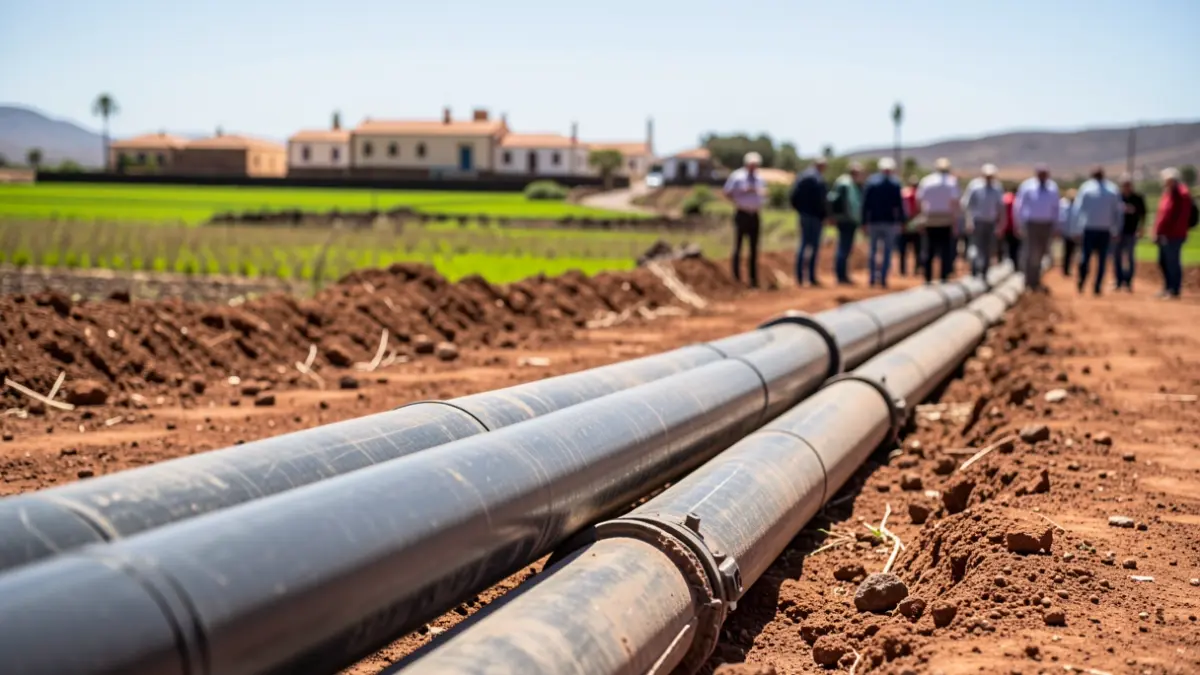
The PSOE of Fuerteventura has highlighted the collaboration between local administrations and the state-owned company Tragsa in developing projects on the island. Specifically, the 'Modernization and improvement of irrigation in the south-central zone of Fuerteventura' plan, approved during the term of the Canary Islands Government under Ángel Víctor Torres, has been emphasized.
The visit of a national delegation from Tragsa to the island has been welcomed by the socialist party. During their stay, the president of Tragsa, Jesús Casas, met with the insular director of the General State Administration in Fuerteventura, María Jesús de la Cruz. The meeting also included participation from Tragsa executives, including its national director, the manager in the Canary Islands, the head of the Territorial Unit, and the coordinator in Fuerteventura.
This delegation has conducted several meetings and site visits to major ongoing projects, such as the aforementioned Irrigation Plan and other initiatives linked to the territory, which have been made possible through the investment of various administrations.
The 'Modernization and improvement of irrigation in the south-central zone of Fuerteventura' project represented a significant leap forward for the farmers of Tuineje and Pájara. The investment of €13.2 million in this first phase was provided by the State Society for Agricultural Infrastructure (Seiasa) and the Cabildo of Fuerteventura.
Among the project's notable achievements is the construction of the Tesejerague reservoir and the pumping of non-conventional water to it, which allows for the avoidance of using potable water for agricultural purposes. Once this large reservoir is completed, the plan foresees the distribution of agricultural water by gravity.
The execution of this project will ensure the supply of agricultural water to cultivation areas, particularly the 'gavias' (traditional irrigation channels), and will preserve potable water for human consumption. This model aims to maintain 'zero-kilometer' agricultural production, enhance Fuerteventura's food sovereignty, and conserve the most scarce resource, potable water, for human consumption.