
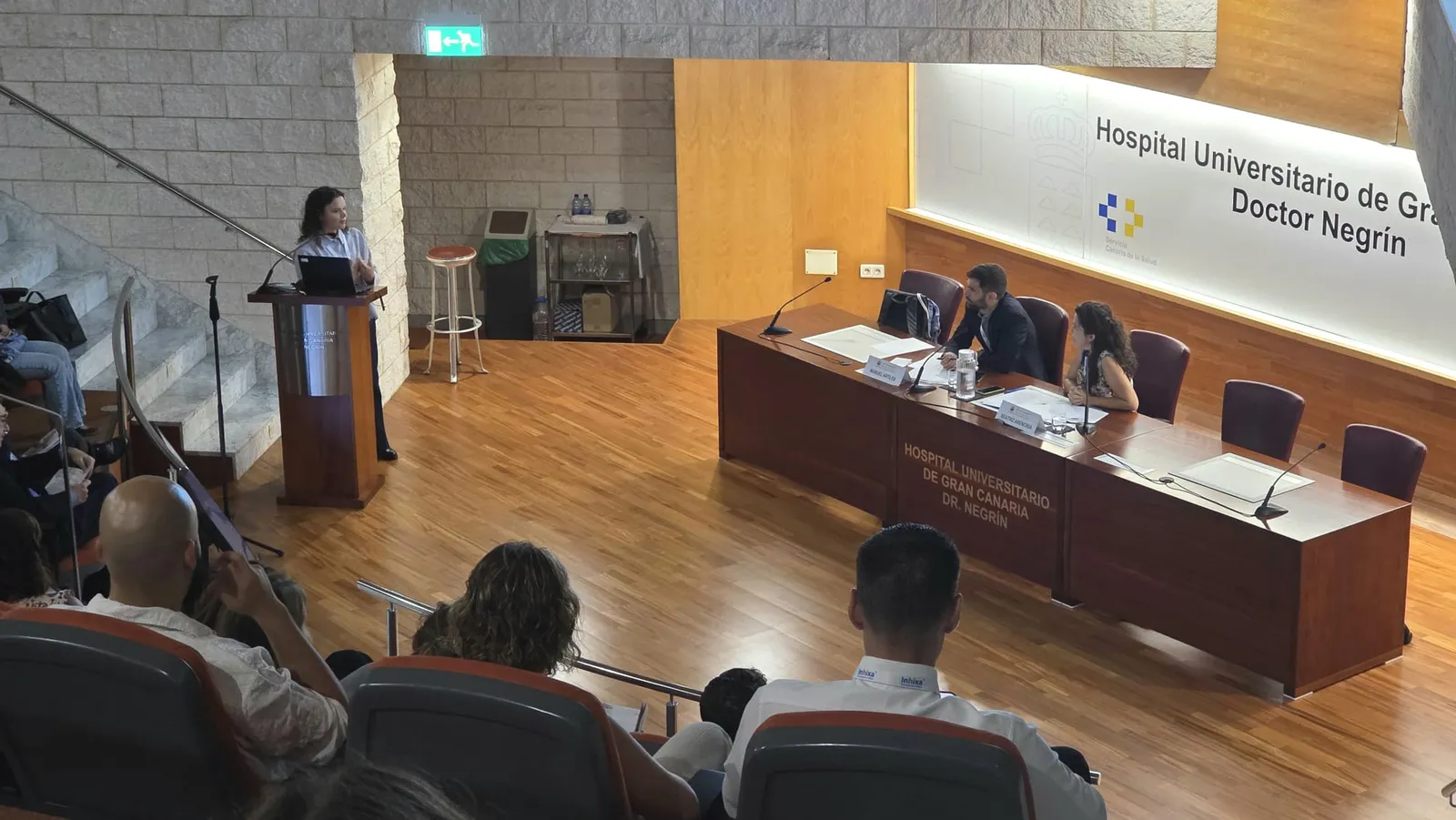
The Gran Canaria Doctor Negrín University Hospital, affiliated with the Canary Islands Government's Ministry of Health, is hosting the 25th Congress of the Canary Islands Society of Surgery. The event, taking place this Thursday, the 15th, and tomorrow, the 16th, at the hospital itself, will bring together over a hundred specialists from leading national hospitals such as the Gregorio Marañón General University Hospital, the Virgen del Rocío University Hospital, the Mataró University Hospital, and the Germans Trias i Pujol Hospital in Badalona. Professionals from other centers within the Canary Health Service (SCS) will also participate.
The congress features a diverse program including round tables, scientific communications, and debates on topics of significant interest. Among the highlighted content will be the management of retroperitoneal sarcoma, the application of artificial intelligence in surgery, and current indications for abdominal wall pathology, whether open, laparoscopic, or robotic. Another key focus will be the current situation of breast cancer and its multidisciplinary management.
The Breast Unit at the Doctor Negrín Hospital, part of the Surgery department, offers multidisciplinary care focused on excellence in collaboration with Plastic Surgery, Medical Oncology, Radiation Oncology, Radiology, Nuclear Medicine, Pathological Anatomy, and Laboratory services. Last year, the breast clinics attended to 5,113 patients, and so far in 2026, 4,227 have been seen. In 2025, 356 breast cancer surgeries were performed, and 326 this year.
Resident doctors will have a special role with a dedicated session where they will share their expectations for their residency period and their personal experiences, thereby fostering training and the exchange of experiences among professionals at different career stages.
The organization of this meeting provides an opportunity to strengthen collaboration among the surgery departments of Canary Islands hospitals, share clinical experiences, and promote the dissemination of scientific knowledge, driving continuous training and professional collaboration initiatives aimed at optimizing patient care, as well as teaching and research practices.