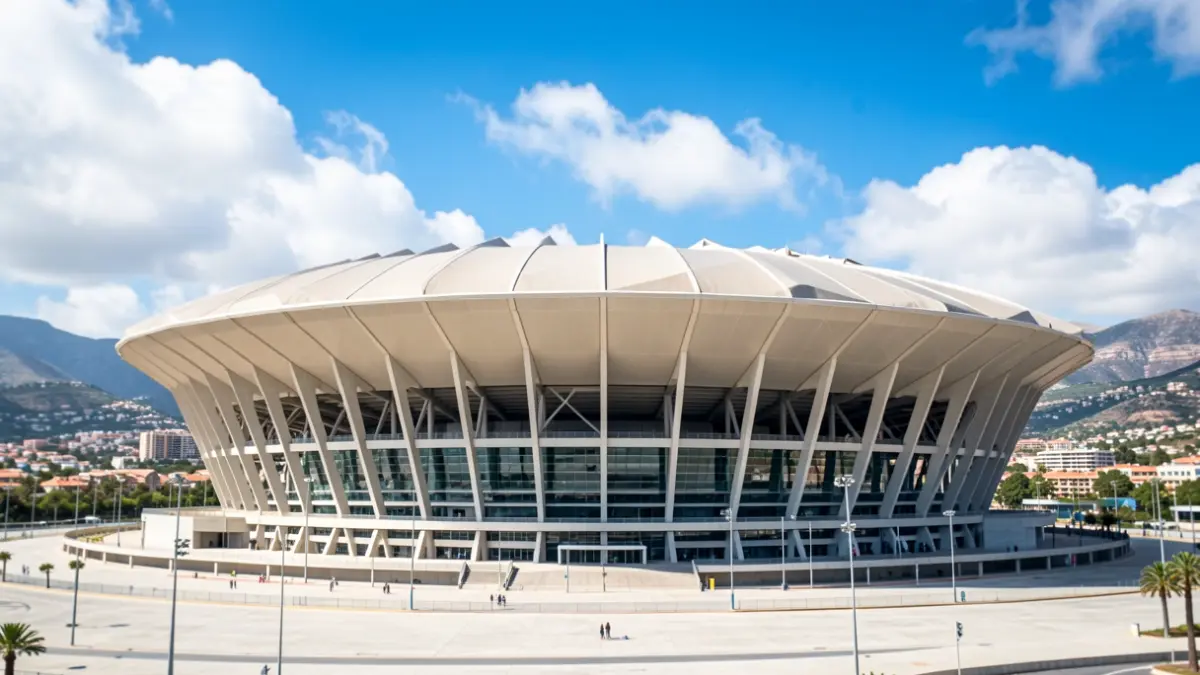
The Cabildo of Gran Canaria will again tender in the first fortnight of August for 234 million euros the project to execute the expansion and renovation of the Gran Canaria Stadium, under the name 'La Nube'. The aim is to create a strategic facility that will improve the island's economy, opportunities, and public space, with an eye on the 2030 Football World Cup.
To cover the budget increase compared to the previous tender of 174 million euros, 25 million euros from the Canary Islands Government and another 15 million euros from the Las Palmas de Gran Canaria City Council are being incorporated into the financing. These sums are added to the 60 million already committed by UD Las Palmas and the 134 million from the Cabildo itself. The Cabildo is also negotiating the economic involvement of the Spanish Government.
Both the President of the Cabildo, Antonio Morales, and the insular Minister of Sports, Aridany Romero, have highlighted that this roadmap meets FIFA's deadlines and requirements for World Cup venues. They thanked the institutional support for carrying out an infrastructure that will provide the island with a new dimension in sports, social aspects, and economic diversification.
Antonio Morales stated that the union of institutional forces to finance the work aligns with the spirit of Gran Canaria's candidacy as a World Cup host, a collective project that has secured 100 million euros in funding from public and private entities. He added that investing in the Stadium is investing in the Gran Canaria of future generations.
The modernization of the stadium, which aims to close the 'wound' of an unfinished facility, is part of the current Island Government's program. The selection of Gran Canaria as a host for the 2030 World Cup is considered a collective success symbolizing the region's capacity to face large-scale challenges.
The international ideas competition was won by the prestigious architecture firm L35 with its 'La Nube' proposal. Soil conditions led to an increase in the initial investment from 114 million to 174 million euros. Following the first tender being declared void, and amidst global economic complications, including increased prices for steel, aluminum, concrete, and specialized labor, a new tender process with an updated budget of 234 million euros has become necessary.