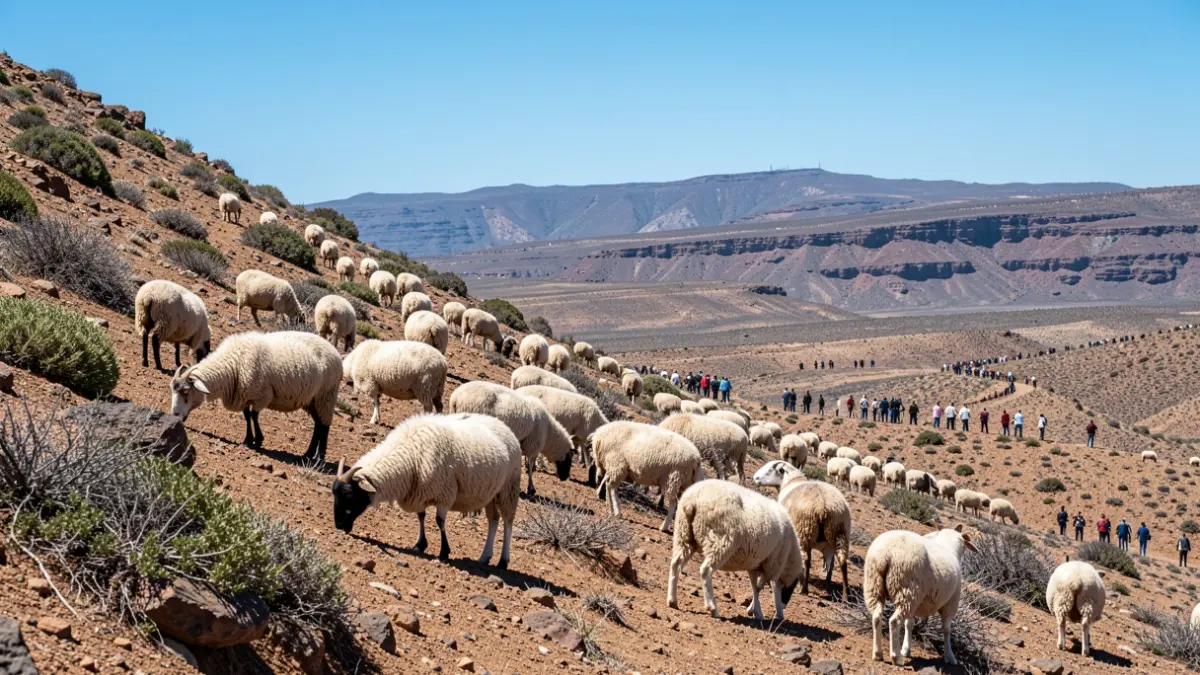
The 'Gran Canaria Mosaico' initiative by the Cabildo of Gran Canaria has awarded public grazing areas for the 'Gran Canaria Pastorea 2026' program. The objective is to prevent forest fires by reducing vegetation in public forests and ravines.
In this edition, 40 livestock families will participate in managing areas strategically important for fire prevention. The action of the so-called 'firefighter sheep and goats' aims to reduce the combustible vegetation biomass during the highest-risk months.
Promoted by the Department of Environment, Climate, Energy, and Knowledge, the program has a maximum budget of 115,245.79 euros and will manage 2,481 hectares. The 2026 call represents a 9.3% increase compared to the previous year, with 52 lots awarded and new operational areas.
The Minister of Environment, Raúl García Brink, highlighted the consolidation of controlled grazing as an effective tool for fire prevention and support for the traditional livestock sector.
Shepherds will receive economic compensation based on the hectares grazed, the type of vegetation consumed, and the strategic importance of the land, with amounts ranging from 40 to 180 euros per hectare.
This model, pioneering in the Canary Islands and recognized by Europarc-España, marks five years of implementation through payment for environmental services.
To ensure controlled grazing, the Cabildo provides GPS collars to goats and sheep, and a Gesplan team carries out brush clearing and places protections on young trees to reconcile grazing with forest regeneration.
Through this initiative, the Cabildo strengthens the prevention of major forest fires and promotes a more diverse, inhabited, and resilient territorial model, where traditional livestock activities help curb the spread of fire.