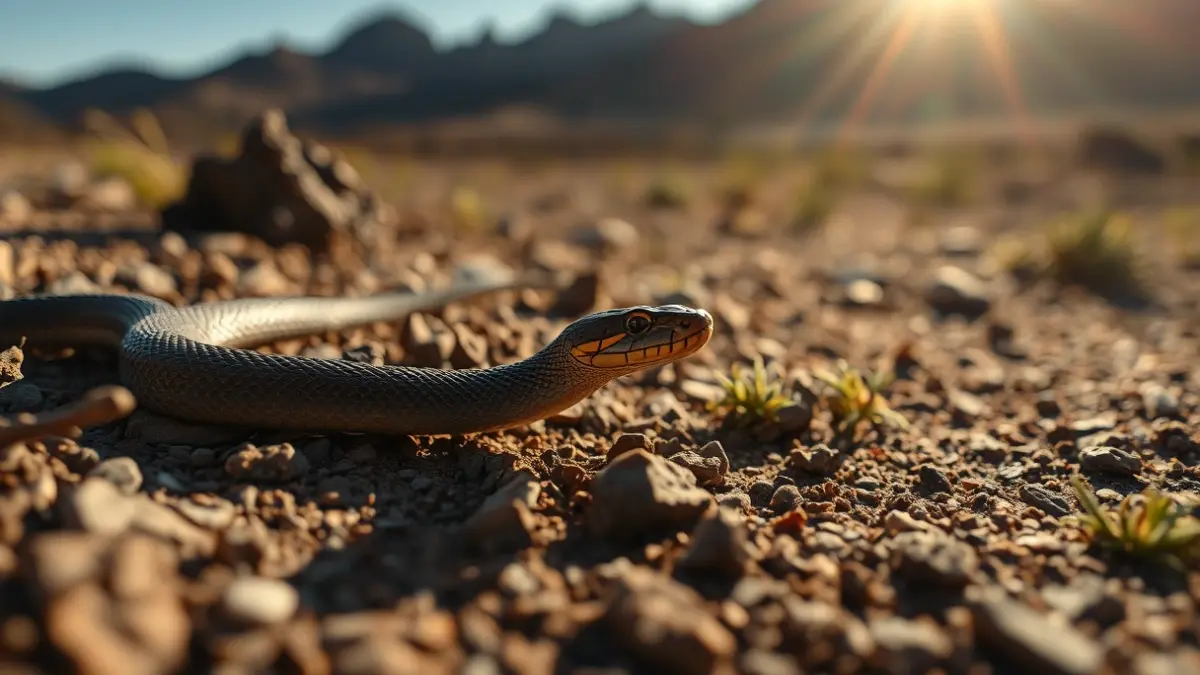
Although the unusual cold of the first months of the year slowed down the activity of this invasive species, the arrival of humidity has caused a surge in sightings and captures. In the first days of May alone, 150 captures have been recorded, suggesting that this month could reach unprecedented figures.
“"It is likely that this May will be the historical month with the highest number of captures if the trend continues, because there is a lot of humidity."
An expert from the Stop Culebra Real project has described the situation as a “very serious environmental problem,” highlighting the difficulty of managing this animal that lives underground most of the time. Furthermore, its reproductive cycle is very effective, with clutches of between 10 and 20 eggs that ensure the continuity of the species even if the female is captured.
Despite not being venomous, the California kingsnake poses a devastating threat to the endemic fauna of Gran Canaria, such as the Gran Canaria giant lizard and the Gran Canaria skink, species that only inhabit the island. The absence of natural predators in the archipelago, unlike its original habitat in California, facilitates its expansion.
Upon sighting a snake, it is recommended to immediately contact 112 or the Stop Culebra Real project phone number (available via WhatsApp at 608 098 296). Personnel, operating from 7 AM to 9 PM during high season, can reach the location of the sighting in a short period. Information about sightings is crucial for mapping the spread of the plague.
The main foci of the plague are concentrated in Telde, Valsequillo, and Santa Brígida, although the species has already spread to other areas such as Montaña La Data in San Bartolomé de Tirajana, the Valle de Agaete, and the Guiniguada area in Las Palmas de Gran Canaria. Induced dispersion by vehicles, which involuntarily transport snakes to new areas, is one of the biggest current problems, as in their natural environment they usually do not move more than 500 meters in their entire lives.