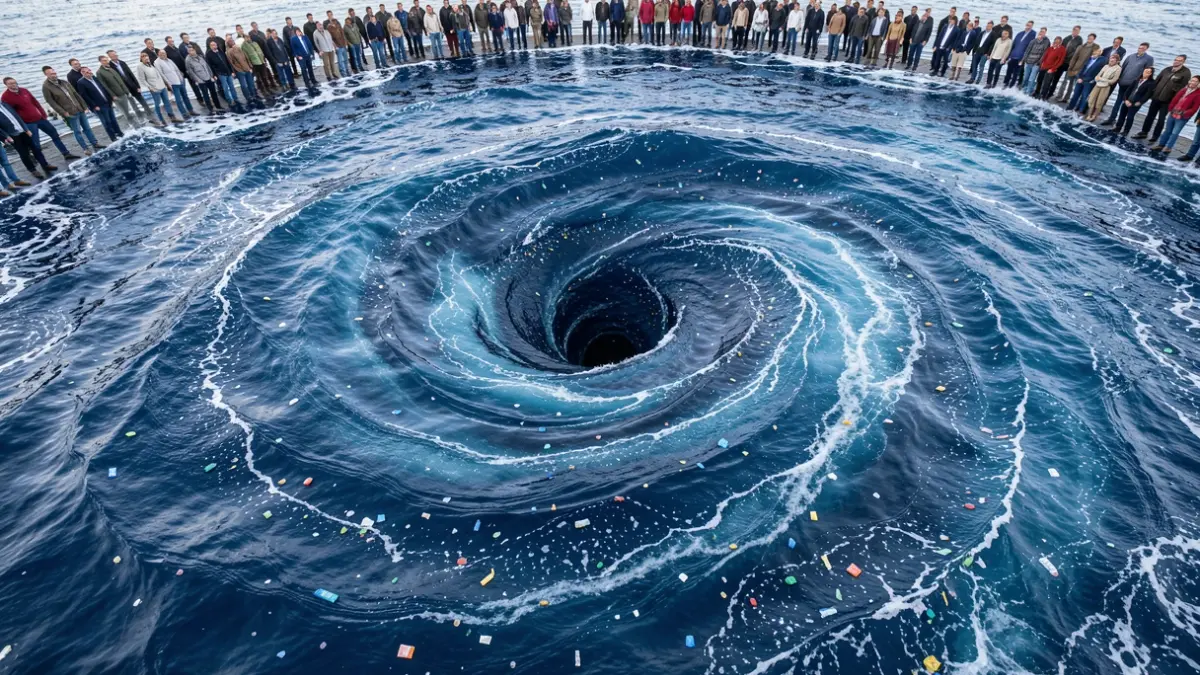
The study, conducted aboard the oceanographic vessel Ángeles Alvariño, focused on two mesoscale eddies located south of El Hierro. These enormous vertical oceanic structures, which can reach tens of kilometers in diameter, were sampled down to 1,200 meters depth to analyze the presence and type of microplastics.
Findings reveal that both eddies concentrated up to three times more microplastics in their upper 200 meters than the surrounding waters. It was observed that anticyclonic eddies (clockwise) primarily retained plastic fragments, while cyclonic ones (counter-clockwise) accumulated fibers, which is related to the theory of coherent vortices.
This work, published in the journal Scientific Reports by the Nature group, validates the use of a mathematical theorem to understand the vertical distribution of plastic pollutants. The results are relevant for environmental management and marine conservation in the Canary Islands, an area of high biodiversity and vulnerability.
The research team included scientists from the OFYGA group and the IU ECOAQUA at ULPGC, the Oceanographic Center of the Canary Islands, and the University of Miami. The project was supported by the Ministry of Science, Innovation and Universities, the Spanish Institute of Oceanography – CSIC, Promotur Tourism of the Canary Islands, and the European Union's Next Generation Funds.