The African Archaeological Review has published research shedding light on an archaeological mystery in La Palma. The study, led by Javier Velasco, Verónica Alberto, and Teresa Delgado, focuses on seven Benahoarite skulls showing signs of having been impaled and displayed, a practice unprecedented in the archaeological record of the Canary Islands or among the Amazigh peoples of North Africa.
These findings, dating from between the 10th and 15th centuries, represent 11% of the well-preserved Benahoarite skulls in museums. They were recovered from five different sites on the island, always in funerary contexts, suggesting a ritual practice widespread in time and space. Researchers rule out that these were war trophies or objects of scorn, practices common in other cultures, but which do not fit the evidence found.
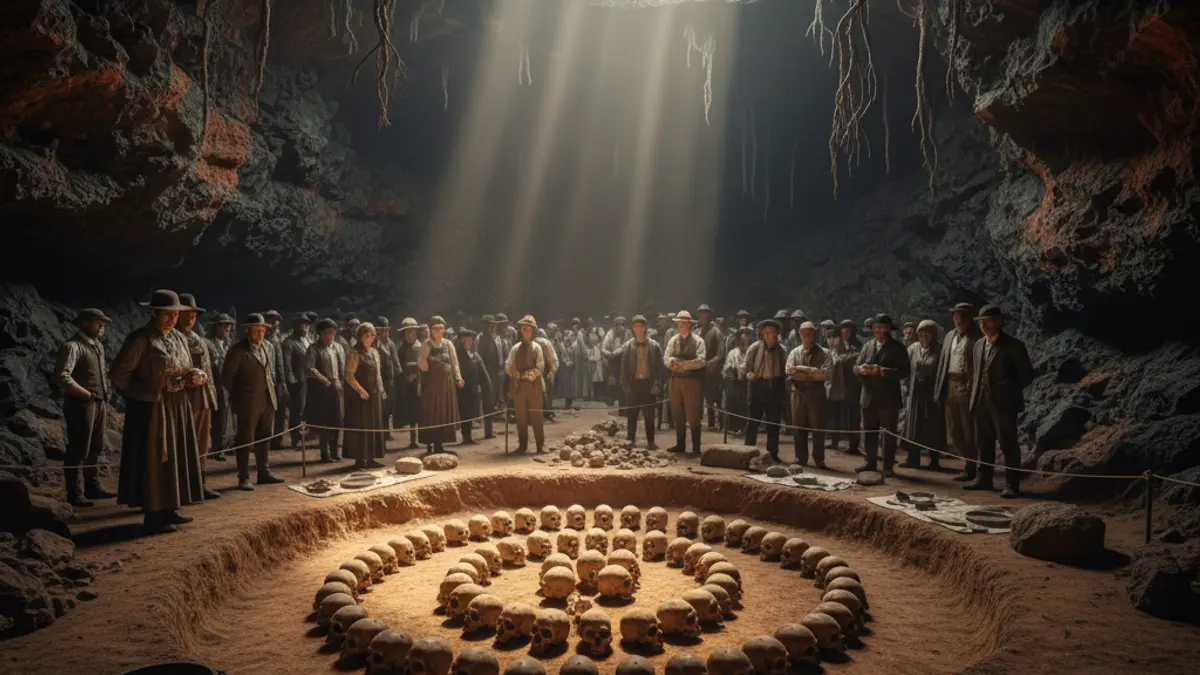
“"We found an opening or natural niche and in line three skulls or craniums inserted into three thin, roughly carved pine poles, about two meters high. At the foot of each of them, the bones of the legs and arms tied with herbs and tree bark. All done with art and great care. It struck all of us the veneration and respect that the primitive inhabitants of La Palma had for the remains of their ancestors."
Forensic analyses reveal that the individuals, men between 25 and 35 years old, were decapitated shortly after death, and their skulls perforated for impalement. A crucial detail is the presence of metallic blade injuries on one of the skulls, a material absent in aboriginal Canarian weapons. This fact suggests that the individual may have fallen in battle against outsiders, placing his death at the end of the 15th century, coinciding with the conquest of La Palma.
Experts suggest that placing these heads on long poles in funerary caves could have been a ritual to reinforce collective identity during a turbulent period like the Conquest, when the aboriginal world was collapsing. This special treatment in burial contexts would indicate the social importance of the individuals and the circumstances of their death.