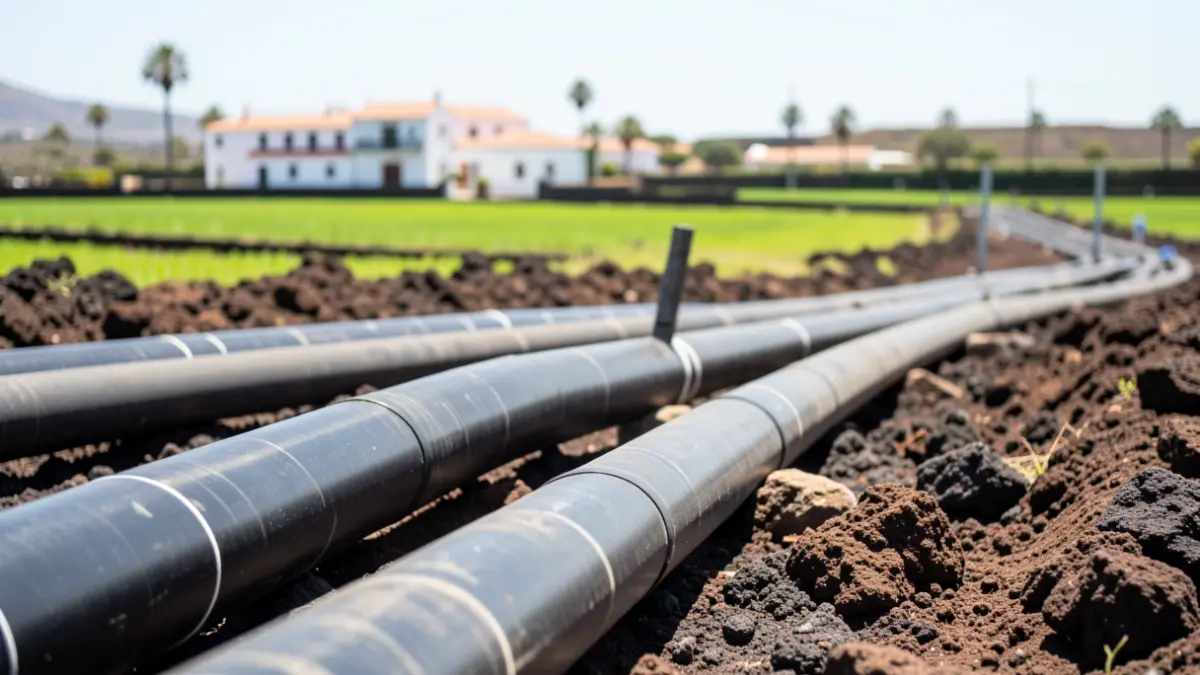
The Canary Foundation Biosphere Reserve of La Palma is working on the improvement of the General Canal La Palma I, a hydraulic infrastructure spanning 64 kilometers. The project involves an investment of over two million euros and aims to reduce water losses through the supply and installation of pipes.
The project will be developed in a six-kilometer section between Barlovento and Fuencaliente, and is crucial for ensuring the optimal use of the island's water resources. The intervention seeks to enhance system efficiency, limit leaks, and strengthen the island's water security, a priority in water management.
Once the pipes are supplied and stored, the Insular Water Council of La Palma will proceed with their use for the piping and repair works. This body plays a central role in water planning and management on La Palma, which relies on a complex network of intakes, reservoirs, and pipelines.
This investment promotes the modernization of hydraulic infrastructures and the reduction of losses, enabling better use of a scarce resource. It reinforces water security and the island's response capacity to challenges posed by scarcity, climate change, and damage from the Tajogaite volcano.
In some municipal systems, losses in urban supply networks can exceed 50%. Island-wide, 37% of water for public supply is unaccounted for, according to the current Hydrological Plan. Causes include physical leaks due to the poor condition of pipes, unmeasured consumption, and seepage from exposed transport infrastructure, exacerbated by the impact of the Tajogaite volcano.
Addressing strategic infrastructures like the General Canal La Palma I is fundamental for system efficiency. The new pipelines will reduce seepage and losses in a network that plays an essential role in the island's water balance.
The General Canal LP-II, measuring 64.73 kilometers, is the most important water transport infrastructure on the west side of La Palma, connecting the north with the southwest and distributing resources from northern reservoirs and galleries.
The action is part of a program focused on the socioeconomic and environmental recovery of the La Palma Biosphere Reserve following the volcanic eruption, with a grant from the Autonomous Body National Parks.
The president of the Cabildo of La Palma, Sergio Rodríguez, highlighted the importance of state funding for essential infrastructure recovery projects after the Tajogaite volcano eruption, emphasizing it as a structural investment.
The insular director of the General State Administration in La Palma, Carlos García, praised the support from the Government of Spain and the institutional coordination that improves the quality of life for the people of La Palma.