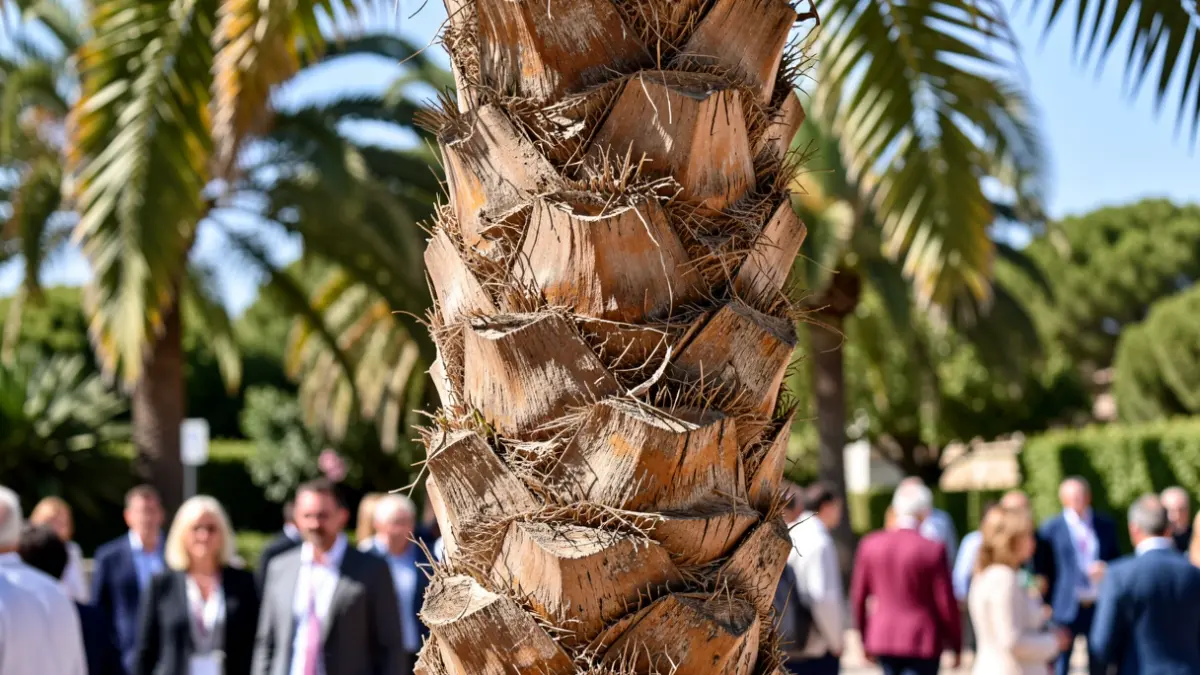
The exhibition hall El Aljibe in Haría hosted a meeting focused on the Canary Island date palm, where experts discussed its historical connection to the island of Lanzarote, its traditional applications, and the threats it faces.
Archaeologist María Antonia Perera Betancor began the lectures with a historical perspective on the exploitation of natural resources by the island's ancient inhabitants. Subsequently, Julie Genicot from the Macaronesian Association of Environmental Humanities, and a student of basket weaver artisan Eulogio Concepción Perdomo, detailed the artisanal practices and generational knowledge associated with the use of the palm in northern Lanzarote.
The potential of the palm in the primary sector was analyzed by expert José Pérez Dorta, promoter of Los Lajares, who examined the possibilities for utilizing its resources and its link to rural activities.
Regarding conservation, the threat posed by the pest Diocalandra frumenti was highlighted. Francisco Enrique Acosta Martín, representative of GMR Canarias, explained the insect's impact and the control measures planned for Lanzarote.
The event included an anonymous digital survey coordinated by Leticia Campanale of ADACIS, and an open forum for citizen participation to share reflections. The activity concluded with a guided tour and tree planting at the Los Lajares Agro-Environmental Farm.
The meeting was organized by ADACIS and Gesplan, with the collaboration of GMR Canarias, Los Lajares, the Macaronesian Association of Environmental Humanities, the Cultural Association Pueblo Maho, and Cicar.