Jesús Ramos, deputy spokesperson for the Gomera Socialist Group (ASG), has stressed the urgency of promoting energy storage systems across the Canary Islands' islands during a session of the Parliament's Ecological Transition Commission. The goal is to move towards a safer, cleaner, and more self-sufficient energy model, overcoming the current reliance on fossil fuels and the system's vulnerability.
During the appearance of the Canary Islands Government's Minister of Ecological Transition and Energy, Ramos emphasized that the Archipelago faces a historic challenge in transforming its energy matrix. He pointed out that simply installing more renewable energy is no longer enough; the crucial challenge lies in the capacity to store this clean energy for use during periods of low solar or wind production, or during peak demand.
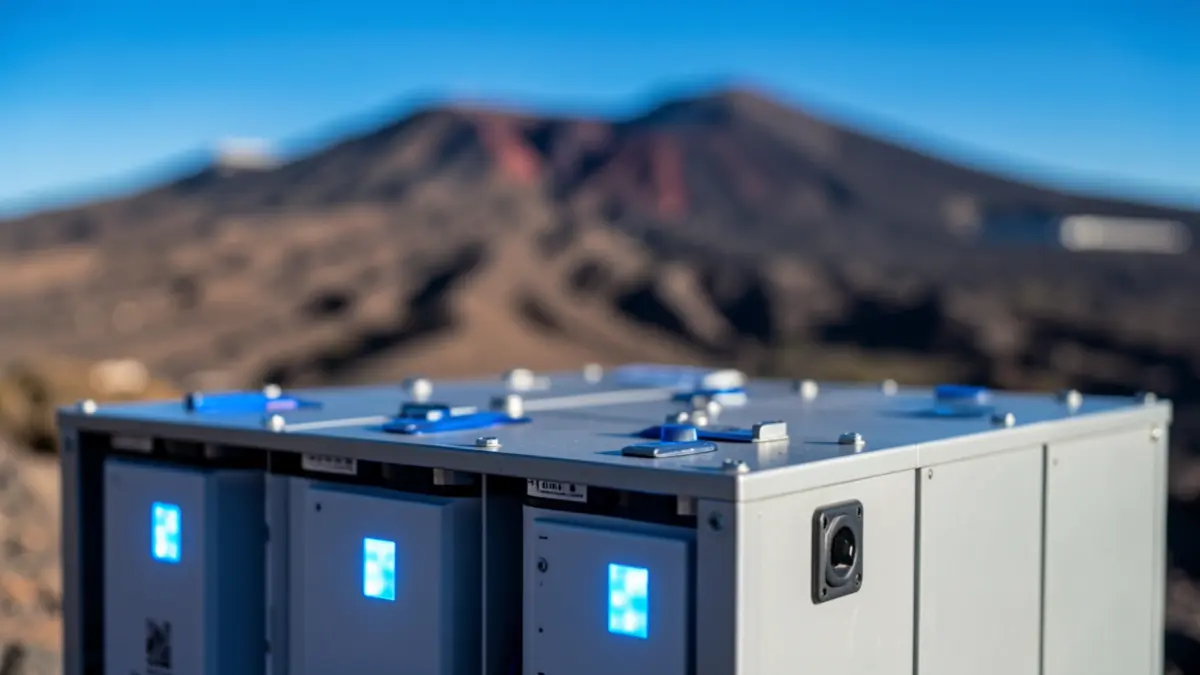
The parliamentarian recalled the isolated and fragmented nature of the Canarian electrical systems, making energy storage an indispensable strategic infrastructure. He positively assessed the Canary Islands Energy Storage Strategy for identifying this tool as key to flexibility, reducing renewable energy curtailment, and increasing the coverage of demand with clean energy.
Ramos cited data from the Ministry indicating a photovoltaic potential of over 11,200 megawatts on building rooftops in the Canary Islands. However, he warned that without associated storage systems, a significant portion of this energy would be wasted, and self-coverage would barely exceed 50% on any island.
"There is still a significant gap between the planning and the effective execution of projects," stated Ramos, who advocated for moving "from the planning phase to the implementation phase" as the top priority.
He underscored the need to avoid applying a "uniform recipe" to all islands, acknowledging their different energy realities. He mentioned that Gran Canaria could benefit from large-scale solutions like pumped hydro storage (Chira-Soria), while Lanzarote and Fuerteventura would require different approaches, such as distributed storage, batteries, or emerging technologies like renewable hydrogen.
Finally, Ramos acknowledged the over 700 million euros mobilized by the Recovery Plan for the energy transition in the Canary Islands. Nevertheless, he called for progress in legal certainty, administrative simplification, remuneration mechanisms for batteries and pumped hydro, and a stable economic framework to build investor confidence, concluding that "the Canary Islands have exceptional conditions to lead the energy transition in island territories" and it is time to "transform that planning into concrete realities."