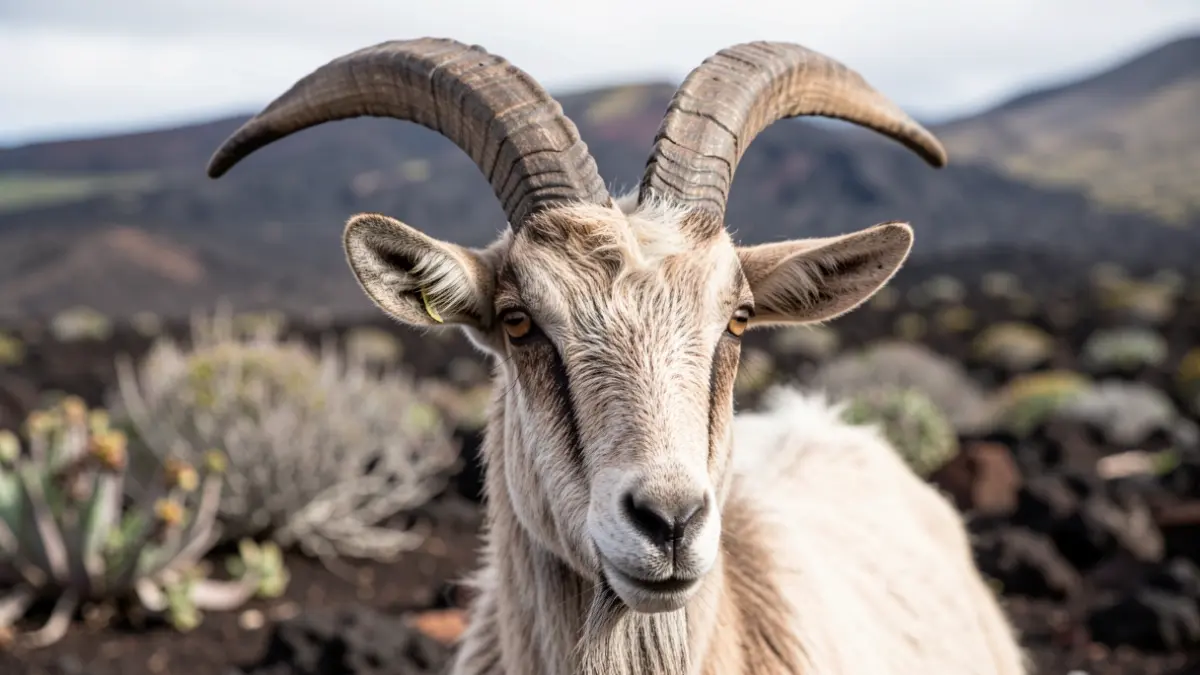
The doctoral thesis by Clara Díaz Pérez, presented at the University of La Laguna, demonstrates through ancient DNA analysis that the prehistoric Canarian goat has maintained astonishing genetic continuity from Roman times and the aboriginal period to the present day. This finding is significant for the archipelago's biological history and international genetics.
The study, which employed paleogenomics and bioinformatics techniques, confirms that the goat is the sole surviving member of the original "Neolithic package" (comprising pigs, goats, and sheep) that has remained virtually unaltered through the islands' profound historical and demographic changes. The research analyzed 344 samples from 33 archaeological sites, including remains from the Roman site of Isla de Lobos, establishing a timeline from the beginning of the common era.
Unlike the human population, whose genetics drastically changed after the Castilian conquest, the Canarian goat remained stable. Local goat breeds perfectly adapted to the island environment and its unique flora, exhibiting superior resilience to European breeds introduced later. Although there was a European genetic contribution after the 15th century, it became diluted over time, with natural selection favoring the aboriginal traits better suited for survival.
Dr. Díaz Pérez notes that these animals are "authentic biological time capsules," emphasizing that current goats are genetically identical to those brought by the ancient settlers. The research positions Canary Islands as a unique "laboratory" for global paleogenomics, offering a real approximation to Iron Age DNA from North Africa due to the scarcity of data on the African continent.
In contrast, the history of sheep presents a different scenario. The aboriginal "hair sheep," adapted to the semi-arid climate, did not thrive after the introduction of European "wool sheep" for textile economic interests, leading to the practical disappearance of the original breed. Today's sheep descend from specimens brought from Venezuela in the 1950s, which paradoxically were descendants of Canarian sheep exported to the New World centuries ago, completing a surprising genetic return cycle.