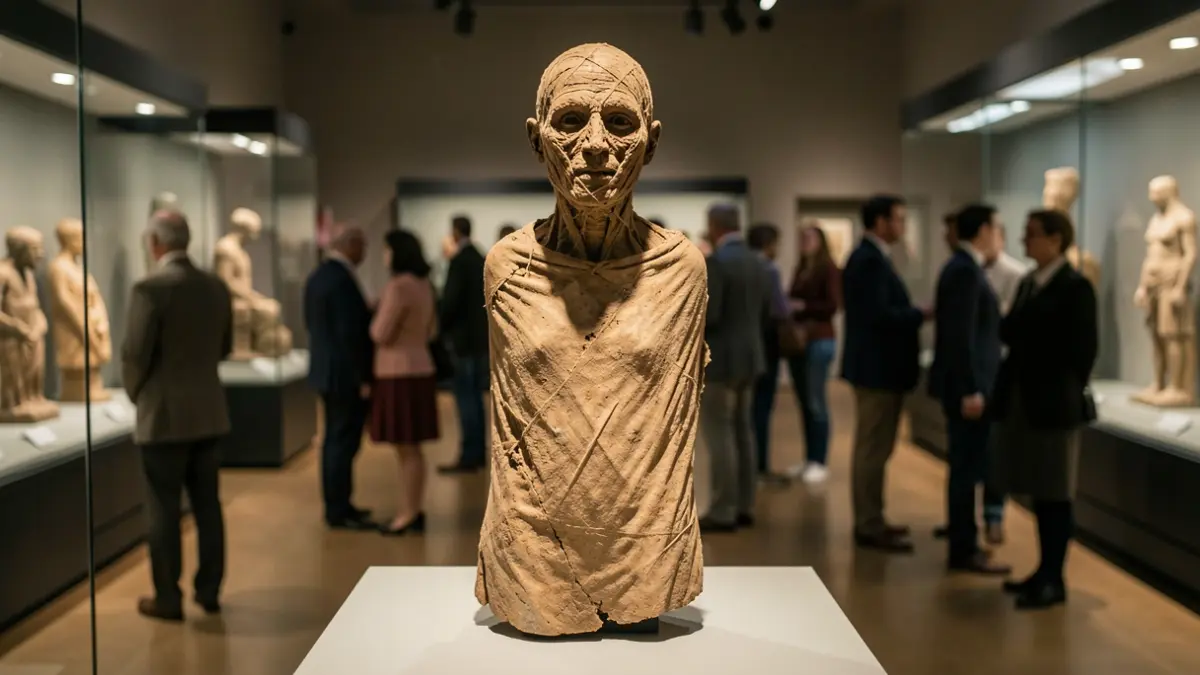
The Director General of Cultural Heritage of the Canarian Government, Miguel Ángel Clavijo, has sent a letter to his counterpart at the Ministry of Culture, Ángeles Alberto de León, expressing his disagreement over the lack of progress in returning the remains of an adult male, one of the island's first inhabitants, to Tenerife.
In the letter, Clavijo states that despite a written request sent last October, no response or information has been received regarding the mummy's conservation, transfer, or current location. The mummy is described as a good of "extraordinary fragility and sensitivity" and part of the "historical and cultural legacy of the Canarian people."
The regional executive finds the "absence of information over all these months" unacceptable, especially concerning human remains whose protection also falls under the Autonomous Community. The mummy, found in the Herques ravine, holds exceptional archaeological value, showcasing Guanche mummification techniques and the physical characteristics of these aboriginals.
In light of this situation, the Directorate General of Cultural Heritage has issued three specific demands: an updated report on the mummy's conservation and custody status; an institutional meeting in Madrid to discuss the situation and future collaboration lines; and authorization for a technical visit to assess firsthand the conservation and treatment conditions of the artifact.
Clavijo reminds that these human remains, declared a Good of Cultural Interest, are "one of the most sensitive and relevant testimonies of the archaeological heritage of the Canary Islands," emphasizing that transparency and inter-administrative collaboration should guide any action concerning a cultural asset of such historical and symbolic significance.
Both the Government of the Canary Islands and the Cabildo of Tenerife have been demanding the return of this mummy for years. It arrived in Madrid in the 18th century and has been housed in various institutions. The Museum of Nature and Archaeology (MUNA) in Santa Cruz de Tenerife already has a replica and the necessary resources for its study and conservation, but the original piece remains in the Spanish capital. The Canarian government is considering legal action due to the persistent lack of response.