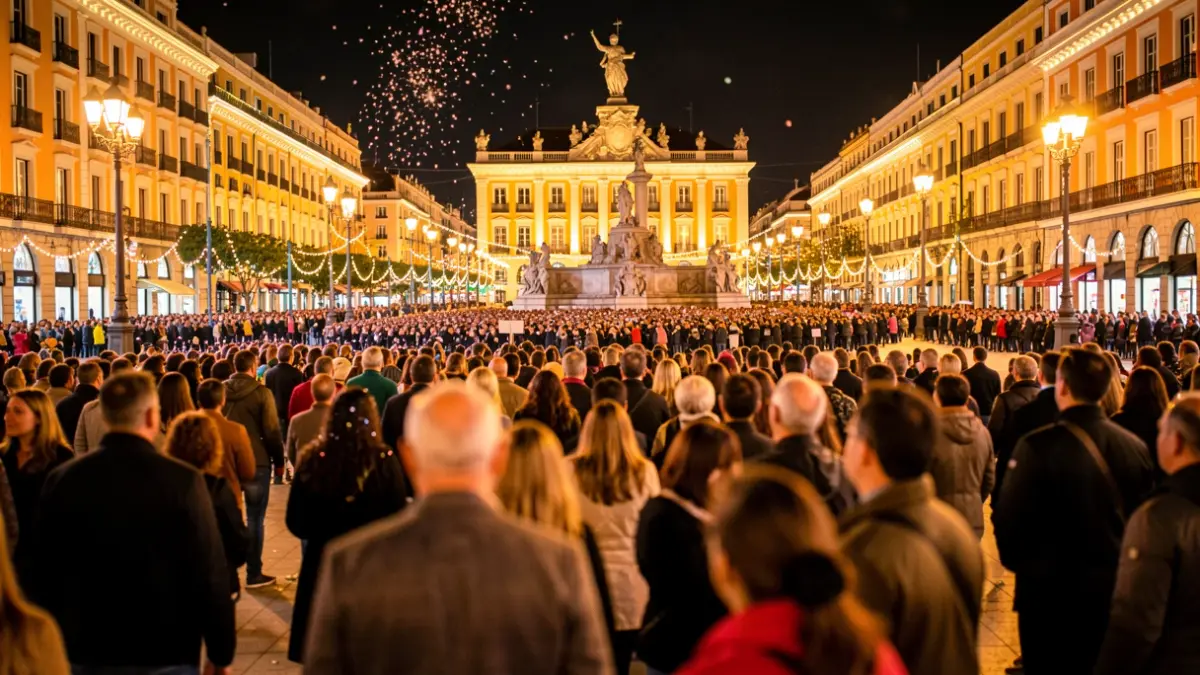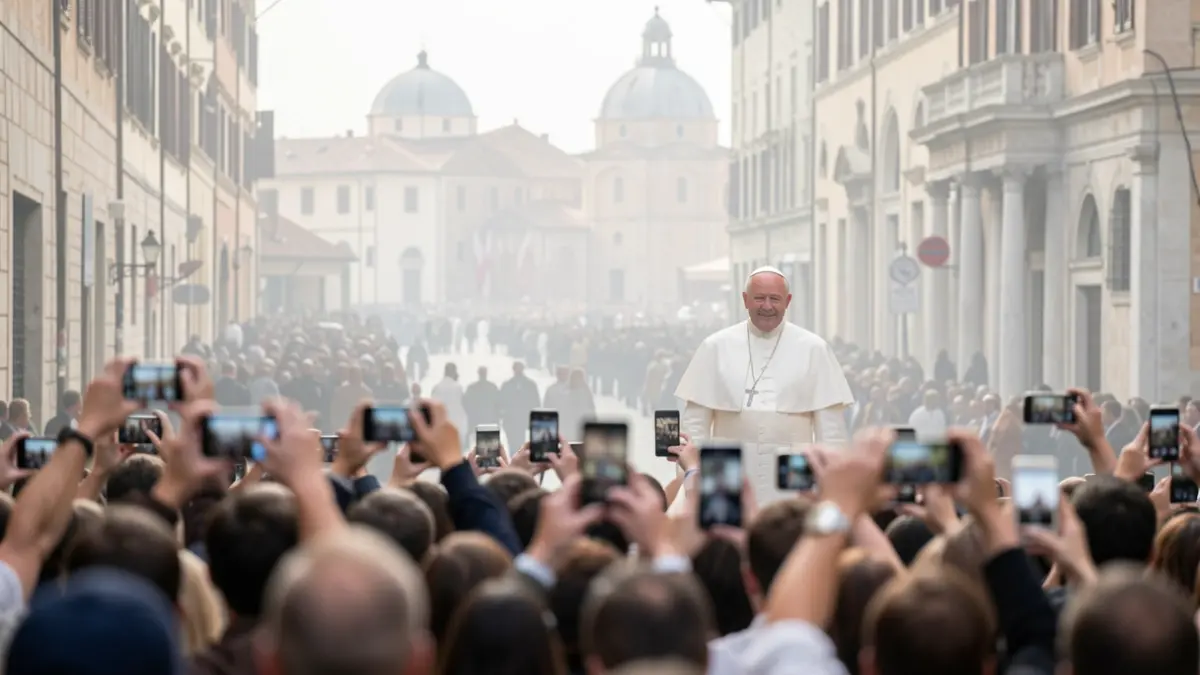
Pope Leo XIV's visit to Spain, including a Mass in Madrid's Cibeles Square on June 7th, coinciding with the Corpus Christi feast, marks a milestone in the history of papal presence. This event brings together devotion from different eras in a single scene: medieval pilgrimage, 20th-century mass liturgy, and 21st-century digital dissemination.
For centuries, approaching the pontiff required a pilgrimage to Rome, centered on the figure of Saint Peter and his tomb. The basilica built by Constantine in the 4th century over the sepulchre became a key destination for Christendom. Popes of that era rarely left the city, with Leo I the Great's encounter with Attila in 452 being notable, inspiring the current pontiff's chosen name, evoking the protection of the people.
Papal journeys, such as Urban II's to preach the First Crusade in 1095, were focused on governance and mobilizing Christendom. Devotion, however, flowed in the opposite direction, with faithful traveling to Rome. The first Jubilee, proclaimed by Boniface VIII in 1300, attracted hundreds of thousands of pilgrims with the promise of forgiveness, though the Pope remained a distant figure for most.
The 19th century intensified veneration. After the invasion of Rome in 1870, Pius IX secluded himself in the Vatican, declaring himself "prisoner." Concurrently, the First Vatican Council proclaimed papal infallibility, consolidating spiritual authority. The Catholic press and prints popularized his image. His successor, Leo XIII, laid the foundations for the Church's social doctrine with the encyclical Rerum novarum (1891).
The Pope's voice transcended borders with the inauguration of Vatican Radio by Pius XI in 1931, thanks to Guglielmo Marconi's technology. Pius XII expanded this reach with globally broadcast radio messages and was the first Pope to appear on television in 1949.
The definitive step was taken by Paul VI, who in 1964 made the first international papal air journey to the Holy Land. He continued to visit five continents, earning the nickname "pilgrim Pope." John Paul II elevated this practice to the core of his pontificate, traveling millions of kilometers and gathering immense crowds, such as during World Youth Days, where Masses sometimes drew several million people.
The comparison of the Pope to a "spiritual rock star," coined by critics like Terry Eagleton, describes the media dimension but omits the papacy's profound, millennia-old tradition. After stadiums, social media marked another transformation. Benedict XVI launched the @Pontifex account in 2012, becoming the first digital Pope.
Pope Francis continued this trend, launching his Instagram account in 2016 and reaching one million followers within hours. His relationship with the faithful became daily via smartphones, appearing in news, videos, and memes. In 2020, his messages garnered 27 billion views, and his Urbi et Orbi blessing during the global health crisis, broadcast worldwide, united millions through screens.
Leo XIV inherits this facet of a Pope from the technological era. His election in 2025 was the first of the TikTok era, and his Instagram debut mirrored Francis's phenomenon, surpassing one million followers rapidly. Currently, papal accounts collectively boast tens of millions of followers.
The history of papal devotion is the history of its forms of presence. Leo XIV's Mass in Cibeles encapsulates this evolution, demonstrating that while the medium, language, and form have changed, the fundamental impulse to see the successor of Peter up close remains intact.
This is an adaptation of the original article by Anna Peirats (Universidad Católica de Valencia), published in The Conversation. Read the original article here: The Conversation.