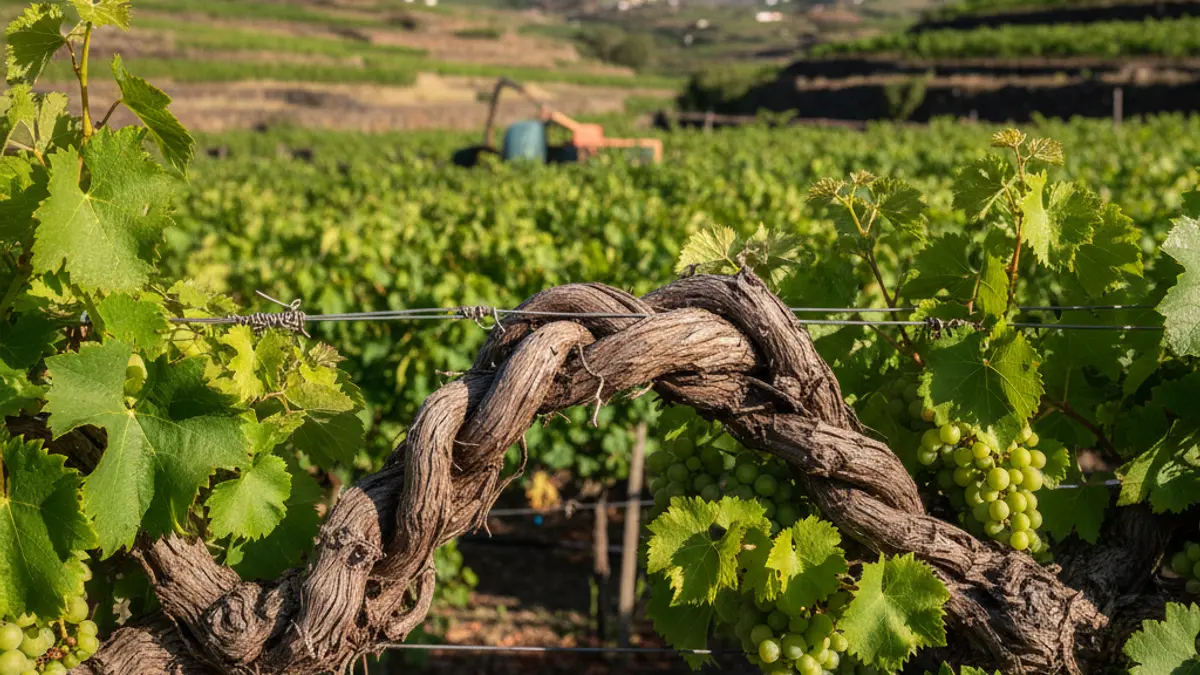
This viticultural system, considered unique globally, not only represents a functional agricultural method with significant landscape value but also a fundamental expression of the cultural identity of the Valle de La Orotava. Despite threats from less laborious cultivation systems, it remains the predominant method in over 70% of the active wine-growing operations in the region.
The administrative process for this recognition, which began in April 2024 with the initiation of the dossier by the Cabildo de Tenerife, has been supported by the municipalities of La Orotava, Los Realejos, and Puerto de la Cruz, as well as the Valle de La Orotava Designation of Origin. The favorable opinion from the Cultural Heritage Council, issued last Friday, marks the penultimate phase of this long journey.
The initiative to protect this technique dates back two decades, when the La Orotava City Council led the initial steps. Extensive research and documentation, including surveys of farms, interviews with winegrowers and winemakers, and coordination meetings with agricultural entities, have been crucial in gathering the necessary information. This effort culminated with the support of the agricultural community, which has preserved and transmitted the braided cordon from generation to generation.
The unique system involves arranging grapevines by intertwining shoots, braiding canes from different years to form a cordon elevated between fifty and eighty centimeters above the ground. Traditionally, these cordons were supported by heather wood forks, although in many cases, they have been replaced by metal bars. The planting cane is inserted directly into the soil, and new shoots are braided and tied with natural materials such as banana leaf sheaths or rush.