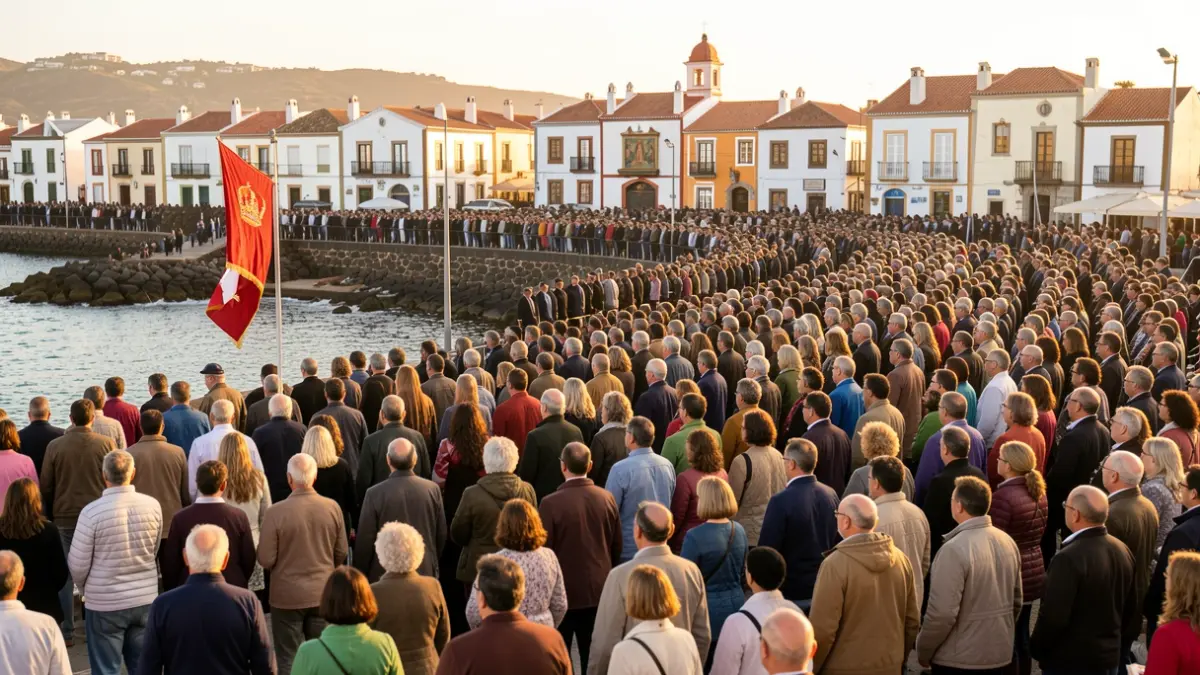
The Bishop of Tenerife, Eloy Santiago, conveyed the “noble affection” of the Canary people to Pope Leo XIV during the Eucharist that marked the end of his apostolic visit to Spain. “Pope Leo XIV is one of us, he is Canarian, and in these islands he will always have his home,” Santiago stated before the approximately 35,000 faithful gathered at the capital's port.
The bishop expressed the religious community's desire on the islands to build a Church that serves as “leaven” for a reconciled world, promoting “magnificent humanity” through respect for human dignity, the protection of fundamental rights, and integral human development.
Referencing the trip's motto, “lift up your eyes,” Santiago invited attendees to “look with hope” at the world, trusting in Christ's love to continue advancing in the task of evangelization. He defended the need to manifest faith through “acts of love” towards the poorest, especially migrants, and to contribute to a more just and fraternal society.
On behalf of the Nivariense Diocese, Eloy Santiago thanked Pope Leo XIV for his visit, the first by a Pontiff to the islands, which will undoubtedly remain “etched” in the hearts of a “faithful” people. “The Pope is one of us, we feel him that way and will remember him, Your Holiness. Pope Leo XIV is also Canarian and in these islands he will always have his home,” he added.
The Holy Mass celebration incorporated Canarian symbolism, including the image of the Virgen de Candelaria, Patroness of the Canary Islands, and the Santísimo Cristo de La Laguna. Reliquaries containing relics of the Canarian saints Hermano Pedro and San José de Anchieta were also present. Three cayucos, symbolizing the migratory drama, were placed in the Dársena de los Llanos.
In the morning, at the Las Raíces center, the bishop reminded the hosted migrants that they are “the most fortunate,” as thousands have not reached their destination and have lost their lives on the Atlantic route. He described this journey as “inhumane” and “precarious,” and argued that the drama of their flight from violence, fear, and dangers cannot leave them indifferent.