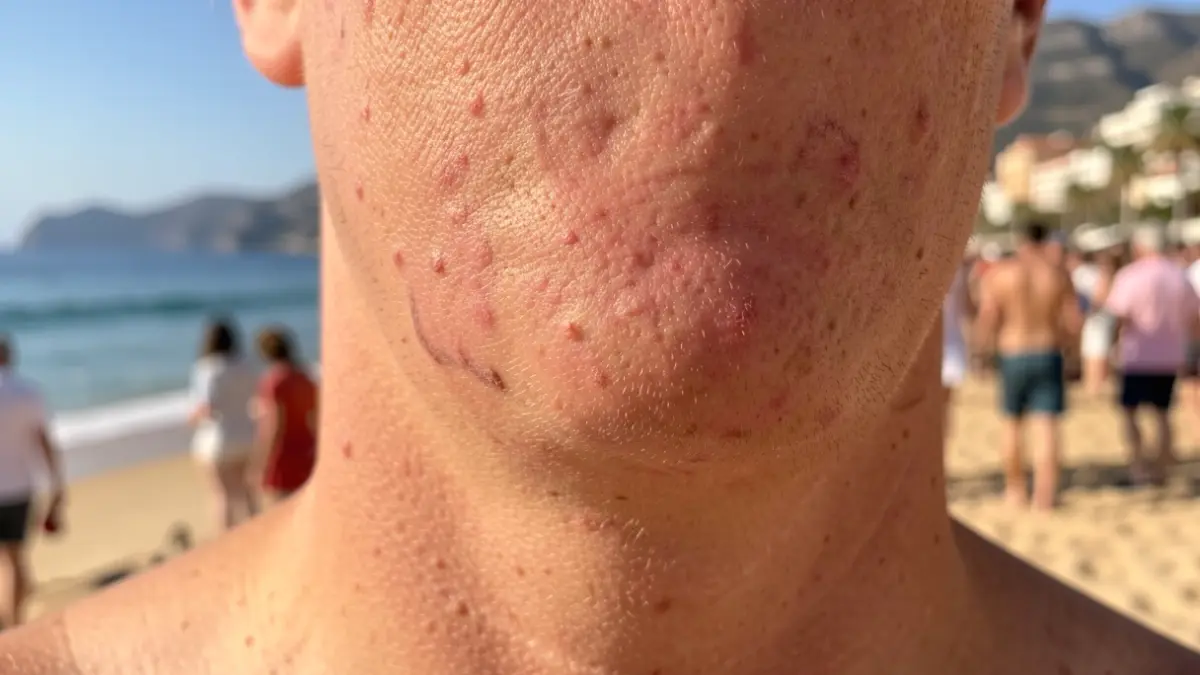
The growing concern about sun exposure intensifies with the arrival of good weather, but experts stress that skin care must be a constant throughout the year, especially in places like the Canary Islands, which record the highest solar radiation levels in Spain. The effects of sun exposure are cumulative and often imperceptible in the short term, but the skin cancer figures in the archipelago are stark: they have doubled since 2015.
In some areas of Tenerife, the increase in cases has been particularly drastic, reaching 208% between 2014 and 2022. Faced with this situation, dermatologist Ricardo Fernández de Misa, who recently chaired the 53rd National Congress of the Spanish Association of Dermatology and Venereology (AEDV), has called for calm and, above all, for education in prevention. He emphasizes the importance of understanding the risks without causing alarm and adopting preventive measures continuously.
Fernández de Misa clarifies that the rise in skin cancer cases is a global phenomenon, not exclusive to the islands, although the Canary Islands' figures are striking. "The skin cancer rate has skyrocketed, but this has happened worldwide," stated the specialist, adding that "there is no study that says there is more cancer here than in mainland Spain." The main objective is to raise awareness about the importance of daily sun protection, dispelling the notion that it is only necessary at the beach or pool.
The dermatologist emphasizes that daily sun damage, resulting from activities such as shopping, walking, or outdoor work, is a key factor. "I don't know exactly how much time we Canary Islanders spend at the beach, but I don't think it's more than 1% or 2% of our lifetime," he argues, pointing out that it is in the remaining 98% where protection is often lower. Therefore, he insists that sun protection should be an annual routine, using hats, appropriate clothing, and sunscreen on exposed areas.
Particular attention is paid to often-forgotten areas like the décolletage, whose thin skin suffers the consequences of the sun. The expert recommends extending facial sunscreen to this area daily. The skin remembers, and sun damage is cumulative. "You don't see the sun damage the next day or in a week, but within 5, 6, or 8 years, the effects of excessive sun exposure begin to appear," explains Fernández de Misa. Each sun exposure contributes to damaging the cell's DNA, and although the body has repair capabilities, accumulation can lead to uncontrolled cell growth and cancer.
Prevention is crucial in childhood, as sunburns in the early years significantly increase the risk of developing skin cancer in adulthood. Despite the severity, the message is one of hope: skin lesions are visible, and early detection leads to high cure rates. "Of all the melanomas diagnosed, 95% are doing great, let's say cured in quotes," assures the dermatologist.
The recommendation on when to start periodic dermatological check-ups varies depending on skin type. Studies suggest that in the United States, it is cost-effective from the age of 56, the average age of melanoma diagnosis, but an individualized assessment by a specialist is ideal to determine the necessary frequency.