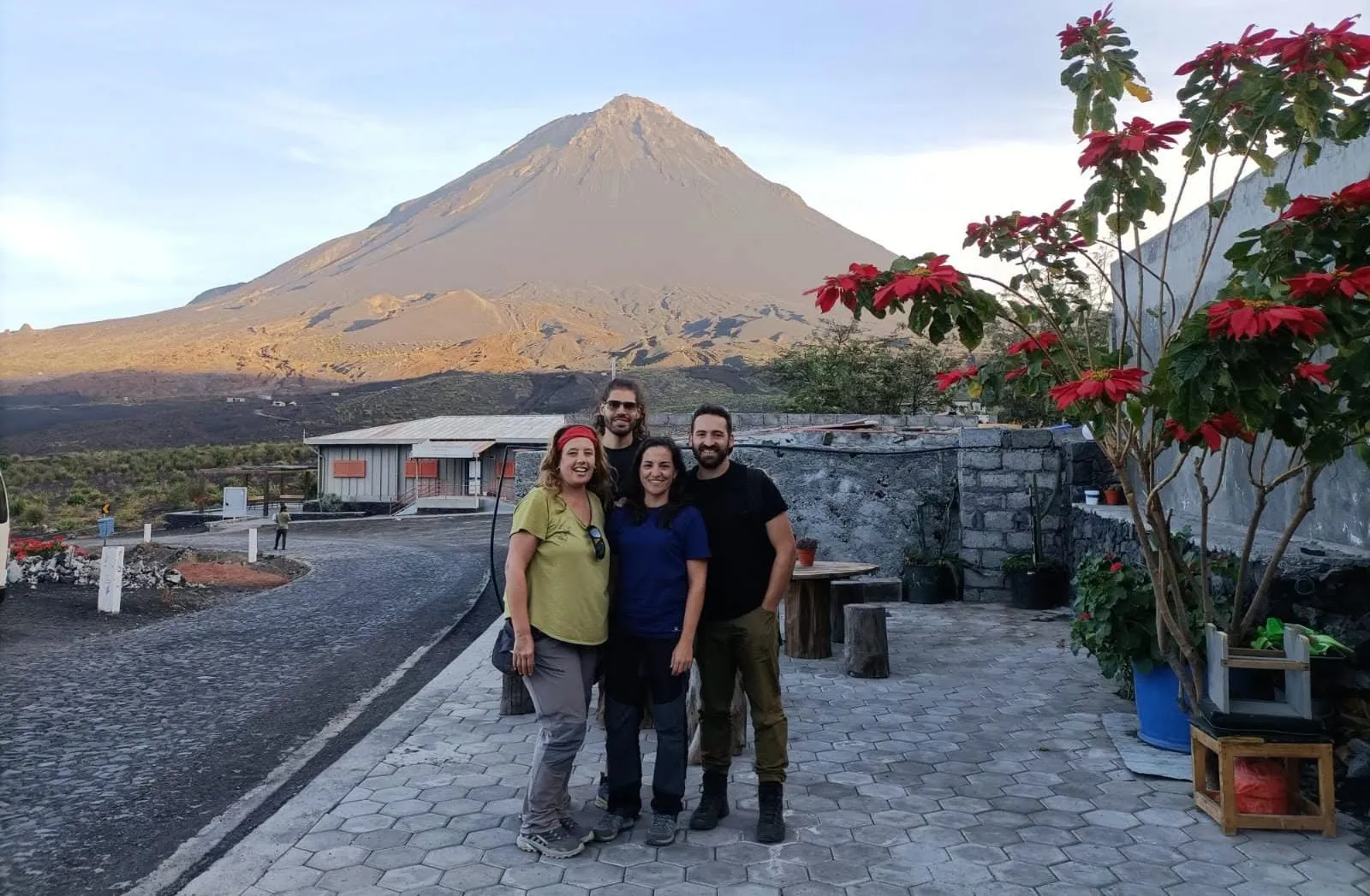
The campaign, which began on 15 November, aims to advance the characterisation of the island's geothermal potential through various geophysical and geochemical techniques. The work is part of the project 'Strengthening R&D&I capacities for the development of geothermal energy in Macaronesia and Sao Tome and Principe' (GEOTERMAC), co-financed by the European Commission's INTERREG VI-D Madeira-Azores-Canarias (MAC) 2021-2027 Territorial Cooperation Programme.
The work is organised around three lines of research. The first is seismic tomography using ambient seismic noise, for which the team installs 10 seismic stations that will remain operational for approximately three months. These data will provide information on the subsurface structure and help identify structures favourable for geothermal exploration.
The second line is gravimetric prospecting, where the team takes relative gravity data at 27 observation points distributed across different sectors of the island. The third line focuses on geochemical research of the volcanic-hydrothermal emissions from the Pico do Fogo crater, characterising gaseous emissions to estimate the temperature and pressure conditions of the geothermal system feeding them.
The campaign has the support of the presidents of the Municipal Chambers of São Filipe, Mosteiros and Santa Catarina do Fogo, as well as representatives of civil society. INVOLCAN, an entity of the ITER group, leads the project, which also includes partners from the Azores, Madeira, Sao Tome and Principe, and Italy.
GEOTERMAC plans two further scientific campaigns in Fogo, likely in March 2027 and March 2028, to continue the research initiated in this first intervention.