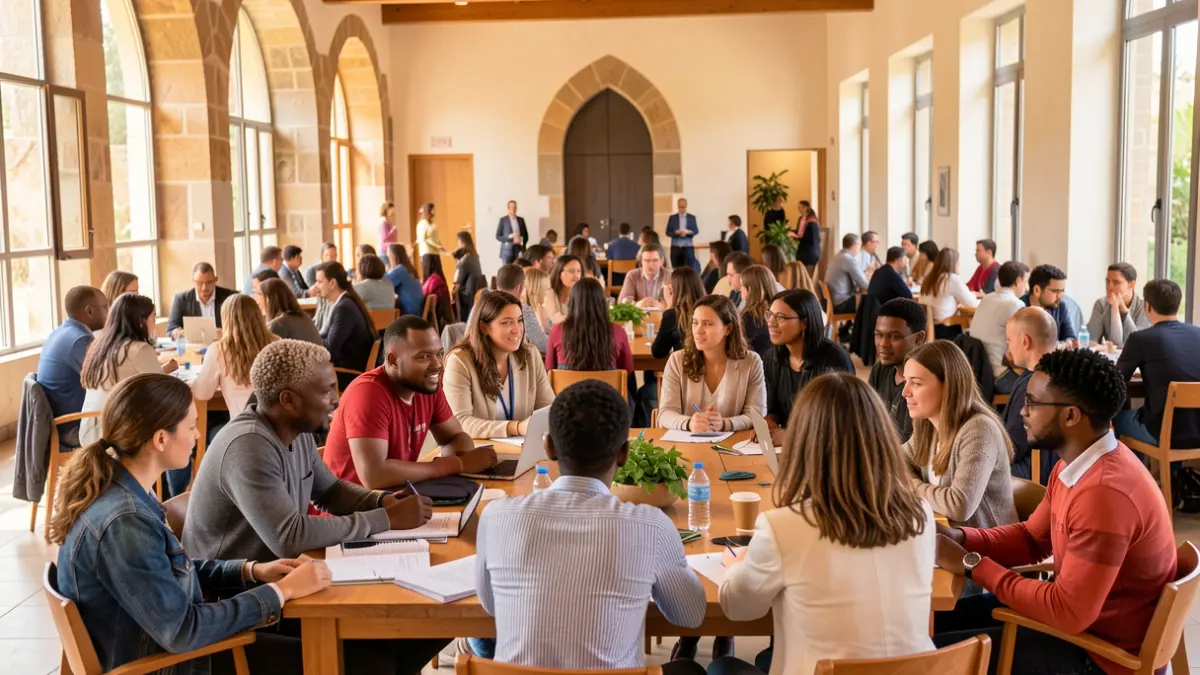
The University of La Laguna (ULL) has successfully concluded its participation in the Erasmus+ KA171 project for the 2023 call, developed under the LiderAfrica consortium. This international cooperation initiative aims to strengthen academic and scientific relations between Spanish and African universities through the mobility of students, teaching and research staff, and technical and administrative personnel.
The LiderAfrica consortium comprises the Spanish universities of Cádiz, Huelva, Las Palmas de Gran Canaria, and the University of La Laguna itself, with the strategic collaboration of Casa África to foster institutional relations between the two continents.
During the project's execution, the ULL collaborated with African institutions such as the Universidade de Cabo Verde, the Universidade Técnica do Atlântico, the Universidade Jean Piaget de Cabo Verde, the Université Assane Seck of Ziguinchor (Senegal), the University of The Gambia, the Université Alassane Ouattara (Ivory Coast), the Université de Nouakchott (Mauritania), and the Namibia University of Science and Technology.
A significant outcome has been the hosting of 18 African students at the University of La Laguna for academic stays at undergraduate, master's, and doctoral levels. These mobilities have covered diverse fields including agricultural engineering, technical architecture, education, humanities, sciences, social sciences, communication, economics, business, tourism, and cultural heritage management.
The students' origins, with participants from Cabo Verde, Senegal, Ivory Coast, Namibia, Gambia, and Mauritania, reflect the project's regional scope and contribute to the internationalization of the ULL campuses, fostering the exchange of knowledge and best practices.
In addition to individual mobilities, the project has organized joint activities such as the Staff Week held at the University of Cádiz in 2024, focused on international mobility management, and another planned for Zanzibar (Tanzania) in 2026, concentrating on institutional capacity building and cooperation.
These activities have helped establish a stable cooperation network, promoting the exchange of best practices in internationalization and identifying new opportunities for academic and scientific collaboration.
The ULL's participation in LiderAfrica aligns with its institutional internationalization strategy and its commitment to the Sustainable Development Goals of the 2030 Agenda, promoting international partnerships and inclusive, quality higher education.
Upon completion of this project, the University of La Laguna reaffirms its role as a key partner in European-African university cooperation, continuing to promote initiatives based on collaboration, mobility, and knowledge exchange.