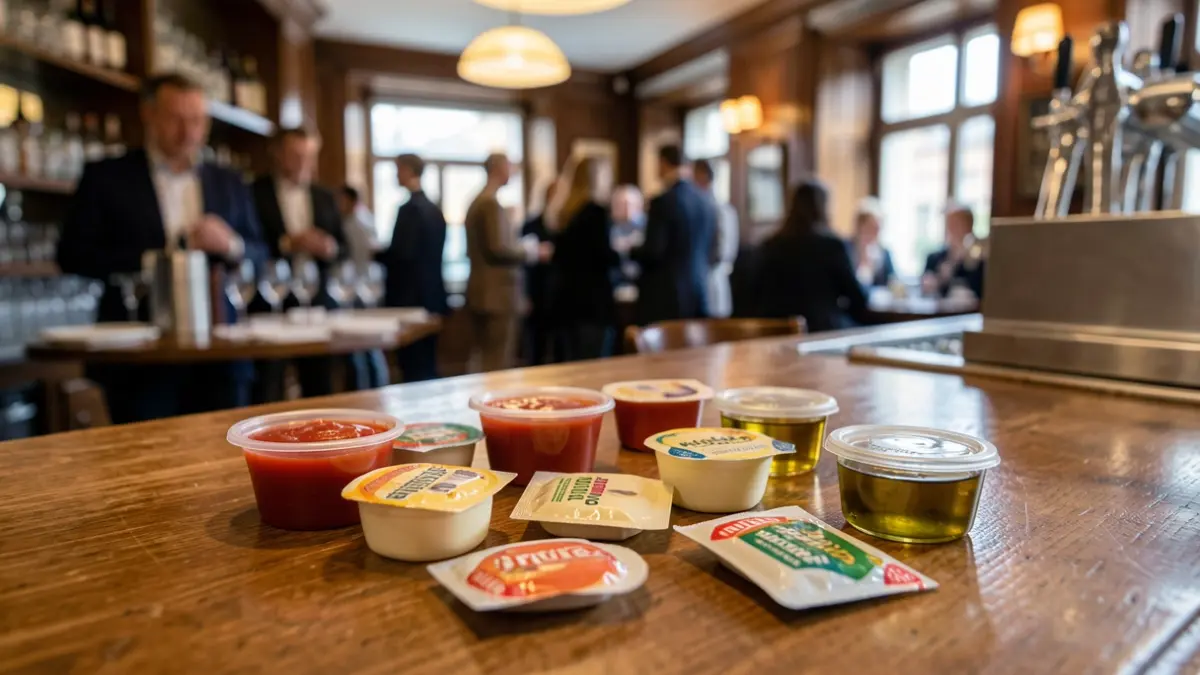
Regulation (EU) 2025/40 on packaging and packaging waste (PPWR) aims to reduce plastic waste generation and promote a circular economy. The measure will affect common products like individual sachets of ketchup, mayonnaise, oil, and vinegar, which must be replaced by reusable dispensers or refillable bottles.
This initiative responds to Brussels' concern over the high percentage of plastic consumed in the EU originating from packaging, much of it single-use. Single-serving items, due to their small size and food residue, are difficult to recycle and often end up polluting the environment. Fast-food restaurants will be among the most affected sectors.
There are important exceptions: individual sachets can still be used for take-away orders. Hospitals and residences, for hygiene reasons, maintain a specific regime. Paper sachets for sugar or salt are also unaffected. Furthermore, the temporary use of certified compostable plastic single-serving items will be permitted in countries like Spain.
The regulation will also impact hotels, which will need to replace small shampoo and gel bottles with more sustainable alternatives, such as refillable dispensers. The regulation introduces new obligations for manufacturers, including the EU Declaration of Conformity and stricter Extended Producer Responsibility (EPR).
Certain chemical compounds, such as PFAS, used in food packaging are also prohibited. The goal is for all packaging sold in the EU to be economically recyclable by 2030. For the hospitality sector, this will involve investments in new service systems and increased control over the cleaning of shared dispensers, a shift from the widespread use of single-serving items for hygiene post-pandemic.