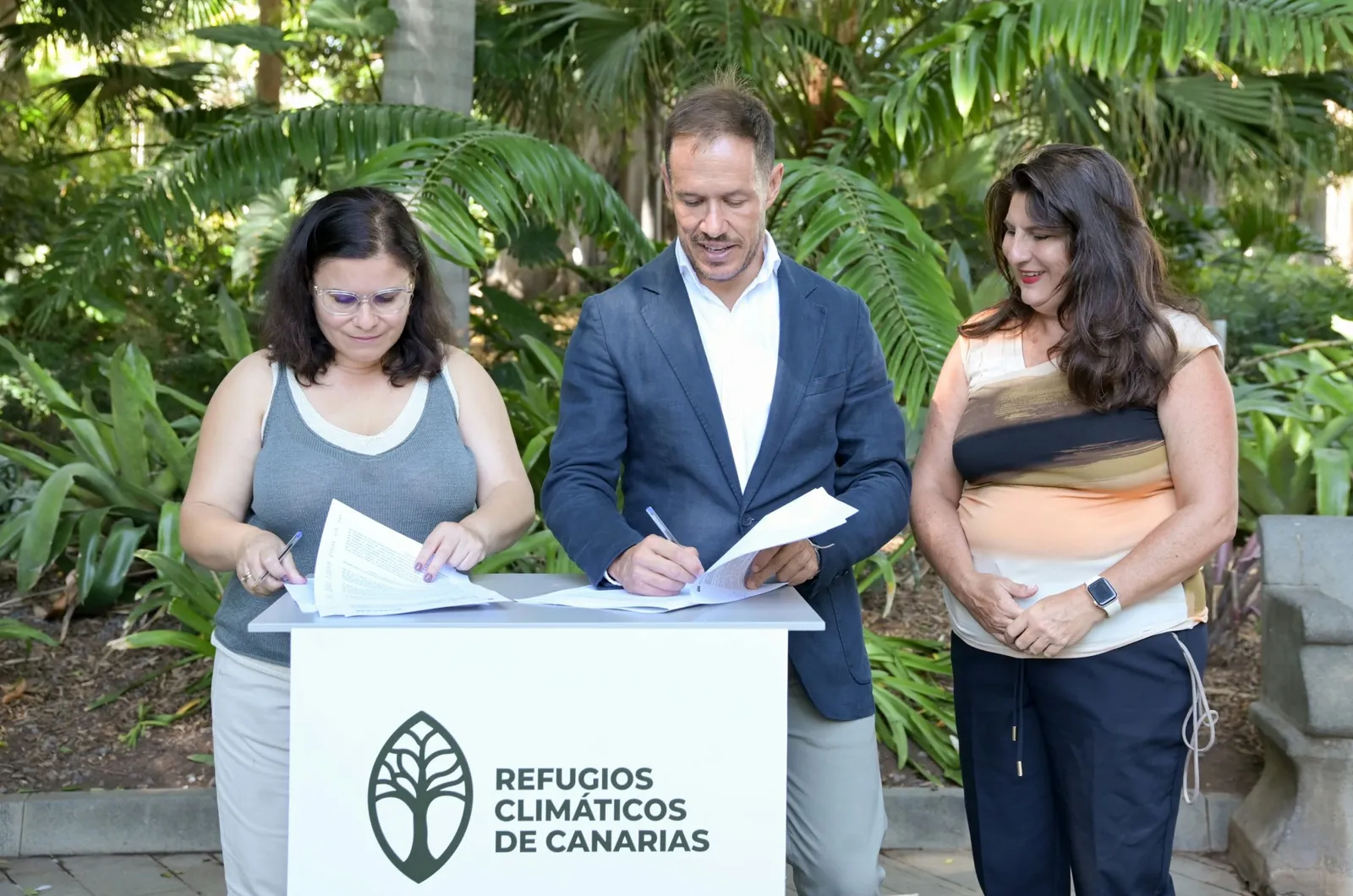
This pioneering agreement marks the first step for municipalities to authorize the publication of their public spaces, such as parks and community centers, on Grafcan's cartographic viewer. The objective is to provide citizens with useful information for protection during extreme heat episodes, identifying safe and comfortable locations.
The Minister of Ecological Transition and Energy, Mariano H. Zapata, highlighted the initiative's importance within the climate change adaptation strategy. "It is essential to identify available refuges throughout the archipelago based on technical and homogeneous criteria," he stated, emphasizing that the tool will be useful for protecting the most vulnerable population.
The president of FECAM, María Concepción Brito, noted the Federation's commitment to this fight against climate change, calling the protocol "another step in applying public policies against an evidence we can no longer ignore." She thanked the Vice-Ministry for Ecological Transition for its impetus and called for funding to maintain and expand the network.
The Vice-Minister of Ecological Transition, Julieta Schallenberg, explained that the strategy aims to adapt urban spaces in the Canary Islands to rising temperatures, collaborating with municipalities, island councils, and the private sector. Municipalities are being supported with recommendation guides, and specific actions are being promoted, such as those carried out at the Piedra Hincada Sustainable Park (Guía de Isora) and projects in Los Realejos, San Bartolomé de Tirajana, Puerto de Tazacorte, and Santa Cruz de La Palma.
The Canary Climate Refuge Network is conceived as a constantly growing initiative, with over 1,000 field visits conducted and an estimated 250 potential refuges. Refuges are defined as urban spaces offering better temperature, humidity, and air quality conditions, especially for the elderly, children, and workers exposed to high temperatures.
Technical criteria establish requirements for indoor refuges (free access, drinking water, rest areas, restrooms, maximum temperature of 25°C) and outdoor ones (accessibility, shaded rest areas, vegetation cover over 75% for areas larger than 2,000 m²).