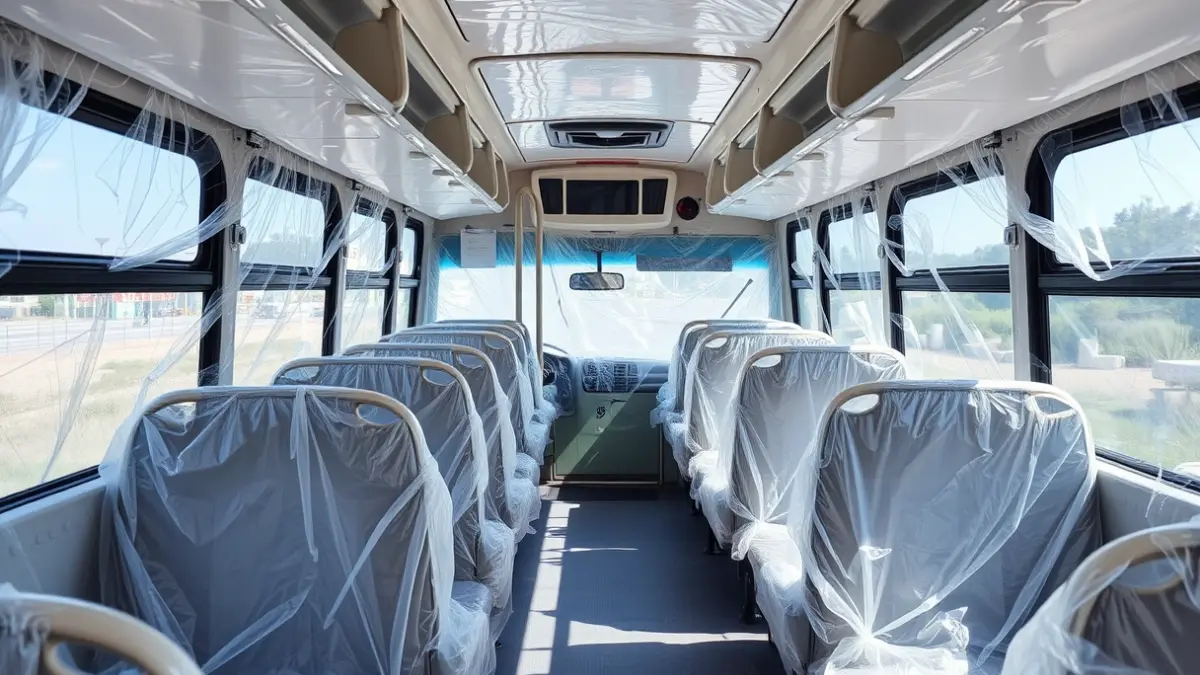
These vehicles, which have surprised drivers on the highway, are part of a special operation for the safe transfer of cruise passengers, aiming to make road transport a completely risk-free environment.
The interior of these buses has been radically transformed. The traditional cabin has been replaced by a sterile environment, where every surface, from seats to handrails, is completely covered in plastic. This measure facilitates quick and effective disinfection, preventing the presence of pathogens.
Despite their size, the capacity of each bus is limited to 15 people, a restriction imposed to ensure passengers maintain a safe distance of two meters. The journey, which lasts approximately ten minutes, is carried out without air conditioning, a protocolary measure to prevent the dispersion of aerosols and viral particles. This means occupants must endure the island's southern temperatures equipped with their Personal Protective Equipment (PPE).
The driver also operates in an isolated compartment and with full PPE. At the end of each trip, a UME team, dispatched from Madrid, is responsible for thoroughly disinfecting the vehicle and 'plasticizing' the necessary areas again, ensuring it is ready for the next service. This deployment highlights the advanced implementation of security protocols in the Canary Islands, with the Granadilla-Reina Sofía Airport route as a key point of sanitary surveillance.