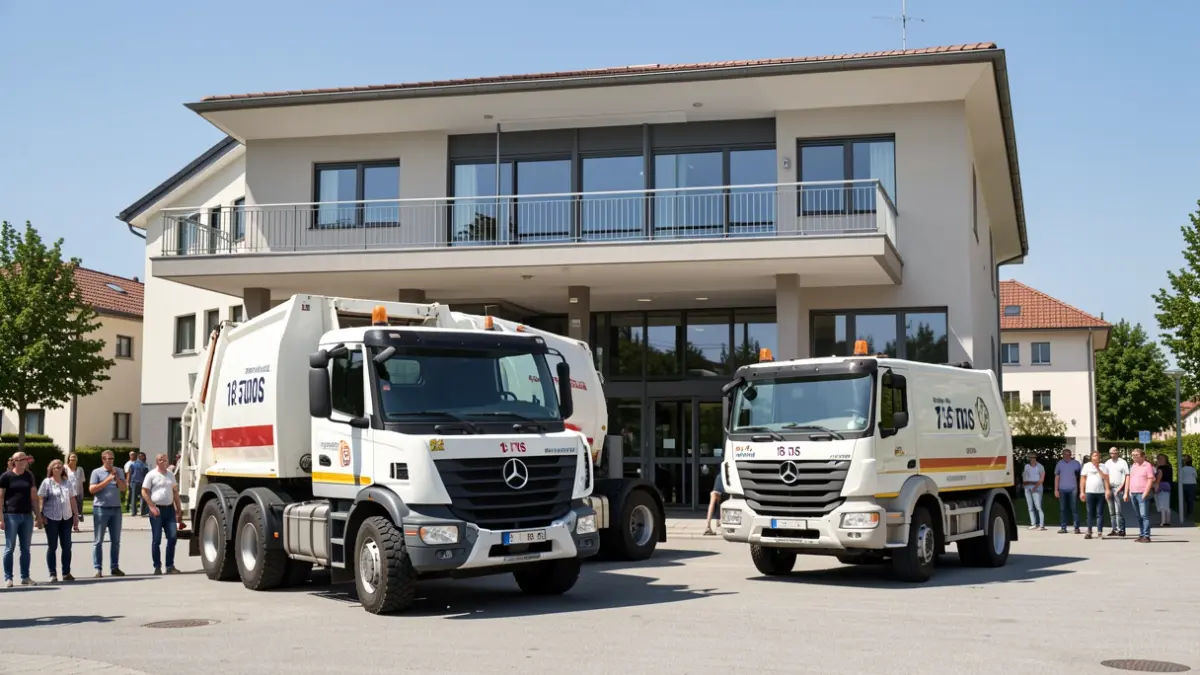
These vehicles, one 18-ton and one 7.5-ton capacity, will strengthen the brown bin service and promote the separation of organic waste at source throughout the municipality. This initiative is part of the council's commitment to sustainability and improving public services.
Mayor José Domingo Regalado highlighted that this acquisition is another step in the firm commitment to sustainability and responsible waste management. He emphasized the importance of citizen collaboration in correctly separating organic waste, which helps protect the environment, reduces costs, and allows more municipal resources to be allocated to other services.
Marcos Antonio Rodríguez, president of Sermugran and Councilor for Municipal Services, explained that the brown bin service was introduced in Granadilla de Abona in 2020 and is now present in all population centers. Approximately 40 tons of organic matter are collected monthly, a figure that continues to grow.
Rodríguez also pointed out that for every ton of organic waste collected separately, there is an approximate saving of 92 euros in treatment costs, in addition to meeting legal separation objectives. The new vehicles will enhance service efficiency and further increase selective collection levels.
Organic matter accounts for approximately 40% of household waste. Its correct separation is crucial for recovering raw materials, optimizing environmental management, and reducing treatment costs. Furthermore, the composting process transforms this waste into quality natural fertilizer.
The City Council and Sermugran remind residents that the brown bin is for fruit and vegetable scraps, meat and fish, shellfish shells, eggs, nuts, cooked food leftovers, used kitchen paper and napkins, coffee grounds, tea bags, cork stoppers, matches, and dry plant waste, contributing to more sustainable and efficient waste management.