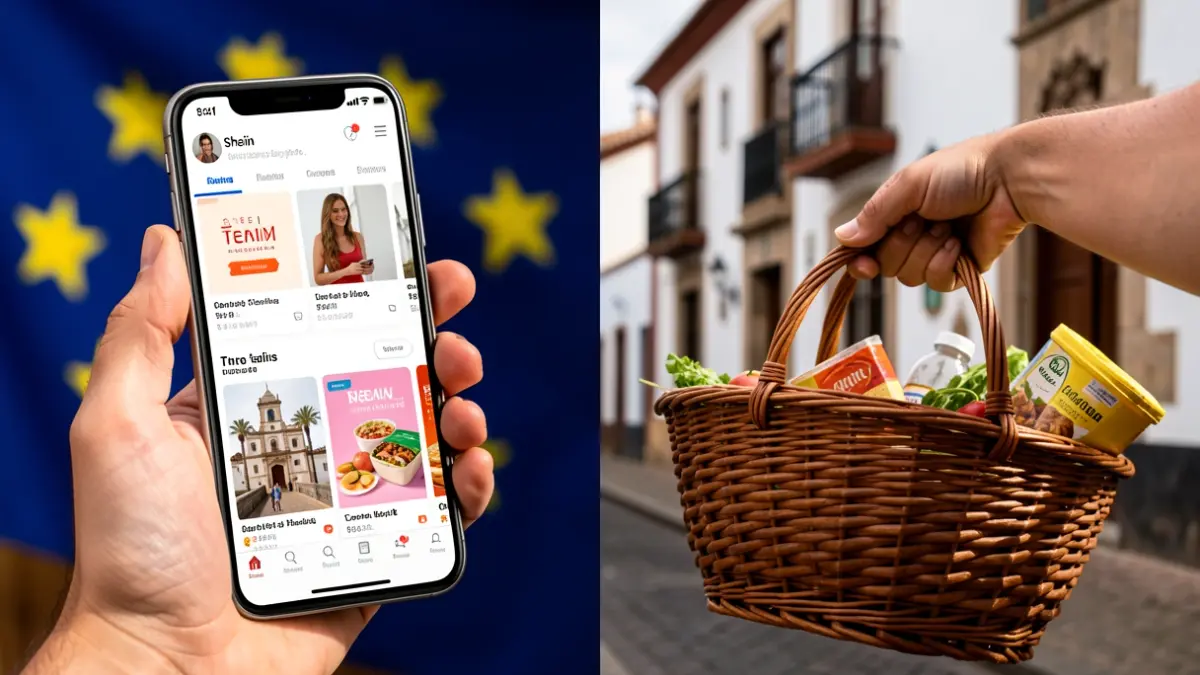
Starting July 1, 2026, the European Union will implement a fixed 3-euro tariff on packages under 150 euros originating from outside the community. This measure, coupled with the ongoing debate in Canarias about potentially removing the IGIC exemption for these same online purchases, could double the final cost of many products, creating a rift between consumers and businesses.
Mónica Bethencourt, president of the Canary Islands Consumers Association (CONCA), views the measure as a blow to the pockets of Canarian consumers. She argues that island residents turn to these platforms not only for price but also due to a "lack of physical stock on the islands." She highlights a comparative disadvantage, as the tariff will apply equally to a consumer in mainland Spain with a 21% VAT and a Canarian consumer with a 7% IGIC. "Any charge that affects consumers' pockets is never good news, obviously," she stated, emphasizing that local consumption has become a luxury for many Canarian families with lower wages.
“"Any charge that affects consumers' pockets is never good news, obviously."
From a business perspective, Victoria González, vice-president of the Chamber of Commerce of Santa Cruz de Tenerife, deems the European decision necessary to "protect European and local commerce" from unfair competition. According to González, 7,882 Canarian businesses have been lost since 2020, a sector that employs 156,000 families in the archipelago. The regulation also aims to address safety and health risks, as packages without customs control may contain toxic materials or dangerous electronics, in addition to the carbon footprint of mass transportation.
The final impact for shoppers could be significant. If the Government of Canarias removes the tax exemption, the product price will be increased by the 3-euro tariff, customs management costs, and the 7% IGIC. This could make low-value purchases unprofitable. However, this change would mean that IGIC revenue would remain within Canarian coffers, benefiting public services. Victoria González questions the current model: "How are we going to be giving our taxes away to Asian platforms that don't pay IGIC here in Canarias?"
The new EU regulation, transitional until 2028, aims to rebalance competition. The debate underscores the difficulty of reconciling the protection of local commerce with the defense of consumer purchasing power amidst low wages and high inflation. Canarias' final decision on the IGIC will be crucial in shaping the future of consumption on the islands.