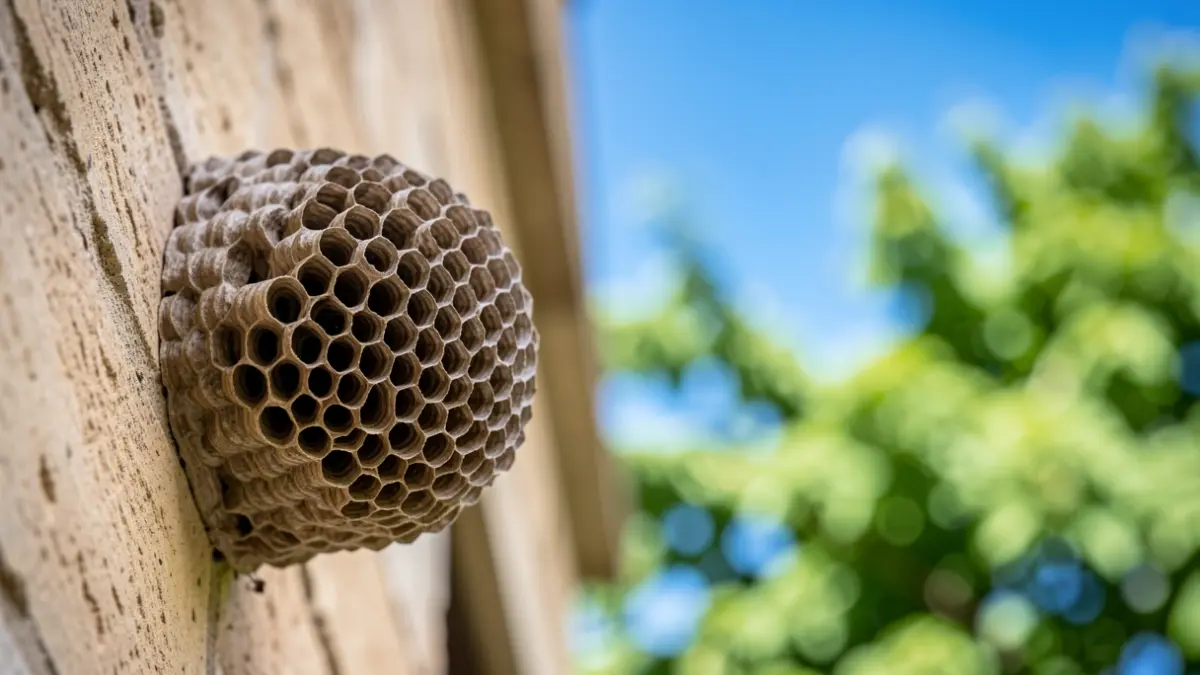
Asian wasp specimens that were scattered after a nest was removed last week in the Gran Canaria capital have built a new nest in the same location, specifically on the facade of the Isabel de España Institute, which faces Paseo Tomás Morales. The previous nest was destroyed along with 93 specimens of this invasive species, detected for the first time in the islands.
From the Department of Ecological Transition, they assure that during the previous intervention, the queen wasp was captured, so "in principle, the reproduction of new specimens is not possible." The Early Warning Network for Invasive Exotic Species of the Government of the Canary Islands (RedEXOS), dependent on the area, will now proceed to remove the new nest. The intervention of a specialist from Mallorca is also not ruled out.
The Department reiterates that "no new outbreaks" of this species have been detected in Las Palmas de Gran Canaria, despite having received "numerous citizen alerts" that turned out to be false alarms. The Asian wasp, present in Spain since 2010, wreaks havoc on beekeeping and wild pollinators, with the honeybee being its favorite prey, which can harm biodiversity and the local economy.
Although it does not pose a major threat to human health, its sting can be more painful. RedEXOS initiated sweeps to install traps in parks, gardens, and the port area of the Gran Canaria capital. Surveillance work will be lengthy, but it is believed that action has been taken in time and that the queen wasp has already been eliminated. It is presumed that the wasp arrived on the island via maritime transport.
RedEXOS emphasizes the importance of citizen collaboration to prevent the establishment of this species in the Canary Islands, providing communication channels such as its WhatsApp (646 601 457) and 112, and urges not to handle nests independently.