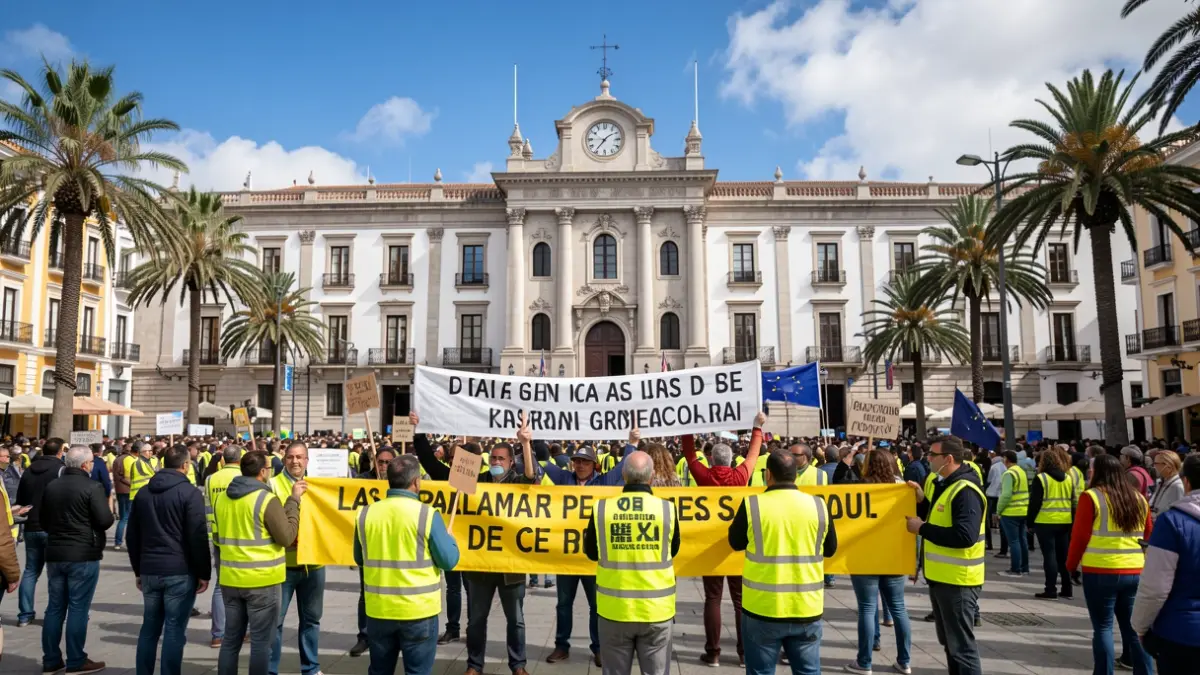
Company committees have formalized the strike call for June 26 and July 31, dates previously approved by the staff on June 9. The notice has been filed with the labor authority.
The first work stoppage will take place on Friday, June 26, coinciding with the City Council's Plenary session at the Casas Consistoriales, with workers gathering in Plaza de Santa Ana. The second strike day is scheduled for July 31, also during a plenary session and with a gathering in the same location.
The call, signed by the company committees for Urban Solid Waste Collection, Street Cleaning, and Special Crews, includes the formation of a strike committee composed of 17 workers.
The conflict stems from the municipal government's project to transform the current Municipal Cleaning Service into a wholly publicly owned commercial company. The staff rejects this model, requesting that the service remain under the direct management of the City Council.
The committees consider the conversion to have been unilaterally driven and express fears that the change in legal regime will affect the employees' status as public servants. The joint assembly on June 9 unanimously supported the call for the two work stoppages.
“"The municipal initiative is a covert way of privatizing the service."
It has been announced that staff representatives are considering legal action. Before the first strike day, the conditions and minimum services to be applied must be finalized.