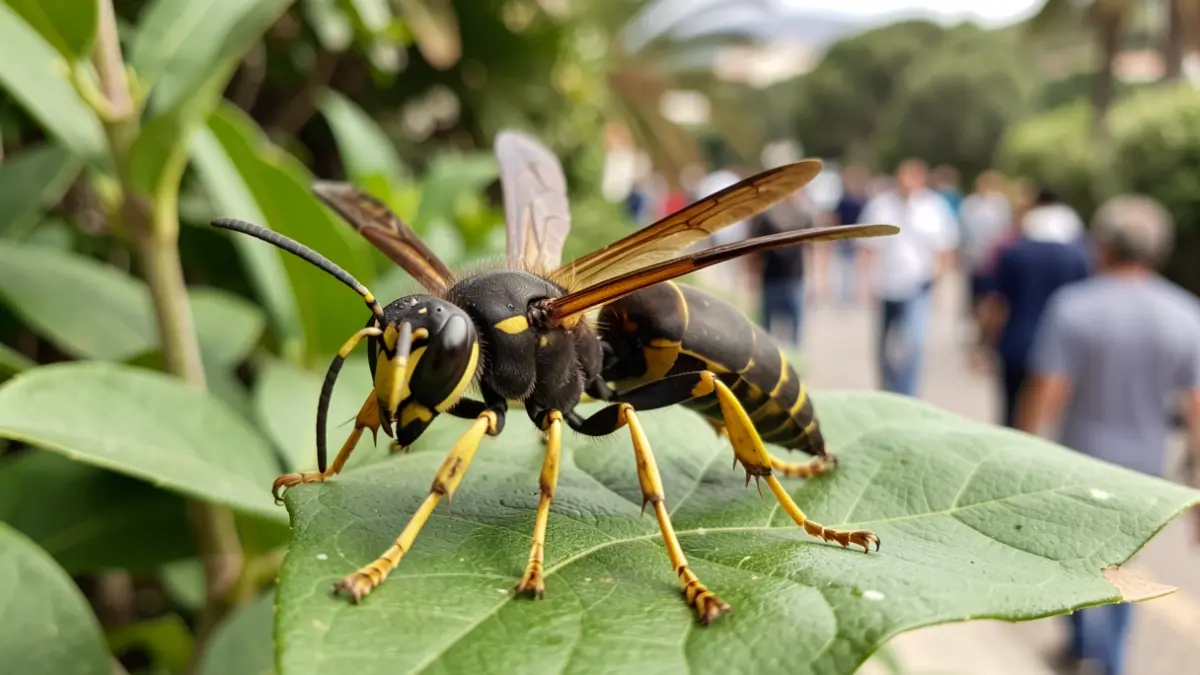
The discovery, consisting of a single nest with 93 specimens, has activated the protocols of the Early Warning Network for Invasive Exotic Species (RedEXOS). The specimens were removed by firefighters from the capital and later confirmed through morphological analysis.
The Asian hornet, an invasive species present in Spain since 2010, is characterized by its large size (up to 3 cm), dark body, yellow legs, and a yellow-orange band on its abdomen. Its sting is more painful and can inject more venom, although the greatest risk is to allergic individuals.
“"Although they do not attack if they do not see their nests threatened"
The Executive has requested public collaboration to report sightings to 1-1-2 or send photos/videos to the RedEXOS WhatsApp (646601457). It is recommended not to attempt to kill them or interact with them. Specialized teams and attractive traps have been installed in urban parks and near the port to delineate the population.
Experts consider it positive that the focus was detected in spring, when colonies are growing and reproduction is unlikely. However, the question remains how the Canary Islands' climate conditions will affect its annual cycle. The species, carnivorous and a predator of bees and pollinators, seeks water sources and may hover around beehive facilities.
It is warned that the Personal Protective Equipment (PPE) commonly used in beekeeping does not adequately protect against this hornet, so their removal must be carried out by specialized personnel, preferably during nighttime hours.