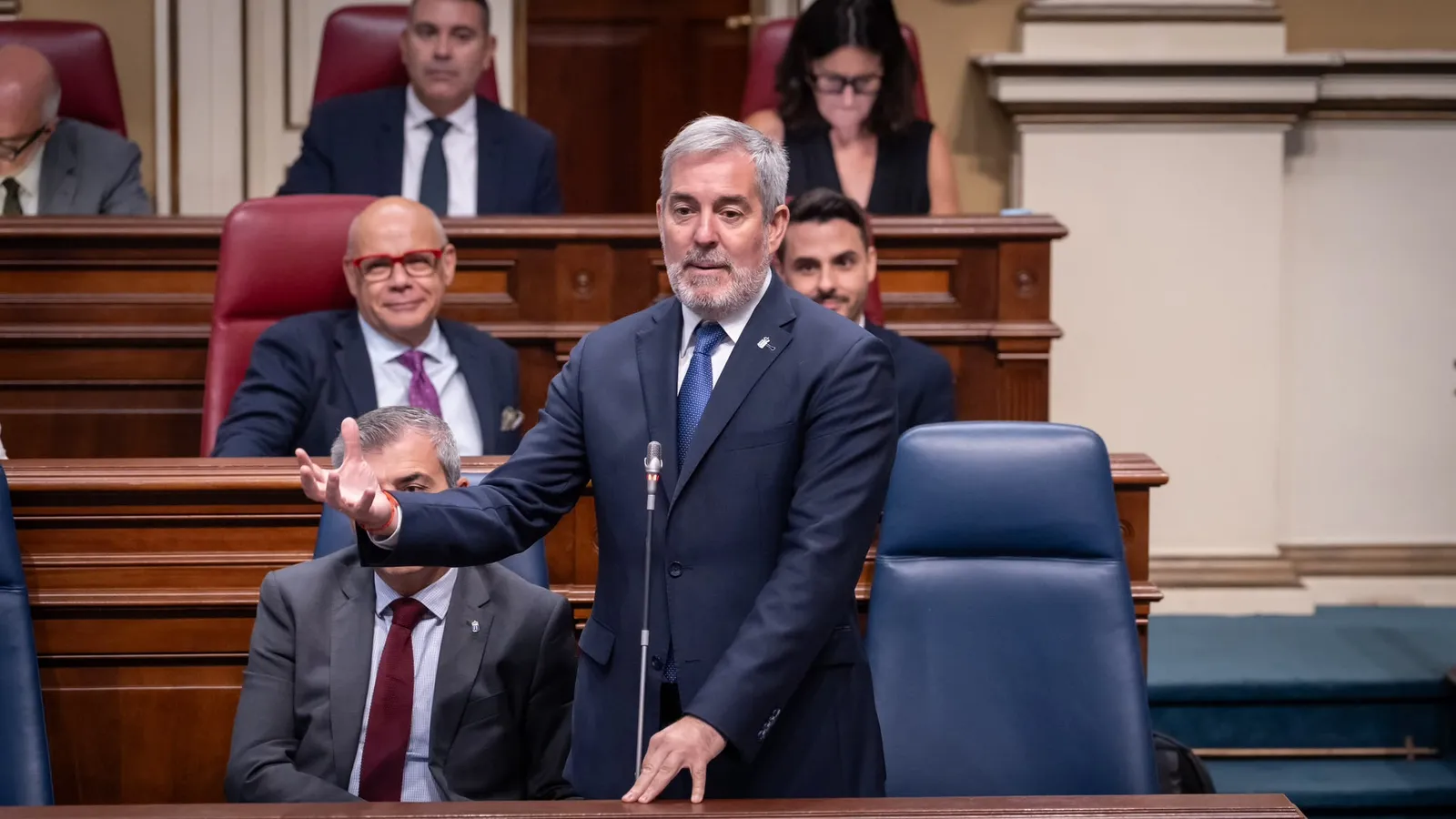

The Minister of Public Works, Housing, and Mobility of the Government of the Canary Islands, Pablo Rodríguez, indicated this Tuesday in the Parliament of the Canary Islands that the preliminary draft of the Canary Housing Plan 2026-2030 has registered nearly 70 contributions after the public information period concluded. Rodríguez explained that the document is in the drafting phase and that the financial sheet, with an economic plan for the entire period of validity, will be incorporated into the preliminary draft.
The plan focuses on three fundamental axes: increasing the residential supply, including the promotion of public, protected, and affordable housing, the mobilization of empty or unfinished homes, and the development of public land for housing; the rehabilitation and regeneration of the residential stock, with actions in urban and rural areas to retain population; and facilitating housing access for priority groups through rental aid, support for youth emancipation and home purchase, attention to vulnerable groups, and instruments for accessing a first home.
The new Plan will prioritize adapting actions to the reality of each island and municipality, the demographic challenge in rural areas, public-private collaboration, and improving coordination between administrations. It is foreseen to distribute approximately one-third of the resources among each of the three strategic axes, with funding from the Canary Islands Government's own funds, the State Housing Plan, and potential European funds.
During the public participation process, the Canary Housing Plan 2026-2030 received 68 contributions, of which 44 correspond to citizens and 24 to public administrations, social organizations, and professional entities. Participants include the Association of Owners of Rental Housing (Asval), the Federation of Municipalities of the Canary Islands (FECAM), the city councils of Adeje and La Matanza de Acentejo, the Island Council of Fuerteventura, and organizations such as Amnesty International and UNICEF.
Once the public information period has concluded, the Canary Housing Institute (ICAVI) is working on responding to the contributions received and drafting the preliminary project. The process will continue with the preparation of reports, the intervention of advisory bodies, consideration by the Government of the Canary Islands, the opinion of the Economic and Social Council, and its submission to the Parliament of the Canary Islands for final approval.