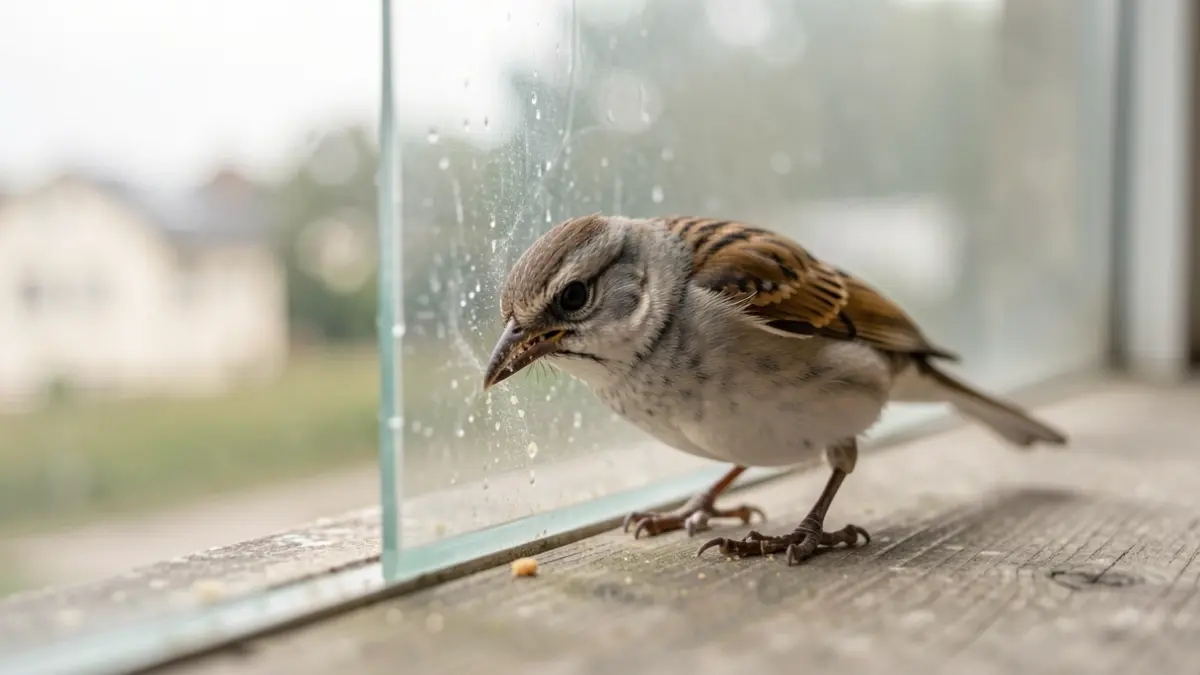
Heatwaves not only impact animal physiology but also alter their behavior and brain functions. Recent studies demonstrate how thermal increases modify how creatures learn, hunt, defend themselves, and interact, creating a cascade of effects ranging from food scarcity to increased risk for already vulnerable species.
An experiment with bicolor turdoides birds in South Africa illustrates this issue: the birds showed difficulty solving simple tasks, such as navigating around a transparent barrier to reach a reward, persistently pecking at it unsuccessfully. This finding, published in 2025, is clear evidence that extreme heat directly affects the animal brain, not just their bodies.
Accumulated scientific evidence indicates that as temperatures rise, many birds spend more time seeking shade and less time feeding or attending to their young. Bees resort to cooling methods to protect their brains, while other species reduce their activity to mitigate thermal stress. Previous research had already linked heat in humans to alterations in decision-making, memory, and aggressive behavior.
This aggression is also observed in other species. Various studies document an increase in dog bites in U.S. cities during hotter, more polluted days. In the Italian Alps, chamois become more territorial due to heat-induced vegetation reduction, with a notable increase in their aggressiveness predicted by 2080. Even the tropical fish Golden Julie reacts with greater hostility when the water warms.
Learning impairment is another direct consequence. Experiments have shown that birds take longer to associate signals with food, zebra finches fail more frequently in problem-solving tasks, and bumblebees struggle to link colors with rewards. In mammals like mice, heat is associated with inflammation in the hippocampus, a brain region crucial for memory.
The underlying mechanism suggests that increased body temperature can raise brain temperature, interfering with neuronal function. This affects perception, memory, and the ability to react to predators or find food. In a warmer planet, this behavioral deterioration could be amplified in urban environments and regions prone to intense heatwaves.
Experts conclude that climate change is not only altering animals' geographic distribution but also their cognitive and behavioral processes. There is concern that the extent of these heat-induced brain alterations, even in humans, may still be underestimated.