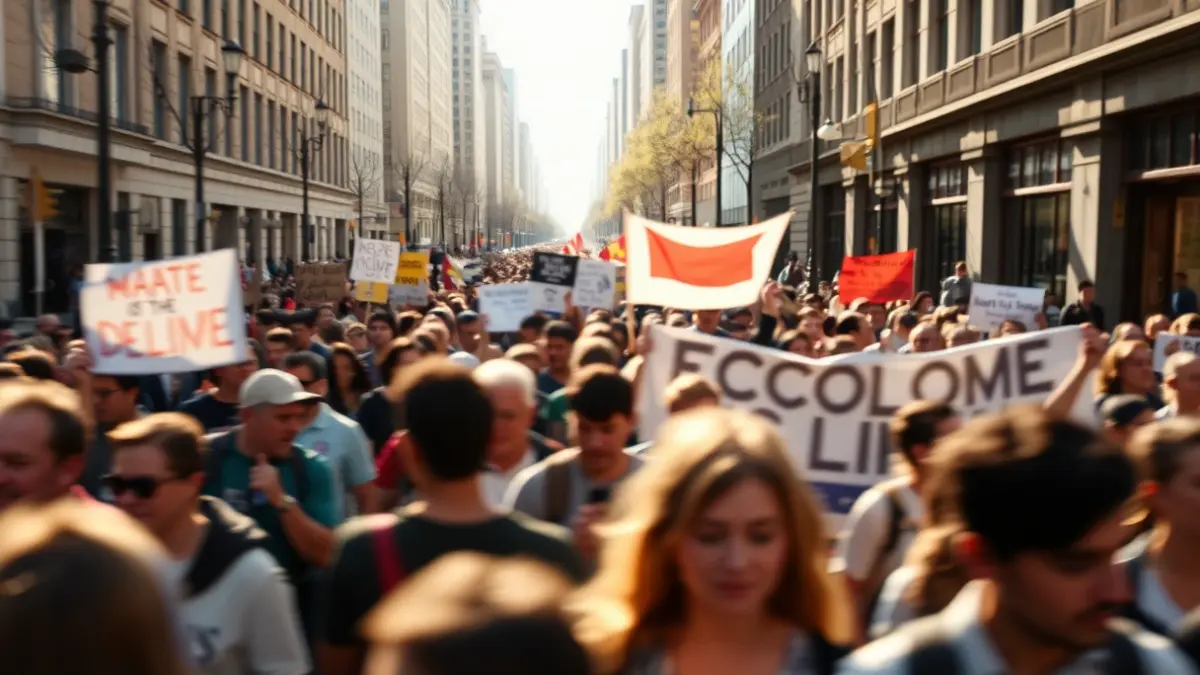
The mobilization, with an estimated participation of around 1,100 people according to the National Police, marched through the main avenues of the capital to Santa Ana Square. There, a unified manifesto was read, focusing on the housing crisis and denouncing the difficulty of access to decent housing for most workers in the Canary Islands.
“"Very few working people in the Canary Islands can access housing."
Among the main demands, emphasis was placed on the concept of the “working poor”, a reality affecting those who, despite having a job, cannot cover their basic needs. Warnings were also issued about the increase in poverty in the archipelago, noting that “a third of the Canarian population lives in poverty” despite record tourism.
The manifesto also addressed job insecurity and the “miserable wages” received by a large part of the working class. On the international front, a strong rejection of armed conflicts and increased military spending was expressed, with slogans advocating for “more schools and hospitals, less military spending” and the neutrality of the Canary Islands as a “territory of peace”.
The march was accompanied by a combative and festive atmosphere, enlivened by a batucada, and saw the presence of various political figures, especially from the socialist sphere. Among those present were the minister and former regional president, who defended the importance of the day to support workers and the fundamental role of trade unions.