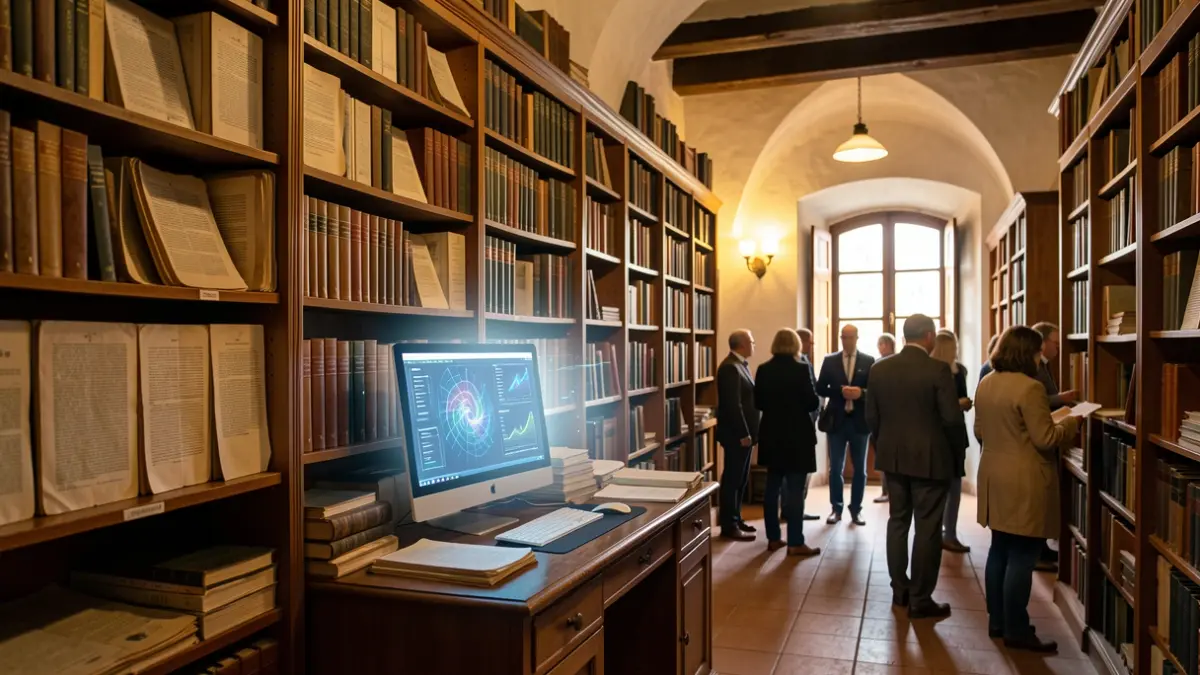
Under the theme 'Digital Resources and Procedures,' the event brings together experts from various academic and cultural institutions. The aim is to discuss the challenges and opportunities that new technologies offer for the documentary field. The initiative is part of the scientific and cultural dissemination project 'A Unique Heritage,' promoted by the Directorate General of Culture and Cultural Heritage of the Government of the Canary Islands, and collaborates with the Provincial Historical Archive of Las Palmas 'Joaquín Blanco'.
The opening of the conference featured the director of El Museo Canario, Daniel Pérez Estévez. The inaugural lecture was delivered by Álvaro Cuéllar González, a specialist in artificial intelligence and computational linguistics from the Autonomous University of Barcelona. Cuéllar addressed the possibilities of AI for the study and preservation of documentary heritage, under the title 'Documentary Heritage and Artificial Intelligence: A Techno-optimistic View'.
During the first day, various technological applications already in use in heritage archives and libraries were explored in depth. Topics covered included automatic document transcription, stylometry, automation of technical processes, and historical press digitization projects. Tanausú Pérez García, a technician at El Museo Canario, presented the digital tools the institution is incorporating into its newspaper collection. Attendees also took a guided tour of the Provincial Historical Archive of Las Palmas 'Joaquín Blanco'.
In the afternoon, specialists from the Carlos III University of Madrid and the National Library of Spain analyzed the advantages, limitations, and challenges of artificial intelligence in heritage libraries. The presentations by Fátima García López, Ana María Morales García, and Ricardo Santos Muñoz facilitated discussions on the role these technologies can play in the conservation and dissemination of documentary heritage while maintaining scientific rigor.
The program will conclude this Tuesday with a session dedicated to 'forgotten collections,' focusing on documentary funds of great historical value that have remained outside major research circuits for years. Scheduled interventions include that of Víctor Manuel Bello Jiménez, Doctor of History from the University of Las Palmas de Gran Canaria, who will analyze the reconstruction of the documentary collection of the Marquisate of Lanzarote. Kevin Rodríguez Wittmann from the University of La Laguna will also participate, presenting the importance of cartographic collections for historical research.