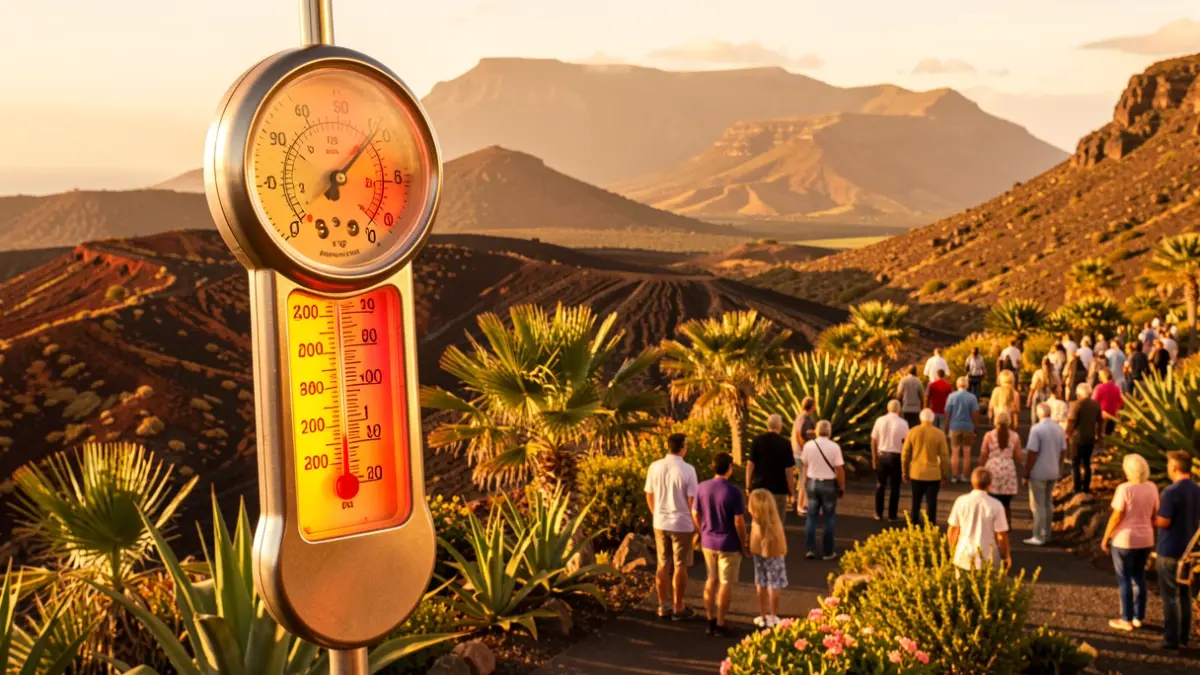
The Canary Islands experienced a 'very warm' July, ranking as the seventh hottest July since records began in 1961. The average temperature recorded was 23.5ºC, exceeding the usual monthly average by 1.2ºC.
During July, 52.46% of nights were tropical, with temperatures exceeding 20ºC on 1,236 occasions. The State Meteorological Agency (Aemet) reported that 92.11% of its stations across the archipelago registered at least one night of this nature. A single torrid night (above 30ºC) was recorded in Lomos de Pedro Afonso, San Bartolomé de Tirajana, Gran Canaria.
The month was also characterized by being humid, accumulating 1.7 liters per square meter, which represents 189% of the expected value, making it the eleventh wettest July since 1961.
Aemet highlighted the occurrence of three warm episodes between the 4th and 8th, 15th and 24th, and 29th and 31st of July. These periods were attributed to the influence of an anticyclone whose variable position allowed warm air from Africa to enter.
The province of Las Palmas experienced an average temperature of 24.5ºC, with a positive anomaly of 1.5ºC. The average maximum temperature across the archipelago was 27.6ºC, 1.5º above normal, while in the province of Las Palmas it reached 28.5ºC (1.8º higher).
The average minimum temperature across the islands was 19.5ºC, one degree above expectations. The locality of Tasarte, in La Aldea de San Nicolás, Gran Canaria, recorded the month's absolute maximum with 40.7ºC on the 30th. In contrast, the station at Parador de las Cañadas, in Tenerife, registered the lowest minimum with 6.5ºC on the 12th.
Regarding precipitation, although scarce as is usual in July, the recorded volumes exceeded the average. Three periods of rain occurred, mostly weak and scattered, with the 11th being notable for more abundant and widespread rainfall. The station at Sauces-San Andrés-Balsa Adeyahamen, in La Palma, accumulated the most water with 21.1 liters per square meter.