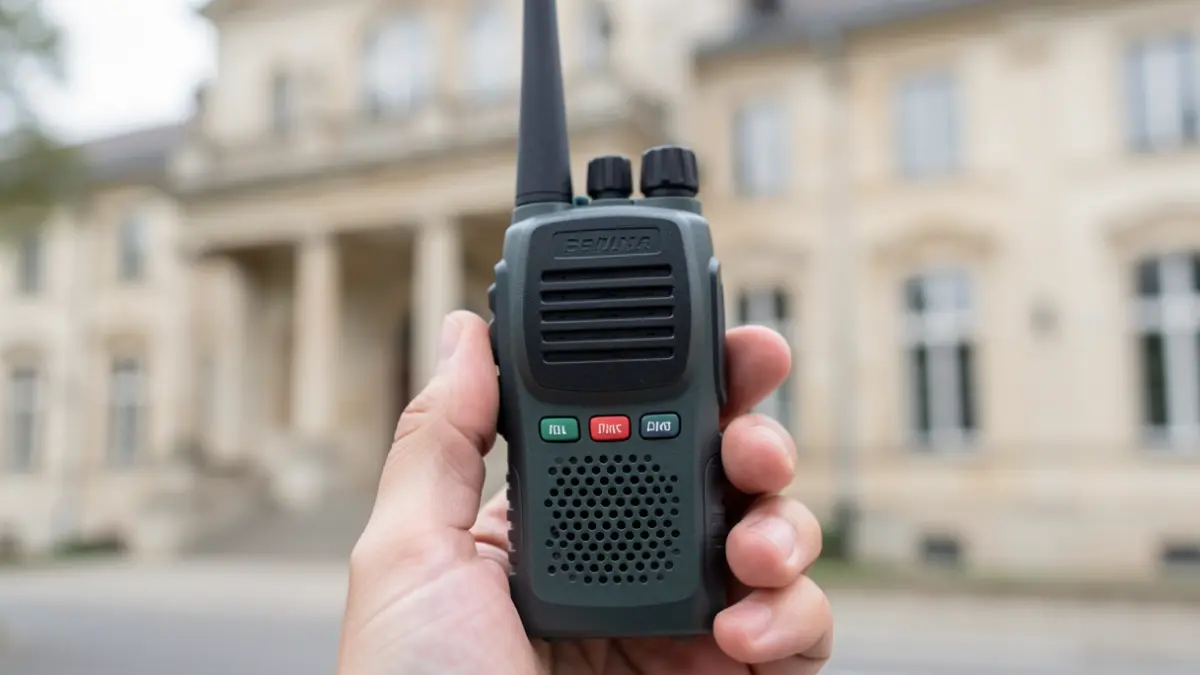
The University of La Laguna (ULL) has taken a stance against the fraudulent use of artificial intelligence by acquiring ten frequency detectors. These devices, costing less than 50 euros each, are currently being tested to locate devices that facilitate cheating in exams, such as nano-earpieces, smart glasses, or watches.
The Vice-Rector for Teaching at ULL, José Manuel García Fraga, explained that the detectors have been used in several exams during the course and that the university is developing instructions for their widespread use across all centers. The devices, similar in appearance to walkie-talkies, can detect any type of signal, including that of mobile phones, even if they are turned off, as long as they are passed relatively close to the students.
To date, the ULL has not detected any cases of fraudulent AI use, but it did register one false positive. García Fraga detailed that the device repeatedly activated for a student who was relocated, suspecting a possible interference from the Wi-Fi network.
Several autonomous communities plan to use these detectors during the university entrance exams, and the Canary Islands are not ruling out their occasional use in the province of Santa Cruz de Tenerife. However, the University of Las Palmas de Gran Canaria (ULPGC) is not considering their implementation at the moment, arguing that they are not completely reliable and that a false positive could cause additional stress for students.
The Vice-Rector for Teaching at ULL also pointed out that fraudulent AI use leaves traces in writing style, content, and the use of jargon or adjectives, as well as in consulting general internet information instead of specific study sources. He emphasized that these devices are more effective in memory-based exams, a format that the university entrance exams aim to avoid in favor of competency-based questions that value reflection and the connection of academic content.
García Fraga advocated for the proper use of AI as a support tool, comparing it to the widespread acceptance of calculators in academia.