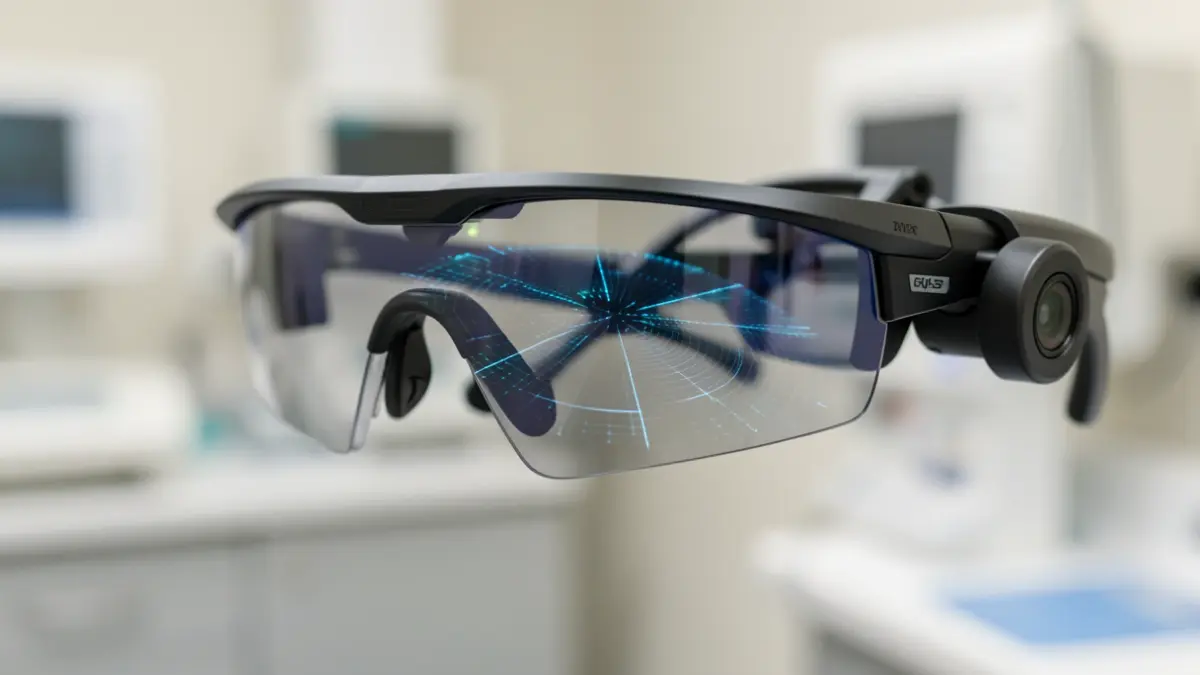
An innovative system based on mixed reality glasses, developed by scientists at the University of Alberta in Canada, offers a new opportunity for patients who have lost a significant portion of their visual field due to brain injuries, such as those sustained after a stroke. The technology records the part of the visual field the patient cannot see and projects it in a compressed form within their intact vision.
The study, led by ophthalmologist Edsel Ing and published in the Journal of Neuro-Ophthalmology, focuses on hemianopsia, a condition affecting a significant percentage of stroke survivors. The glasses, powered by Microsoft HoloLens 2 software, allow the user to see the real environment while processed images from a mounted camera are superimposed.
The system captures the portion of the scene the patient does not perceive and 'compresses' it to display it within the remaining visual field, creating a kind of enlarged 'window'. In tests conducted with five patients with hemianopsia, the use of the glasses significantly reduced stumbling over obstacles on a 50-meter course.
“"With these mixed reality glasses, for the first time we can give patients back the perception of an almost complete visual field. These glasses give them the perception of the whole world again."
Although the cost of the HoloLens 2 glasses presents an economic barrier, this advancement marks a milestone in visual rehabilitation, overcoming the limitations of previous treatments like optical prisms. The team is already planning to adapt the technology for other visual conditions such as torsional diplopia or nystagmus.
Specialist Edsel Ing emphasized the responsibility of scientists and doctors to 'innovate to find new solutions that improve the quality of life for patients with brain injuries', as long as the underlying brain damage cannot be repaired.