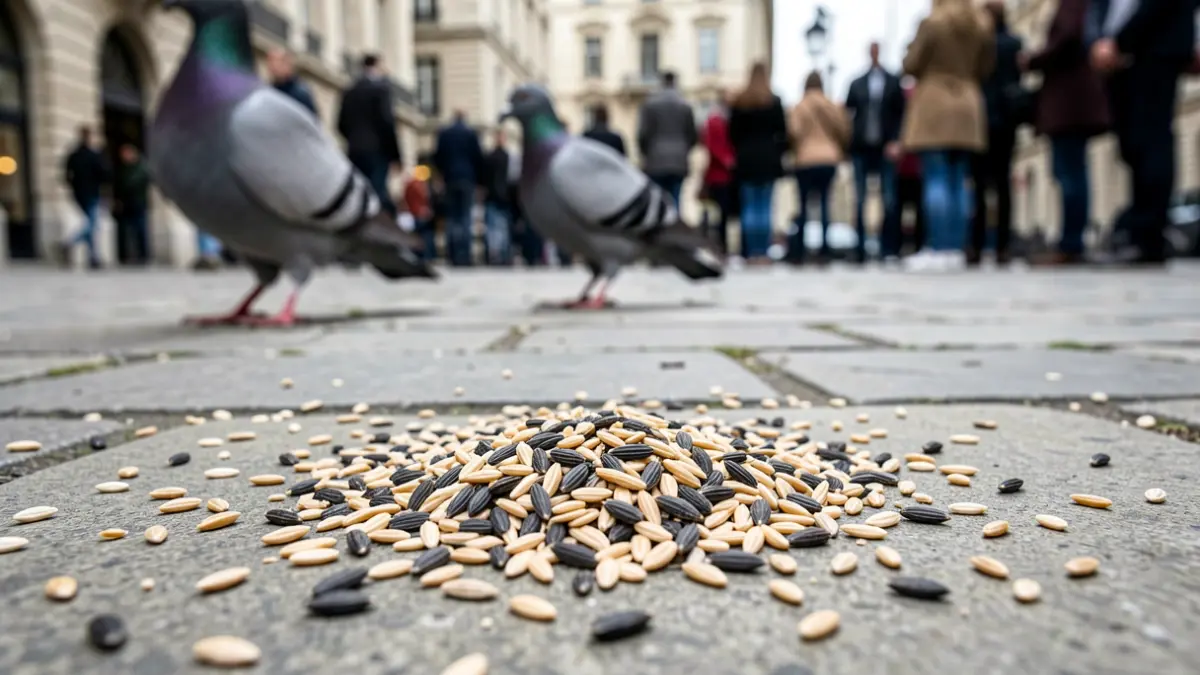
The act of feeding birds in the street, while it may seem like an act of kindness, can lead to serious problems of dirt, animal concentration, and neighborly disturbances. A recent case in the United Kingdom, where a woman was fined €1,700 for leaving large amounts of bird food, has reignited the debate on this practice.
The accumulation of food attracted numerous rodents that affected nearby homes and businesses. This situation is similar to the regulations in force in Las Palmas de Gran Canaria, where feeding animals in public spaces is restricted if it causes coexistence or health problems.
In the capital of Gran Canaria, the usual presence of pigeons can be altered by constant feeding points. Depositing food in squares, parks, or streets can lead to bird concentration and an increase in food scraps, dirt, and droppings in shared spaces. Municipal ordinances aim to balance respect for animals with citizens' right to enjoy clean spaces.
The continuous practice of feeding pigeons can create dependency in the birds and concentrate them in specific areas, leading to conflicts between neighbors, especially in densely populated urban areas like Las Palmas de Gran Canaria.
The British case, which resulted in a fine of 1,500 pounds (approximately €1,749) and restrictions for the woman for two years, underscores how an action with good intentions can generate a larger problem by affecting the common environment. Authorities established measures such as limiting feeders and requiring food to be kept in closed containers.
The regulation in Las Palmas de Gran Canaria, like in other cities, seeks to find a balance between respect for animals and the right of residents to enjoy clean and nuisance-free spaces.