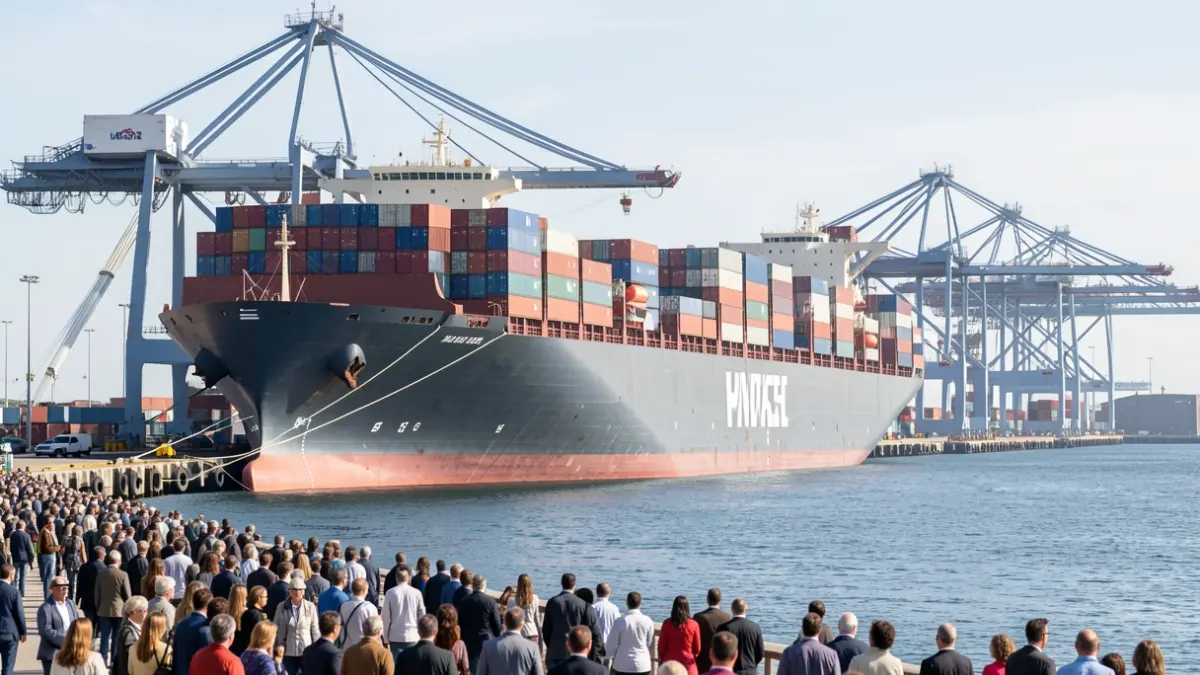
This initiative, which emerged during the second day of the Canary Islands-Morocco institutional mission, primarily seeks to enhance commercial connectivity and optimize logistics. The president of the Port Authority of Las Palmas has indicated that this is a medium-term objective, emphasizing the need for a gradual and consolidated process to ensure the success of the new line.
“"These types of steps cannot be taken overnight. They must be worked on, consolidated, and secured to ensure success and prevent creating another problem precisely by establishing this line."
Currently, goods from Agadir reach the Canary Islands via Cádiz, involving a considerable detour. This indirect route, primarily transporting fish and horticultural products, includes a land journey to Casablanca and then a sea journey to Cádiz before shipping to the islands. Implementing a direct line between Agadir and Las Palmas would eliminate this detour, saving an estimated day and a half in transit time.
In addition to saving time and navigation costs, the new route would open opportunities for new markets, such as packaging, and foster business synergies. A reduction in greenhouse gas emissions is also expected. The collaboration could extend to the ship repair sector, as the Moroccan fishing fleet requires modernization that the shipyards in Las Palmas de Gran Canaria, such as Zamakona, specialized in fishing vessels, could provide.
The ports of Las Palmas and Agadir are also exploring joint projects in innovation, training, and technology, focusing on the shared concern about the impact of climate change on the ocean. There is an aspiration for the unloading of fresh fish surpluses, currently done in Agadir, to be transferred to Las Palmas, although this would involve complex international agreements.