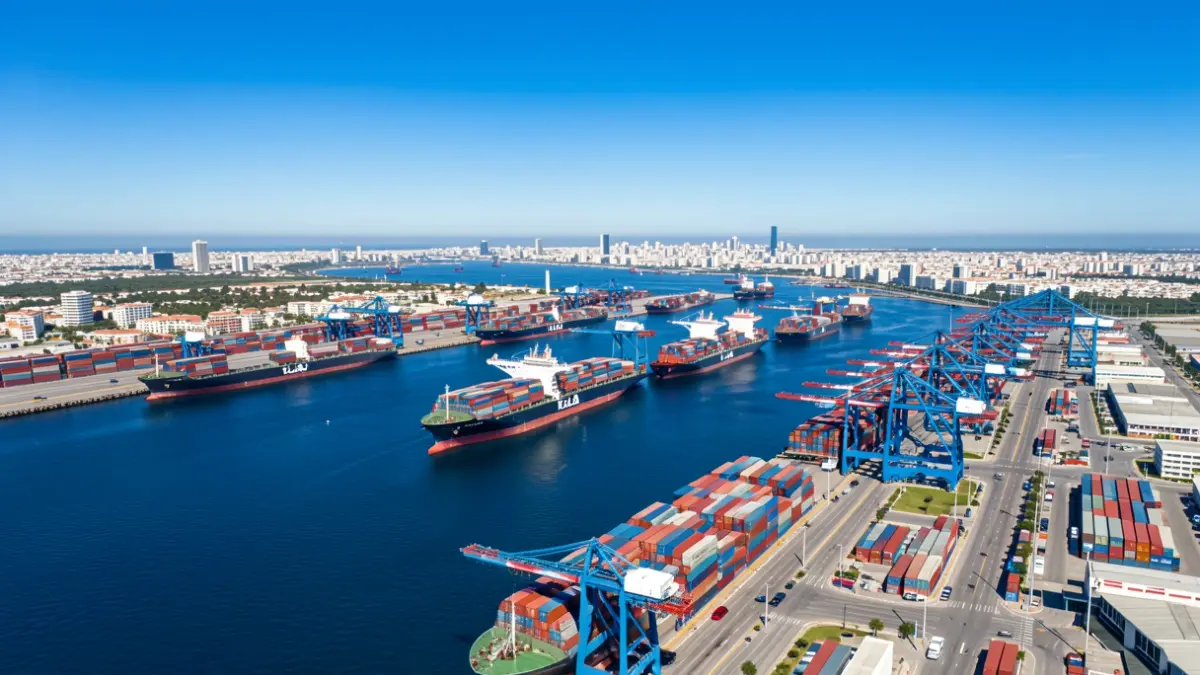
The capital's port facility consolidates its role as an economic engine, concentrating the majority of activity recorded between January and April. Merchandise traffic increased by 3.34%, reaching 9,250,593 tons, while container movement grew by 6.22% to 457,509 TEUs. General containerized cargo also saw a 1% rise.
A notable increase of 70.57% was observed in frozen fish, reaching 120,572 tons. In contrast, fresh fish traffic decreased by 37.50%, with only five tons accounted for. Ro-Ro traffic also showed a positive trend, with a 4.90% increase in units and a 10.41% rise in tonnage.
Passenger traffic saw a 6.15% increase, totaling 988,705 passengers. This growth is primarily attributed to the cruise segment, which advanced by 15.37%, offsetting a 6.31% decline in regular lines. However, fuel movement experienced a 7.27% drop.
Across the five ports managed by the Port Authority of Las Palmas, total traffic reached 11,772,948 tons, a 2.70% increase from the previous year. The President of the Port Authority, Beatriz Calzada, highlighted the strength of these results to advocate for inclusion in the Group 1 of state ports.
By individual port, the Port of Las Palmas led in volume with 10,222,683 tons. The Port of Arrecife saw a slight increase, while the Port of Salinetas experienced the largest percentage growth (34.38%). Conversely, the Port of Puerto del Rosario and the Port of Arinaga reduced their traffic.
Globally for the Port Authority, merchandise increased by 3.24%, containers by 5.73%, and Ro-Ro traffic by 7.27%. Frozen fish rose by 68.23%, while fresh fish and fuel saw decreases.