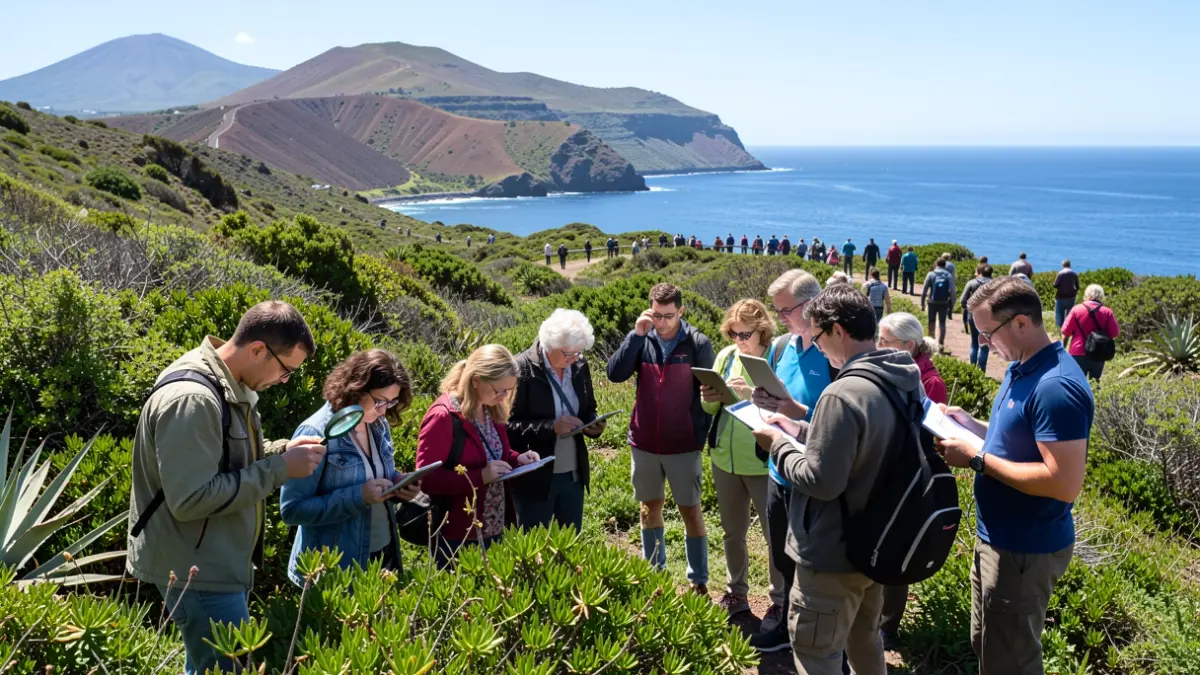
The initiative, aimed at conserving the archipelago's biodiversity, broke participation records in its 2025 edition. For the first time, activities extended to all eight Canary Islands, consolidating its regional reach. The event, promoted by the Canary Network for Early Warning of Invasive Exotic Species (RedExos), took place between May 23rd and 31st, bringing together more than 40 entities, institutions, and social groups.
During the week, 17 group activities were organized in various natural spaces across Tenerife, Gran Canaria, Fuerteventura, Lanzarote, La Graciosa, La Palma, La Gomera, and El Hierro. Participants combined the tasks of locating and monitoring invasive species with practical on-site extraction and removal actions.
The Minister of Ecological Transition and Energy of the Government of the Canary Islands, Mariano Hernández Zapata, highlighted that the Alien CSI Bioblitz has become a key citizen science initiative for biodiversity protection in the islands. He emphasized that the high participation from citizens, public administrations, and collaborating organizations reflects the growing concern about the threat posed by invasive exotic species to the Canary ecosystems.
This year's edition also benefited from the collaboration of the Delegation of the Higher Council for Scientific Research (CSIC) in the Canary Islands, as well as environmental associations, educational centers, scientific entities, and volunteer groups, reinforcing the initiative's participatory nature.
RedExos, a tool promoted by the Ministry of Ecological Transition and Energy, allows any citizen to report the presence of invasive exotic species through a mobile application and a web platform. Its objective is to improve the early detection, monitoring, and management of these species to protect the unique biodiversity of the Canary archipelago.