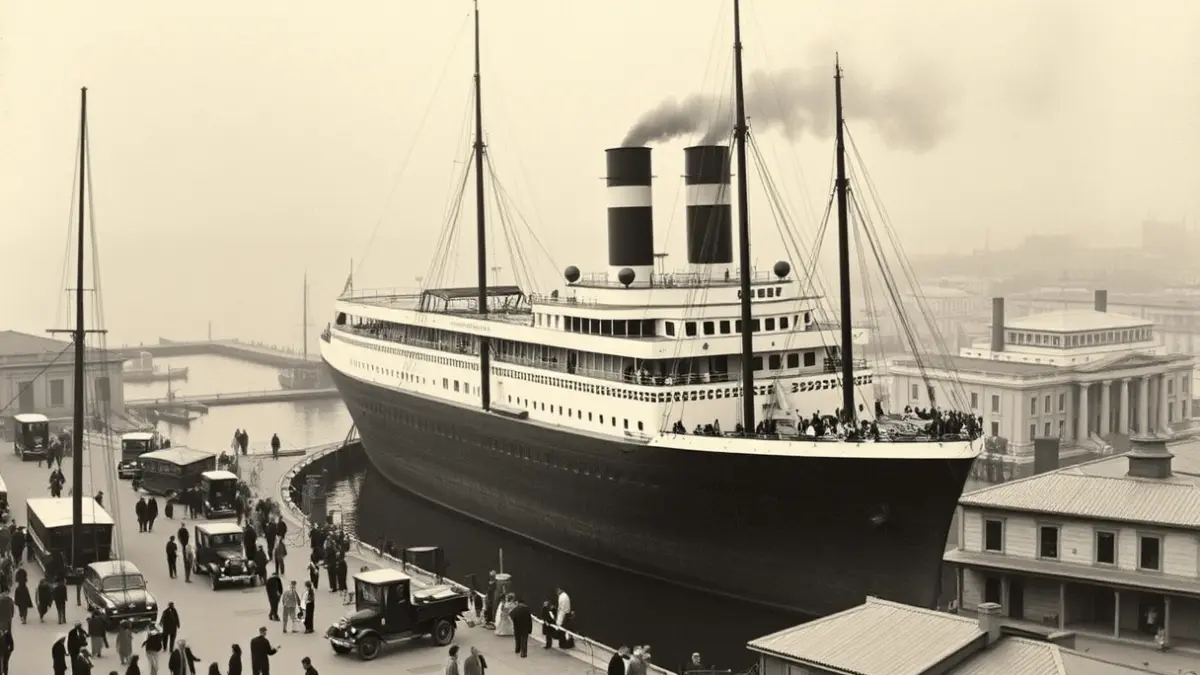
The transatlantic liner Infanta Isabel, a vessel owned by the Pinillos shipping company, set sail from A Coruña on September 28, 1918, bound for Havana, with a scheduled stop in Las Palmas de Gran Canaria. This ship, considered one of the most advanced in the Spanish merchant navy at the time, regularly covered a transatlantic route starting from Barcelona.
However, the voyage turned tragic. The flu spread rapidly among passengers, especially those traveling in third class. Upon arrival in Gran Canaria, the ship already had nearly 200 sick individuals and several deceased, causing great alarm on the island.
“"Let's be alert for public health."
The first news of the epidemic on board appeared in the Diario de Las Palmas on October 2 of that year. The newspaper reported the arrival of the Infanta Isabel with 75 affected, 18 serious, and four dead, warning of the "great danger" facing the city.
Given the risk of contagion to the population, the Health Board decided that the ship would not dock at the port of La Luz. Instead, it was diverted to Gando, where a lazaretto was set up to house the most seriously ill. The ship's captain had requested to disembark the remains of the deceased passengers, but this request was denied.
The disembarkation of the sick in Gando was carried out with "great precautions." In the lazaretto's cemetery, three people were buried: a two-year-old girl and two adults. The affected occupied one wing of the lazaretto, while the rest of the passengers were moved daily to disinfect the ship's cabins.
The event caused deep sadness in the city. The Diario de Las Palmas lamented that, unlike other occasions when the Infanta Isabel brought "work, life, joy," this time it had brought "sadness, unease, death" to Las Palmas, especially for the 300 Canarians who were waiting to embark to emigrate to Cuba.
Finally, the Infanta Isabel departed from Gando on November 7, returning to the peninsula instead of continuing its transatlantic journey. On board were 850 healthy passengers and 142 crew members, while 370 passengers, including the sick and their families, remained in the Telde lazaretto. Throughout the journey, from its departure from A Coruña until its return to Galicia, 34 people died, six during the voyage and 28 in Gando.