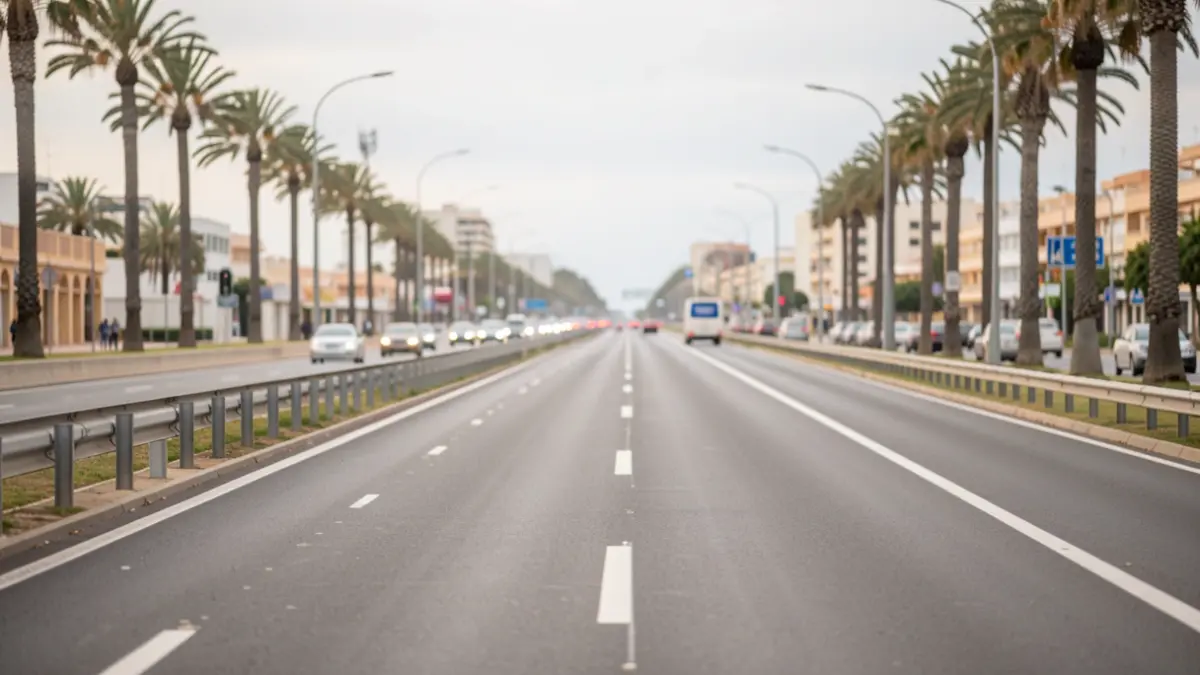
Implemented measures, including road closures, recommendations for remote work, and the suspension of school activities, had a substantial effect, resulting in considerably less traffic during the event than on a typical workday. Fears of a traffic collapse, understandable given the city's frequent congestion, gave way to a day of unusual calm.
Official data from the Department of Public Works, Infrastructure, Architecture, and Housing of the Cabildo de Gran Canaria confirm this trend. At several points along the metropolitan road network, vehicle circulation decreased by over 60%.
The San José tunnel, one of the sections affected by closures, recorded just 8,000 vehicles on the day of the visit, compared to over 21,000 the previous day, marking a 62.2% reduction. In the opposite direction, the decrease was 61.5%.
Meanwhile, the Adolfo Cañas tunnel (La Laja tunnel) on the GC-1 saw 23,138 vehicles heading south, a 56.3% decrease from the day before when over 53,000 passed through. A similar reduction, 57%, was observed at the monitoring station in the Santo Domingo tunnel on the GC-3.
The tunnel of the La Ballena ravine, on the GC-23 connecting Plaza de América to the ring road in Siete Palmas, also experienced a drastic drop. While it registered nearly 50,000 vehicles heading one way on Wednesday, it fell to 23,348 on the day of the papal visit, half the number. The reduction in the opposite direction was 57.5%.