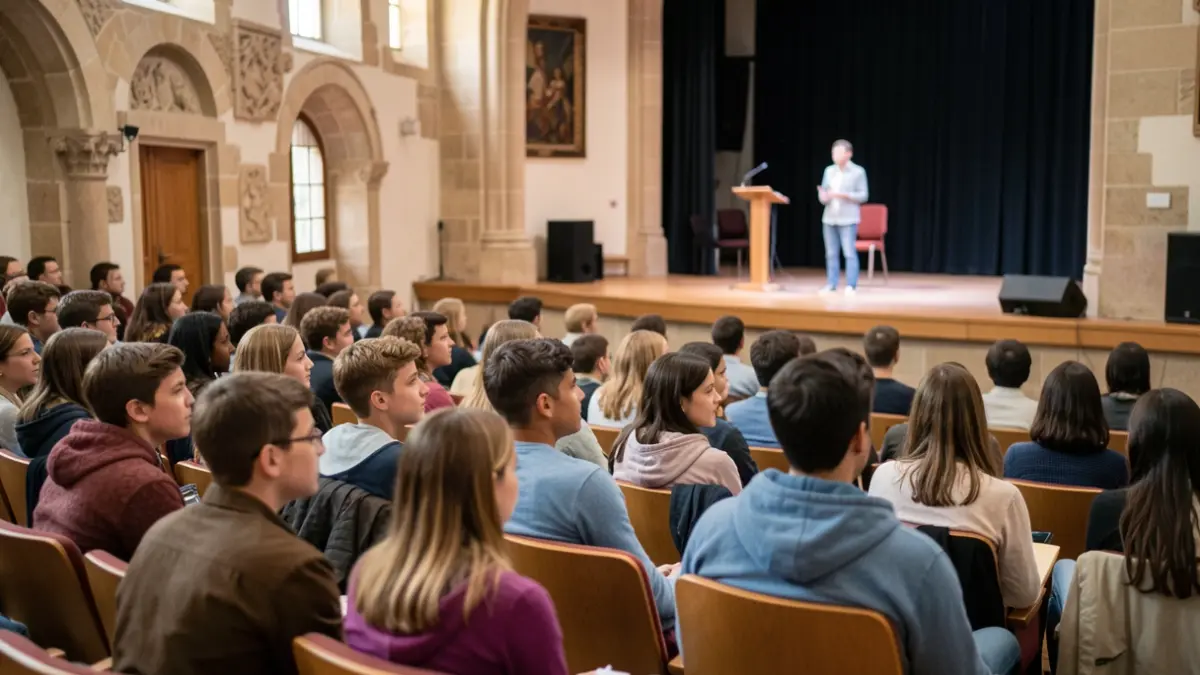
The event, organized by the Unit of Scientific Culture and Innovation (UCC+i) of the ULPGC's Canaria Science and Technology Park Foundation, gathered experts in economics, business sciences, geography, and urbanism to analyze the factors hindering access to rental housing and their repercussions.
The rector of the ULPGC, Lluís Serra, defended the University's role as a space for rigorous analysis and the exchange of perspectives. Participants included Rosa Rodríguez, coordinator of reports for the Official College of Economists of Las Palmas; Santiago Hernández, technician from the Urban Planning Service of the Las Palmas de Gran Canaria City Council; Carmen Falcón, titular professor of Financial Economics and Accounting; and Juan Manuel Parreño Castellano, professor of Human Geography at ULPGC. The session was moderated by María Victoria Ruiz Mallorquí, dean of the Faculty of Economics, Business, and Tourism at ULPGC.
Among the topics discussed, Rosa Rodríguez highlighted the limited availability of social housing in the Canary Islands, calling it a «structural problem». Juan Manuel Parreño indicated that the issue has been developing gradually and considered housing policies of the last decade insufficient. Santiago Hernández explained that increasing the supply of social and affordable rental housing takes time, reiterating the goal to «guarantee population access to housing».
Carmen Falcón warned that rental access difficulties also affect employed individuals and advocated for expanding and better financing social housing, stating that «there can be housing, but if it cannot be paid for, it is as if it does not exist».
This event is part of the debate series promoted by ULPGC through the project «iDescubre: the path from research to innovation», with the collaboration of the Spanish Foundation for Science and Technology (FECYT), the DISA Foundation, and the Margarita Salas Foundation.